Fabuwood Cobblestone vs Nickel
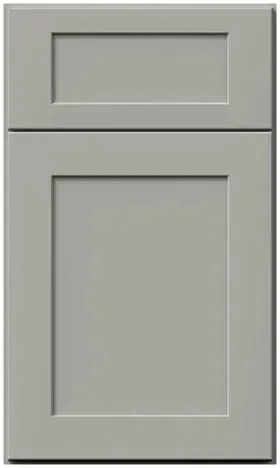
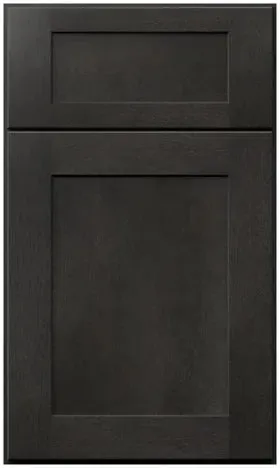
One Galaxy door, two very different finishes: a dark gray-brown stain and the classic painted mid-gray.
The Fabuwood Cobblestone vs Nickel decision is between two finishes on the Allure Galaxy shaker door, and they’re the same cabinet at the same price. What separates them is depth and surface. Nickel is a flat, opaque mid-tone gray paint. Cobblestone is a near-black gray-brown stain with the wood grain showing through. Below we cover what each does to a room, the undertone question shoppers keep asking, and how to settle it with two sample doors.
Galaxy Cobblestone vs Galaxy Nickel at a Glance
Compared on 11 points, updated September 2026.
Swipe to compare →
| Galaxy Cobblestone | Galaxy Nickel | |
|---|---|---|
| Door | Galaxy five-piece shaker (same door) | Galaxy five-piece shaker (same door) |
| Finish | Stain, wood grain visible through it | Painted, no visible grain |
| Depth | Near-black; only Pitch Black is darker in Galaxy | Mid-tone, the middle of the gray ladder |
| Undertone | Warm: a gray-brown, reading browner under warm bulbs and beside wood | Neutral; Fabuwood says it doesn’t drift blue or brown |
| What it does to a room | Grounds and darkens; needs light coming back at it | Clearly gray without pulling the room down |
| Strongest role | Island, base run, or lower half of a two-tone | Full perimeter, or either half of a two-tone |
| Box and drawers | ½″ veneered plywood box, ⅝″ dovetail drawers | Identical Allure spec |
| Hardware | Blum® Blumotion hinges, Tandem runners | Blum® Blumotion hinges, Tandem runners |
| Lead time | 7 days to 3 weeks, pre-assembled | 7 days to 3 weeks, pre-assembled |
| Warranty | Limited lifetime | Limited lifetime |
| Typical 10×10 cabinets | $4,400–$6,500 | $4,400–$6,500, with the same price on each box |
Choose Cobblestone if…
- You want a dark kitchen, or at least a dark island, but black feels like too big a commitment
- The room gets strong daylight, or you’re pairing it with a white counter and pale walls that bounce light back
- It’s going below the counter line under lighter uppers, where heavy color belongs
Choose Nickel if…
- You want a gray kitchen that stays bright enough to run wall to wall
- Your counters, floor and metals aren’t chosen yet and you need a color that works with most of them
- The room is small, faces north, or has one window, because a near-black finish would close it in
Two Rungs Apart on Fabuwood’s Gray Ladder
Set the door samples in a row and the ladder is plain. Nickel is the lightest: the classic painted mid-tone that carried a decade of gray kitchens. Stone, a taupe-gray paint on the Fusion door, sits a step darker. Cobblestone is far deeper again, a near-black gray-brown stain that gives a room weight without the flat finality of Pitch Black. On the Galaxy shaker, shoppers who want a neutral that is not white usually end up choosing between these two.
Most gray regret we hear about turns out to be a depth mistake. Someone wanted an airy room and ordered the dark one, or wanted something moody and got a gray that looks like tired white. So decide how dark you want the room before you get into undertone. Pick Nickel if you want gray as the background. Pick Cobblestone if you want the cabinets to anchor the room.
Paint or Stain, Warm or Neutral: The Straight Answer
Many shoppers come in expecting that one of these is a warm, greige-leaning gray and the other is cool. That isn’t quite right, and it helps to know before you order. Neither one is greige. Linen is the Galaxy finish in that territory. Fabuwood describes Nickel as a neutral that doesn’t drift toward blue or brown. In practice you choose it for its depth and don’t have to match an undertone.

Cobblestone is a different kind of finish altogether. Fabuwood calls it a warm gray stain, and its own collection copy describes it as a cross between traditional brown and transitional dark gray. On the door it reads near-black, with the wood grain visible through it and a brown warmth that grows under warm bulbs or beside a honey oak floor. It is not a cool charcoal, and it is not a flat paint. The grain also means no two doors look quite identical, which a painted gray never shows. Judge it with a real door in your own room.
Lighting also affects the two differently. Very warm 2700K bulbs make a mid-tone gray like Nickel look flat and faintly brown, and 3000K brings it back. Cobblestone isn’t hurt by warm light the same way, but it takes more light overall because a finish that dark soaks it up. In a dim room it goes nearly black by evening unless you add under-cabinet lighting.
Counters, Floors and Metals for Each Depth
Nickel works with almost anything, which is why people pick it before the rest of the kitchen is decided. White quartz, soft gray veining, cream stone, warm wood floors, and brushed nickel, matte black or brass hardware all work with it. The one combination to avoid is a counter or tile at about the same mid-gray depth, which puts you back in the gray-on-gray look of 2016.
Cobblestone needs contrast more than it needs matching. A white marble-look quartz with bold veining is the combination we quote most. It puts a bright band across the dark base and makes the depth look deliberate. Pale floors do the same work lower down. A mid-tone oak next to a dark cabinet keeps its definition, but a dark floor under Cobblestone merges into one heavy block. For metals, matte black almost disappears on it, so pick brass or polished nickel if you want the pulls to show.
For two-tone kitchens the two finishes play different parts. Nickel can go on either half: under Frost or Dove uppers, or on the perimeter around a darker island. Cobblestone nearly always goes low, as the island or base run under white or light-gray uppers. Using the two together can work because they’re far enough apart in depth. Keep Cobblestone on the island and Nickel on the perimeter, and don’t mix them on the same wall.
Wear, Dust and the Resale Question
Here the paint-versus-stain difference matters. Nickel is a flat paint: it hides fingerprints around the pulls and scuffs at toe-kick height, and its weak spots are dust on the top rail and crown, and water spotting under the sink. Cobblestone is a stain, so fine scratches tend to lose themselves in the grain the way they do on Timber. Its weak spots are different: pale dust, flour and dried drips show plainly on a near-black door, and a chip or a raw cut edge shows as a pale fleck, while greasy prints hide in its depth. If you have kids who cook with you, think about which of those messes you’ll clean more often.
For resale, the mid-tone has the edge. A Nickel kitchen reads as a recent renovation to most buyers and divides them less than any dark color. Cobblestone is a stronger design choice and will split a room of buyers more. That’s fine if you’re staying in the house, and worth thinking about if you plan to sell within a few years.
Same Box, Same Number on the Quote
Price doesn’t favor either one. Twelve of Galaxy’s fourteen finishes price identically cabinet for cabinet, and both of these grays are among the twelve. Only Desert Oak and Natural Oak, the true wood-veneer finishes, run about 20% higher. A standard 10×10 in either gray typically lands between $4,400 and $6,500 in cabinets, before countertops, delivery and installation.
Each quote buys the same build: ½″ veneered plywood boxes with a natural wood-veneer interior, ⅝″ solid wood dovetail drawers, Blum® Blumotion soft-close hinges, Tandem full-extension runners, and a limited lifetime warranty. Galaxy is also the fastest-shipping Allure collection, with pre-assembled cabinets leaving in 7 days to 3 weeks. If you change your mind between the two grays after quoting, only the color code on each line changes.
Settling Cobblestone vs Nickel in Your Own Kitchen
If you want gray to be the background of the kitchen, choose Nickel. It’s bright enough to cover every wall, neutral enough that you can choose the counter later, and the safer bet for a small, north-facing or single-window room. If you want the cabinets to anchor the room, and you have the daylight or the white surfaces to balance a dark finish, Cobblestone gives you that weight without committing to black.
Order both door samples before you commit. Stand them together against your backsplash wall and look at them at noon and again after dark with your normal bulbs on. The depth difference shows right away. How brown Cobblestone looks in your room, and how much of the grain you notice, you’ll only see on the real doors.
Ready to price your own layout in Galaxy Cobblestone or Galaxy Nickel?
Get a free 3D rendering and an itemized quote so you can compare real numbers, not list prices.
Related Reading
See Galaxy Cobblestone or Galaxy Nickel in Your Kitchen
Our designers render your actual layout in either line, free — so you’re comparing more than a spec sheet.
Get Free 3D DesignNo obligation · Ready in days
Galaxy Cobblestone vs Galaxy Nickel FAQ
Common questions about how these two compare.
Cobblestone, by a wide margin. It is a near-black gray-brown stain, second only to Pitch Black in the Galaxy line, while Nickel is a mid-tone gray paint. Put side by side, the gap is obvious even from across a showroom.
Both, which is why our collection is labelled dark brown and Fabuwood calls it a warm gray stain. It is a near-black gray-brown with the wood grain showing through. In daylight the gray side leads, and under warm bulbs or beside warm wood the brown comes forward. A sample door in your own light is the only reliable test.
Neither, which is the point of it. Fabuwood describes Nickel as a balanced neutral that doesn’t drift blue or brown. The one condition that dulls it is very warm 2700K lighting, which can make it look faintly brown. At 3000K or cooler it reads as a clean gray.
Yes. Both are standard Galaxy finishes, and twelve of the fourteen Galaxy finishes price identically on every cabinet. Only Desert Oak and Natural Oak cost more, about 20% higher. A typical 10×10 runs $4,400–$6,500 in cabinets in either gray.
Yes, as long as each has its own zone. The depth gap is large enough to look intentional. Put Cobblestone on the island and Nickel on the perimeter, and pair both with a white counter so the two grays have something bright between them.
No brand we carry uses the name Lava Gray. The shade people mean is a deep, volcanic charcoal. In the Galaxy line the nearest are Pitch Black, a flat near-black paint, and Cobblestone, a near-black gray-brown stain with the grain showing. Nickel is much lighter. Our gray shade guide lists the other charcoals worth sampling alongside it.