Fabuwood Timber vs Desert Oak
A honey-toned stain at the regular price, or pale blonde oak for about a fifth more.
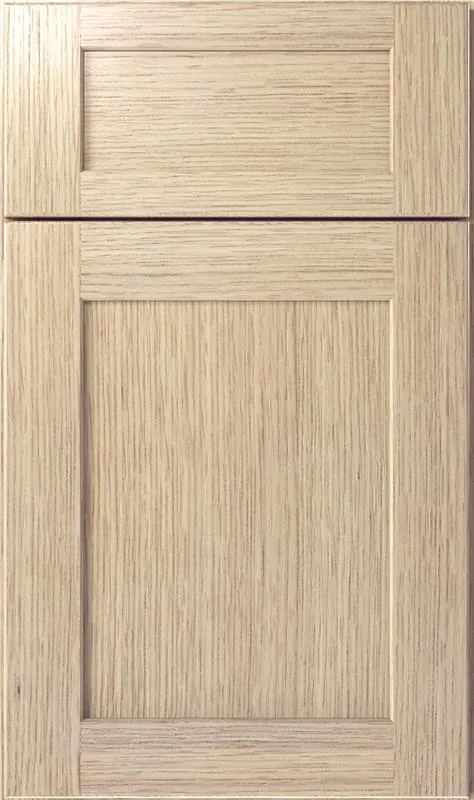
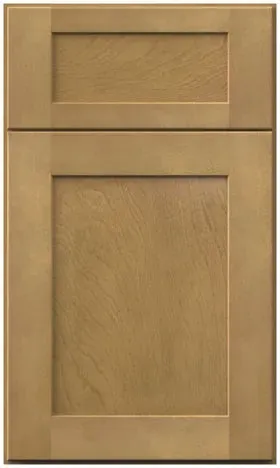
Fabuwood Timber vs Desert Oak is the question we get from people who have already ruled out paint and want the kitchen to read as wood. Both come on the same Galaxy shaker door with the same box, but they are not two shades of one idea. Timber is a warm honey-gold stain priced with the other standard Galaxy colors; Desert Oak is the palest wood Galaxy makes, a washed blonde oak-grain veneer that costs roughly 20% more per cabinet. If “light wood” is the brief, one of them gets you there and the other gets you somewhere warmer.
Galaxy Timber vs Galaxy Desert Oak at a Glance
Compared on 11 points, updated September 2026.
Swipe to compare →
| Galaxy Timber | Galaxy Desert Oak | |
|---|---|---|
| Door | Galaxy five-piece shaker (same door) | Galaxy five-piece shaker (same door) |
| Surface | Wood stain, grain showing through | Oak wood-grain veneer, textured face |
| Color on the swatch | Golden honey tan | Washed blonde, the palest wood in Galaxy |
| Grain pattern | Soft, low-contrast, gently waving figure | Straight, open rift-style lines you can feel |
| Price group | Standard — same as the other 11 standard Galaxy colors | Oak group — shared only with Natural Oak |
| 12″ base (B12) list / our price | $560 / $364 | $675 / about $439 |
| Typical 10×10 in cabinets | $4,000–$5,500 | About $4,800–$6,600 (≈20% more) |
| Galaxy lead time | 7 days – 3 weeks, pre-assembled | 7 days – 3 weeks, pre-assembled |
| Also offered on | Luna, Fusion and Echo | Luna and Luxe |
| Box, drawers, hardware | ½″ plywood box, ⅝″ dovetail drawers, Blum® soft-close | Identical Allure spec |
| Warranty | Limited lifetime | Limited lifetime |
Choose Galaxy Timber if…
- You want a warm, sunny wood tone rather than a bleached one
- The budget is set and you’d rather spend the difference on counters or appliances
- You want the same stain available later on an Echo, Fusion or Luna door
Choose Galaxy Desert Oak if…
- Your inspiration photos show pale, Scandinavian-style oak with straight grain
- You have yellow or orange-leaning floors and don’t want a second golden tone on top
- You’re willing to pay the oak premium, or to limit it to an island
Which of the Two Is Actually “Light Wood”?
Most people who post this question in kitchen groups are chasing a light wood look and hoping the cheaper option will deliver it. Here’s the plain answer from the swatches: Desert Oak is the light one. Timber is a mid-light stain with a lot of gold in it, closer to honey or butterscotch than to the pale, almost milky oak in most current magazine kitchens.
That doesn’t make Timber the wrong pick. It makes it a different room. Timber gives a kitchen warmth and a sunny, lived-in feel, and it costs the same as Frost or Dove. Desert Oak gives it airiness and a quieter, Nordic calm, and it sits in a separate, higher price group. Decide which of those two moods you’re after before you look at price, because no amount of lighting will turn one into the other.
Honey Stain Beside Washed Blonde Oak
Held up together, the doors separate on three things at once. Color: Timber carries a clear yellow-orange warmth, while Desert Oak reads as bleached blonde with a faint cream-grey cast. Depth: Timber is noticeably darker, so on a wall of cabinets it pulls the eye; Desert Oak recedes. Grain: Timber’s figure is soft and low-contrast, drifting across the panel in loose waves, whereas Desert Oak shows tight, straight lines with open pores that you can feel under a fingertip.
Light pushes each one further in the direction it already leans. Warm evening bulbs make Timber richer and more amber, sometimes edging toward orange if the walls are also warm. The same bulbs flatter Desert Oak by adding a little sand to it. In cool north-facing daylight, Timber settles into a tan and Desert Oak can look almost pale grey. If your kitchen gets hard afternoon sun, look at a Timber sample at 5 p.m. before committing.
Timber is not a grey stain: Fabuwood describes it as a blend of golden amber and earthy ochres, and the door reads warm and golden. If it’s a cooler, greyer brown you’re after, that is Mocha, which is also darker and moves you further from the light look.
Floors, Counters and Hardware That Suit Each One
Timber loves company that’s a little warm but lighter than itself: cream or warm-white quartz, zellige in off-white, brushed brass, and a Dove perimeter if you’re doing a Timber island. Watch the floor. Put Timber over a honey-oak or orange-toned floor and the two golds merge into one flat mass; over a pale, grey-washed or tile floor it looks deliberate.
Desert Oak wants contrast that stays clean: bright white quartz, matte black pulls and faucets, white or Frost uppers, and simple light fixtures. It handles yellowish existing floors better than Timber does because it’s far enough from them in tone to read as its own thing. Where it struggles is next to stark cool greys, which can drain it toward beige.
Both are wood-grain surfaces, which hide fingerprints and small scuffs better than any painted door. Of the two, Timber’s darker mid-tone and soft figure are the more forgiving around busy handles; a pale face like Desert Oak shows darker smudges a little sooner.
Where Each Finish Goes Beyond the Galaxy Door
If you’re planning more than one room, check which doors each finish follows you onto. Timber is also offered on Luna’s slim-frame door, Fusion’s wide-rail transitional door and Echo, Fabuwood’s newer slim shaker. Desert Oak appears on Luna and on Luxe, the flat-panel wood-veneer door, where the straight grain runs uninterrupted across the whole front.

Lead times differ by door, not by finish. Galaxy typically ships in 7 days to 3 weeks pre-assembled, while Luna, Fusion and Luxe usually take 3–5 weeks. If you pair a Galaxy kitchen with a Luxe or Luna room elsewhere in the house, plan the order around the longer lead time so both arrive together.
Settling It With Door Samples, Not Screens
Photos exaggerate Timber’s gold and wash Desert Oak out to near white, which is why this pair gets argued about online. Order both Galaxy doors as Fabuwood door samples, about $25 each, and set them on your actual floor next to your counter sample. Check them over breakfast and under your evening lights; lamplight is where Timber’s gold either charms you or starts to feel orange.
If Desert Oak feels too pale and cool but Timber too golden, the middle ground is Natural Oak, a warmer tan oak with finer grain in the same oak price group. Our Desert Oak vs Natural Oak comparison covers that split in detail. For a pale look on a strict budget, remember that no standard-price Galaxy stain is lighter than Timber; you either pay the oak premium or use it only where it’s seen most.
Ready to price your own layout in Galaxy Timber or Galaxy Desert Oak?
Get a free 3D rendering and an itemized quote so you can compare real numbers, not list prices.
See Galaxy Timber or Galaxy Desert Oak in Your Kitchen
Our designers render your actual layout in either line, free — so you’re comparing more than a spec sheet.
Get Free 3D DesignNo obligation · Ready in days
Galaxy Timber vs Galaxy Desert Oak FAQ
Common questions about how these two compare.
No. Desert Oak is the palest wood finish in Galaxy, a washed blonde oak. Timber is a warm honey-tan stain that reads clearly darker and more golden beside it.
Desert Oak is an oak wood-grain veneer finish that Fabuwood prices in a separate group with Natural Oak, about 20% above the other twelve Galaxy colors. A 12″ base lists at $675 in Desert Oak versus $560 in Timber. The box, drawers and hardware are identical.
Warm. Fabuwood describes Timber as golden amber with earthy ochres, and the door is a honey tan. Fabuwood’s cooler, greyer brown is Mocha, which is also darker.
We don’t recommend it. Two different wood tones on the same shaker door tend to look like an ordering mistake. Pair either one with a painted Galaxy color instead, such as Dove or Frost.
On the Galaxy door, yes: both typically ship in 7 days to 3 weeks, pre-assembled. Confirm stock on your specific finish when you get your quote.