
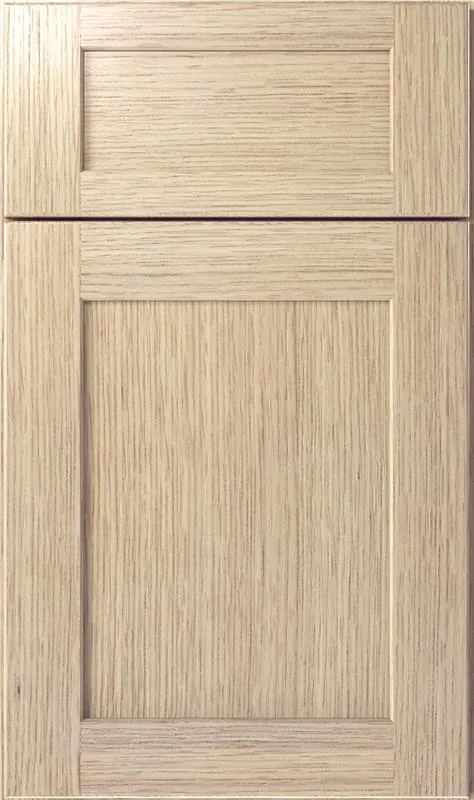
Fabuwood Desert Oak vs Natural Oak
The two wood-grain Galaxy doors — and the only two that cost extra.
Fabuwood Desert Oak vs Natural Oak is the one Galaxy color decision that also moves the price. Of the fourteen Galaxy finishes, these are the two wood-grain doors, and both carry roughly a 20% premium over the other twelve. Desert Oak is a pale, sandy blonde with straight, textured grain; Natural Oak, new in August 2026, is a white-washed stain on rift-cut white oak. Below: how the grain differs, what each pairs with, and when the painted Galaxy colors are the smarter spend.
Galaxy Desert Oak vs Galaxy Natural Oak at a Glance
Compared on 11 points, updated September 2026.
Swipe to compare →
| Galaxy Desert Oak | Galaxy Natural Oak | |
|---|---|---|
| Collection | Allure Galaxy — framed five-piece shaker | Allure Galaxy — framed five-piece shaker |
| Surface | Textured oak wood-grain veneer | Rift-cut white oak with white-washed stain |
| Color read | Pale sandy blonde | Warm, washed light oak |
| Grain character | Straight, linear, felt as much as seen | Straight rift grain with subtle ray flecking |
| In the lineup since | Established Galaxy finish | August 2026 — Fabuwood’s newest |
| Other doors offered | Luna slim-frame and Luxe flat-panel | Luna slim-frame |
| 12″ base (B12) list price | $675 — oak price group | $675 — oak price group |
| Same B12 in a painted Galaxy finish | $560 list | $560 list |
| Box and drawers | ½″ veneered plywood box, ⅝″ dovetail drawers | ½″ veneered plywood box, ⅝″ dovetail drawers |
| Hardware | Blum® Blumotion hinges + Tandem runners | Blum® Blumotion hinges + Tandem runners |
| Warranty | Limited lifetime | Limited lifetime |
Choose Desert Oak if…
- You want the palest, sandiest wood tone Galaxy offers, with grain you can feel
- You plan to repeat the finish on a Luxe flat-panel or Luna run elsewhere in the house
- Your inspiration board is light oak, white counters and matte black fixtures
Choose Natural Oak if…
- You’re after the rift white oak look — calm, pinstriped grain with a soft wash over it
- You want a touch more warmth than Desert Oak without sliding into honey or golden tones
- The wood is the feature, so you’re happy to spend the oak premium on the island or the whole room
Two Oaks on One Galaxy Door
Galaxy is the collection Fabuwood keeps in stock, and it runs fourteen finishes on a single shaker door. Twelve are paints or stains that price identically. The other two, Desert Oak and Natural Oak, are wood-grain finishes in a price group of their own, and they’re the pair buyers ask us to separate once they’ve decided they want the kitchen to look like wood rather than color.
Underneath the surface nothing changes. The door frame, the ½″ veneered plywood box with natural veneer interior, the ⅝″ dovetail drawer box, the Blum® soft-close hinges and Tandem runners, the pre-assembled delivery and the limited lifetime warranty all follow the shared Allure spec. What you’re choosing is a grain pattern and a tone, and whether to pay for either one.
Sandy Blonde Texture or a White-Washed Rift Cut
Desert Oak is the pale member of Fabuwood’s wood family: a light, sandy blonde with straight, linear grain and a textured face. Run a hand across the door and the grain registers under your fingers. From across the room it reads as bleached, sun-faded oak, and it keeps a little sandiness even under warm bulbs.

Natural Oak takes a different route to a light kitchen. Fabuwood applies a warm, white-washed stain to rift-cut white oak, so the grain is tight and almost pinstriped rather than arching, with faint ray flecks catching the light as you walk past. The wash softens the wood without hiding it, and the result looks less like a finish than like good lumber with a thin coat of milk over it.
Held together, the two are close in depth, so neither looks dark next to the other. The tell is character. Desert Oak shows a drier, more uniform blonde with a tactile surface, while Natural Oak shows more figure, a touch more warmth and the calm straightness that rift cutting is known for. If your photos are labelled “white oak” or “rift oak,” Natural Oak is almost certainly what you’re looking at.
Counters, Floors and Two-Tone Plans for Each Oak
Desert Oak likes contrast that stays cool and simple. White or soft-veined quartz, matte black pulls and faucets, and white walls give it the Scandinavian look it’s known for. It also sits easily under Frost or Dove uppers, where the blonde lowers read as the only warm element in an otherwise bright room.
Natural Oak carries more warmth, so it takes warmer company without turning yellow: warm-white or cream quartz, unlacquered brass or bronze, plaster-toned walls. As an island under a painted Galaxy perimeter it gives the organic-modern two-tone that’s filling our design queue this year. Put it beside a pale oak floor and check that the two woods don’t fight; a door sample laid on the floorboards answers that in a minute.
One pairing we talk people out of is using both oaks in one kitchen. They sit close enough in tone that side by side they look like a supplier mix-up rather than a choice, so pick one and pair it with paint.
Is Either Oak Worth It Over a Painted Galaxy Door?
The honest answer depends on where the wood goes. Across a full kitchen the oak premium adds real money for a look that a painted door simply can’t fake, and if light wood is the whole design idea, that’s a fair trade. Wood grain is also the most forgiving surface in the catalog; fingerprints, water spots and daily scuffs disappear into it in a way they don’t on Frost or Pitch Black.
On a tighter budget, the move we suggest most is to limit the oak to the island. Only those boxes pick up the higher price, the perimeter stays in a standard painted finish, and the room still gets its warm centerpiece. If even that stretches the number, Timber, Mocha and Truffle bring wood-toned stains at the standard Galaxy price, though all three are darker and browner than either oak and won’t give you the pale look.
Where we’d skip the premium: rentals, quick flips, or a kitchen where the cabinets will be mostly hidden behind appliances and tall panels. In those jobs Frost or Dove at the standard price does the work, and the saved money goes further on counters.
Choosing Between the Two Galaxy Oaks
Pick Desert Oak for the lightest, sandiest wood look Galaxy makes, especially if you like a grain you can feel or want the same finish on Luxe or Luna doors elsewhere in the house. Pick Natural Oak if the rift white oak look is what brought you here; its straight grain, ray fleck and soft wash make it the more refined of the pair at the same price.
Because the two are so close in depth, screens exaggerate the difference in one direction or the other. Order both door samples, set them on your counter and floor, and look at them at breakfast and again after dark. The one that still looks right under your own bulbs is the one to order.
Ready to price your own layout in Galaxy Desert Oak or Galaxy Natural Oak?
Get a free 3D rendering and an itemized quote so you can compare real numbers, not list prices.
See Galaxy Desert Oak or Galaxy Natural Oak in Your Kitchen
Our designers render your actual layout in either line, free — so you’re comparing more than a spec sheet.
Get Free 3D DesignNo obligation · Ready in days
Galaxy Desert Oak vs Galaxy Natural Oak FAQ
Common questions about how these two compare.
They’re close in depth. Desert Oak reads as a pale, sandy blonde; Natural Oak reads as light oak under a warm white wash, with a little more warmth and more visible figure. Next to each other the gap is in character more than lightness, so judge real door samples rather than photos.
They’re the two wood-grain finishes in a collection that’s otherwise paints and stains, and Fabuwood prices them in their own group. A 12″ Galaxy base lists at $675 in either oak versus $560 in the other twelve finishes, about a 20% difference across the line.
Yes. Both sit in the same oak price group, so a quote in one converts to the other with no price change.
August 2026. It’s Fabuwood’s newest finish, offered on the Galaxy shaker door and the slim-frame Luna door. Because it’s new, confirm stock and ship date on the oak specifically when you request a quote.
Timber, Mocha and Truffle are wood-toned stains at the standard Galaxy price, but all three are browner and darker than either oak. To keep the pale oak look and control cost, use oak on the island only and a standard painted finish on the perimeter.
Yes. Galaxy Desert Oak and Galaxy Natural Oak are both in our door-sample range. Order the two together; with finishes this close, they only separate clearly when they sit side by side in your own light.