
Choosing a kitchen cabinet brand comes down to five things: what the box is made of, how the drawers and hinges are built, how the finish is applied, what the warranty actually covers, and which price tier the brand competes in. Two white shaker kitchens can look identical on day one — and one will still look new in fifteen years while the other has swollen edges and sagging doors. The difference is the brand's construction standards, not the door style.
We sell cabinets from a dozen manufacturers, which means we've also decided not to carry many more. This is the checklist we use when we evaluate a line — the same one you can use to judge any brand, whether you buy from us or not. (For our take on specific manufacturers, see the brand-by-brand roundup; this guide is about how to judge them yourself.)
Table of Contents
Why the Brand Matters More Than the Style
Door styles are copied across the entire industry within a season — every brand sells a white shaker, a slab, and a raised panel. What brands can't copy overnight is manufacturing: the box material, the joinery, the hardware they buy, and the finish line their doors run through. Those decisions are invisible in a showroom photo and completely decisive in year ten.
The brand also determines your experience before the kitchen exists: how accurate the shipping timeline is, how fast a damaged panel gets replaced, and whether the 24th cabinet matches the first 23. When a brand cuts corners, it cuts them everywhere at once.

The Five-Point Quality Checklist
Ask these five questions of any brand and you'll know more than most shoppers learn in a month:
| Check | Good Answer | Walk-Away Answer |
|---|---|---|
| Box construction | All-plywood sides, back, shelves | Particleboard with thin veneer |
| Drawer boxes | Solid wood, dovetail joints | Stapled or glued corners |
| Hardware | Soft-close hinges and undermount slides standard | Soft-close as a paid upgrade |
| Finish | Multi-step baked/catalyzed factory finish | Single-coat spray, visible orange peel |
| Warranty | Limited lifetime on construction | 1–5 years, or "contact your dealer" |
The box and the drawers tell the truth
Plywood boxes hold screws better, shrug off moisture, and carry more shelf weight than particleboard — it's the single clearest quality divider between brands, and the first thing we check. Dovetail drawer boxes on undermount soft-close slides are the second: dovetails are machined joinery a budget factory can't fake, and a brand that includes them standard (as lines like Fabuwood and J&K Cabinetry do) is usually careful everywhere else too.
The finish is the hardest thing to judge — and the most important
A factory finish is baked and cured in conditions no jobsite can reproduce, which is why factory-finished doors outlast site-painted ones by decades. In a showroom, look at a door edge-on in raking light: a quality finish is uniform, smooth, and consistent from door to door. Then check the cabinet interior — brands that finish interiors cleanly aren't hiding anything.

Cabinet Brand Tiers and What They Cost
Every brand competes in one of four tiers, and knowing the tier tells you what to expect before you see a single price sheet. Using a standard 10x10 kitchen as the yardstick:
| Tier | 10x10 Kitchen | What You Get |
|---|---|---|
| Stock / RTA | $2,000–$6,000 | Fixed sizes, fast shipping, quality varies wildly by brand |
| Value pre-assembled | $3,000–$8,000 | Factory-built boxes, plywood construction in the good lines |
| Semi-custom | $3,000–$13,000 | Size modifications, deeper finish catalogs, more accessories |
| Custom | $15,000+ | Anything you can draw, local shop lead times |
The critical insight: tiers overlap, and the top of a lower tier routinely beats the bottom of a higher one. A well-built value line with all-plywood boxes and soft-close hardware standard outperforms an entry semi-custom line built on particleboard. That overlap zone is where the best value in cabinetry lives, and it's why the brand — not the tier label — is the real decision. Our custom vs. RTA comparison covers the tier trade-offs in depth, and you can browse every tier we stock across our cabinet brands.
Certifications and Warranties Worth Checking
Two credentials separate marketing claims from tested facts:
- KCMA certification (ANSI/KCMA A161.1). The Kitchen Cabinet Manufacturers Association tests cabinets to an ANSI standard — shelves loaded at 15 pounds per square foot, doors slammed through operation cycles, finishes exposed to vinegar, lemon, coffee, and detergent. A brand displaying the KCMA seal has passed independent durability testing, not just written a nice brochure. Ask whether the specific line (not just the company) is certified.
- CARB2 / TSCA Title VI compliance. Limits formaldehyde emissions from the engineered wood inside cabinets — table stakes for anything sold legally in the U.S., but worth confirming with importers selling direct.
On warranties, read for three things: duration (limited lifetime is the quality-tier norm — J&K, for example, warrants for as long as you own the home), coverage (materials and workmanship; finishes usually carry shorter terms — that's normal), and process (a warranty serviced through an authorized dealer who answers the phone beats a web form in another time zone). A short warranty on a new brand is the manufacturer telling you their own confidence level. Believe them.
Matching a Brand to Your Project
The "best" brand is project-dependent. The honest matchups we give customers:
- Rental or flip on a deadline — a proven RTA/value brand with fast shipping. Skip the upgrades; spend on plywood boxes.
- Family home you'll keep — the value-tier sweet spot: all-plywood construction, soft-close standard, limited lifetime warranty, in a finish with deep stock (matching cabinets available years later matters).
- Design-driven remodel — semi-custom for the size modifications and accessory catalog, or an inset line if you want the furniture look without a custom-shop price.
- Modern minimalist kitchen — a dedicated frameless (European-style) brand; framed brands imitating slab-door modern rarely nail the reveals.
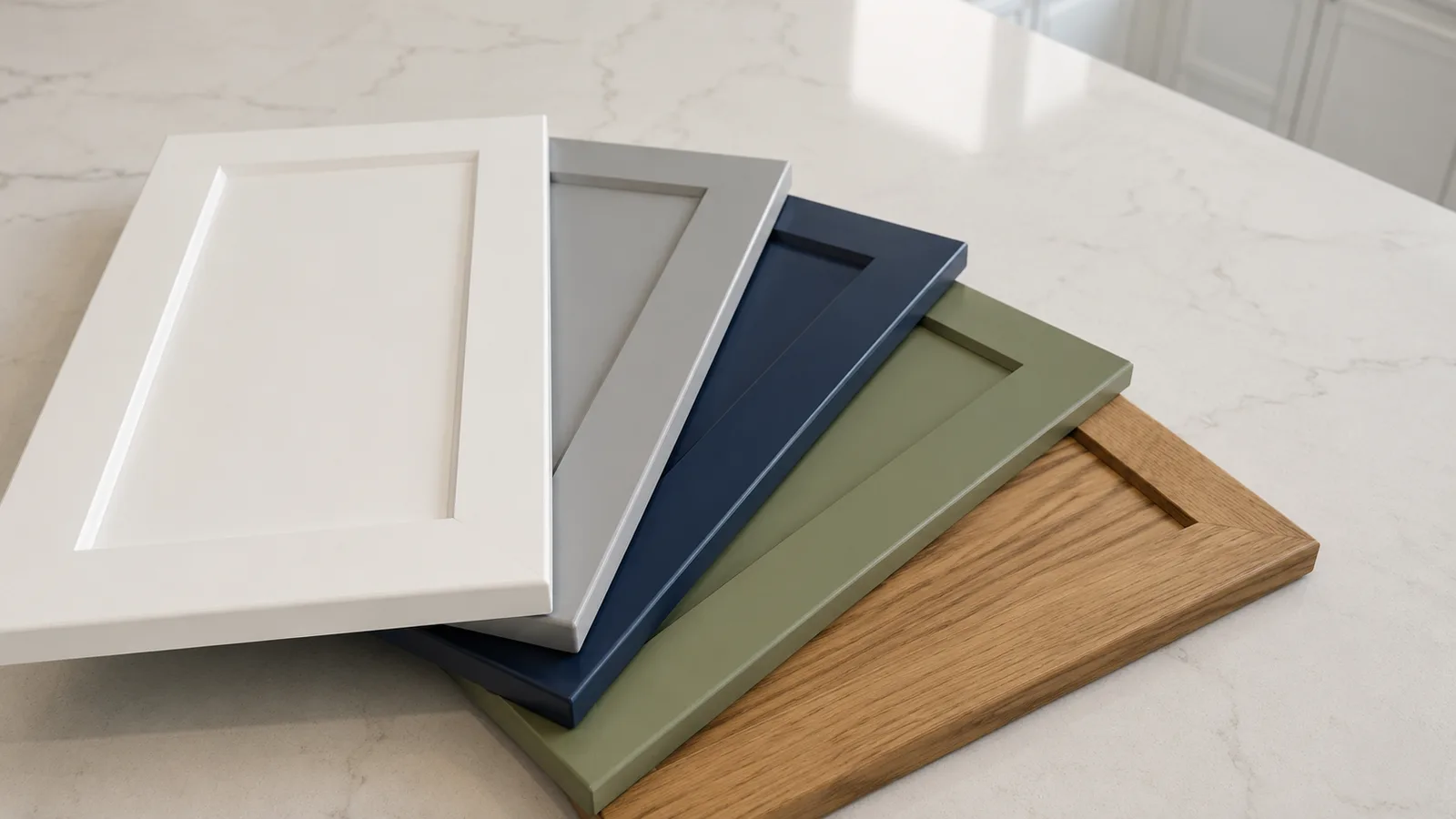
Whatever the project, order a sample door before committing — every reputable brand offers them. A door in your hands, in your kitchen's light, next to your flooring, answers questions no showroom can.
Seven Questions to Ask Before You Order
- Is the box all-plywood — sides, back, and shelves?
- Are dovetail drawers and soft-close hinges standard, or upgrades that change the quote?
- Is this line KCMA certified?
- What's the real lead time right now — and does it change for assembled vs. RTA?
- What happens when a cabinet arrives damaged, and how long do replacements take?
- Will this finish still be in the catalog in five years if I add cabinets later?
- What exactly does the warranty cover, and who handles claims?
A good dealer answers all seven without flinching — and the answers will separate your finalists faster than any showroom tour.
If you'd rather shortcut the research: tell our free 3D kitchen design service your budget, timeline, and style, and we'll design your exact kitchen in the two or three brands that genuinely fit — itemized quotes included. A designer replies within 1 business day, and the full designs and quotes follow within 3–5 business days. Or contact us / call 609-900-3358 and ask the seven questions above about any brand we carry. We like answering them.
Frequently Asked Questions
What is the best kitchen cabinet brand?
There's no single best — there's a best fit per project and budget tier. Judge any candidate on five things: all-plywood construction, dovetail drawers, soft-close hardware standard, a factory-baked finish, and a limited lifetime warranty. Brands that check all five compete for "best" at their price point.
Are expensive cabinet brands worth the money?
Above the quality baseline, extra money buys design flexibility — custom sizes, exotic finishes, inset construction — more than extra durability. A well-built value brand and a premium brand can share near-identical box construction. Pay up for design freedom you'll use, not for durability you already get at the value tier.
What does KCMA certification mean?
The cabinet line passed independent testing to the ANSI/KCMA A161.1 standard — structural tests like 15 lb-per-square-foot shelf loading plus finish resistance to common household substances (vinegar, lemon, coffee, detergent). It's the closest thing cabinetry has to a verified quality floor.
Is plywood construction really better than particleboard?
Yes, meaningfully: plywood holds screws better, resists moisture swelling, and carries more weight. It typically adds a few hundred dollars across a whole kitchen — the highest-return upgrade in cabinetry.
Are RTA cabinet brands lower quality than assembled brands?
Not inherently — many brands ship the identical cabinet either flat-packed or factory-assembled. Quality tracks the brand's construction standards, not the shipping method. Judge an RTA brand by the same five-point checklist, plus the quality of its assembly hardware.
How do I compare two cabinet brands directly?
Order a sample door from each and compare weight, finish smoothness in raking light, and joinery. Then compare spec sheets on box material and standard hardware, confirm KCMA status and warranty terms, and price the same kitchen layout in both. The differences become obvious fast.

Written by
Noor K.Technology Manager at Captivating Cabinets
Noor manages and develops the Captivating Cabinets website, and writes practical guides on cabinet styles, finishes, pricing, and remodel planning.
Get a free 3D design + quote
- Your layout rendered in 3D, with an itemized quote
- Back in 3–5 business days
- Free, and yours to keep either way
Recent Articles

September 10, 2026
Cabinets for Property Managers and How to Standardize Unit Turns

September 10, 2026
Cabinets for Developers Building Spec Homes and Small Communities

September 9, 2026
Cabinets for Remodelers and How to Keep an Occupied Kitchen on Schedule

September 9, 2026
Wholesale Kitchen Cabinets for Contractors Without a Showroom Markup

September 9, 2026
Choosing a Multi-Family Cabinet Supplier for Unit Turns and Phased Deliveries


