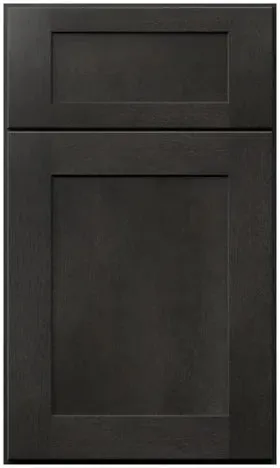
Shop Galaxy Cobblestone loose parts from the Fabuwood Allure Galaxy series at Captivating Cabinets. They replace a damaged box, add a shelf, or build out a cabinet where the doors and drawer fronts are already in hand.
Tandem plus Blumotion full extension concealed drawer runners
Drawer Head
5-piece recessed panel drawer fronts
Drawer Construction
⅝” solid wood drawer box with dovetail construction
Hinge
Hinges feature Quick-Release Technology with Blumotion Soft-close
Cabinet Interior
Natural wood veneer finished interior
Cabinet Exterior
Pre-assembled
Assembly Method
Dowels and glue / Pocket screw Joinery
Delivery
Typically 2 Weeks · Pre-assembled
Galaxy Cobblestone loose parts: fixing what shows up pale on a dark stained cabinet
Reviewed September 2026 · Captivating Cabinets
Prices quoted in this article were read off the grid on the review date; the live price grid on this page governs.
On a white kitchen, damage shows up darker than the door. Galaxy Cobblestone loose parts get bought for the opposite reason: every mark on this dark gray-brown stain shows up light. A chip exposes blond wood, a site-cut filler shows a pale stripe of core, a dried drip leaves a chalky ring, and all of it catches the eye from across the room. The page behind this article lists 183 carcass-only boxes, 78 shelves keyed to cabinet codes, loose Blum clips, bumpers and three finish items, and which of them you need depends on what the pale mark actually is.
A pale film is usually residue, and residue is free to fix
Start with a damp microfibre cloth before you order a single part. Dark finishes are honest about what sits on them: flour on a drawer rail, a hard-water spot under the sink, the grey haze a spray cleaner leaves when it dries, a dusting along the top of the toe kick. On a white door none of that registers. Here it reads as wear, and customers regularly describe a residue problem to us as a finish problem.
Wipe with the grain, dry at once, and look again at a low angle. If the mark has gone, the answer was a cleaning habit, and the care guide covers which products leave a film. Grime around the pulls, oddly, is the one thing this finish hides better than a light door does. If a pale line survives the cloth and has an edge you can feel with a fingernail, it is a chip or a cut, and the next two sections are for you.
A light fleck on an edge: touching up a grained stain, not a painted door
The same rail before and after: the chip shows pale wood, and the repair is a darkening along the grain rather than a dot of colour laid on top.
Cobblestone is a stain. Grain is visible through the colour, which is why a chip looks the way it does: the knock takes the finish and the stained surface fibres with it, and the lighter wood underneath shows as a blond fleck against near-black. That also decides how it gets repaired. Paint touch-ups are opaque, so a painted door forgives a dab laid straight over the damage. On a stained surface, a flat, solid dot sits on top of the grain instead of in it, and reads as a sticker.
The GCB-TOUCH-UP-KIT at $62.40 is the factory match for this finish, and we would not put anything else on it; a furniture marker labelled "espresso" or "dark walnut" is almost always too red or too black beside this brown-leaning grey. Build the colour in thin strokes that run with the grain, let each coat dry, and stop when the fleck stops being lighter than its surroundings. Under-doing it and adding a coat is recoverable; a raised blob is not. What the kit fixes is edge nicks and small scrapes. A dent you can see from the side, or a split rail, is beyond touch-up and is a front to price with your designer.
A pale stripe along a cut: edge banding where the island gets trimmed
An island end trimmed on site. The raw half is the brightest line in the room; the banded half disappears into the stain.
In a two-tone plan, this finish usually goes low: the island, the perimeter bases, sometimes a tall bank, with a lighter colour above. That matters for parts because the island is where most site cutting happens. The back panel gets trimmed to the counter overhang, the ends get scribed to an uneven floor, a filler goes in beside the dishwasher, and a panel beside the seating gets notched for the stool footrest. Every one of those cuts exposes light core along the edge, and on a dark run a raw edge is the brightest line in the kitchen, at knee height where guests sit.
GCB-EDGE-BAND at $7.15 is coloured to the finish and seals the cut; put a coil on the order with the panels and fillers rather than after the installer finds the problem. The skin panels and gables guide shows where island backs and ends get cut, and the fillers explainer covers the scribe cuts along walls.
The third finish item is GCB-PSC at $45.50. The listing carries the code and nothing that says what is in it, so we will not describe it; tell your designer what you are fixing and they will confirm whether it is the part.
A failed box under good doors: prices on the lower and island codes
When the damage is structural rather than cosmetic, the bare box is the part. Add -BO to the cabinet code and you get the assembled carcass with no doors, drawer fronts or hinges fitted: sides, back, bottom and face frame in the Cobblestone stain, with the natural veneer interior. The good fronts come off their Blum Quick-Release hinges and Tandem glides and go onto it.
Because this finish so often lives below the counter, the codes that matter are bases, and islands in particular: a slow leak under the island sink, a stool kicked into a seating-side end, a microwave drawer cabinet overloaded. The table prices seven of them. Across all seven the bare box costs between 64 and 65 per cent of the finished cabinet.
Carcass-only against the complete cabinet on lower and island codes, displayed prices
Cabinet
Carcass (-BO)
Complete
You keep
B15 15″ door base
$243.75
$377.00
$133.25
B27 27″ door base
$331.50
$516.75
$185.25
B42 42″ door base
$487.50
$757.25
$269.75
DB33 33″ three-drawer base
$614.25
$955.50
$341.25
BMC30 30″ base microwave cabinet
$448.50
$695.50
$247.00
BLB42/45 42″ blind corner base
$494.00
$767.00
$273.00
BTR12 12″ base transition, right
$269.75
$419.25
$149.50
Two gaps to know before you plan an island repair around a box. The sink base, the cabinet that takes the water in most islands, has no carcass listing in this finish from SB21 to SB42, and neither do the lazy susans; those are whole-cabinet replacements from the base cabinet listings. And the drawer rows: nothing on the listing says whether a DB or BMC carcass arrives with its drawer boxes, so ask your designer before you order one, because a drawer bank with no boxes is a far bigger job than one with no fronts.
Inside the box: shelves, clips and the small hardware
Open a Cobblestone cabinet and the inside is not dark. The interior is natural wood veneer, the same as every Allure Galaxy cabinet, so a replacement shelf is not a colour-matching exercise the way the outside is. It is ordered by the cabinet it fits: AS- plus the family and width. GCB-AS-B15 fits a 15″ base at $38.35, GCB-AS-B27 a 27″ base at $74.75, GCB-AS-B42 the 42″ base at $113.75, and the 12″ base transition has its own GCB-AS-BT12 at $34.45. Deep walls and corners carry their own codes too, up to $204.75 for the 36″ lazy susan shelf.
Multi-packs are a convenience, not a saving. GCB-AS-W15-3 is $71.50, or $23.83 a shelf, against $23.40 for one; GCB-AS-W24-3 is $113.75, or $37.92 a shelf, against $37.05. Clips are sold singly at $0.65 and in packs up to six at $3.90, four to a shelf. If you want an extra level rather than a replacement, look for the drilled pin holes first; a shelf only goes where the side was bored for it.
Two small parts matter more around an island than anywhere else. A stem bumper at $0.65 stops a door knocking the frame; seating-side doors get bumped by knees and feet more often than perimeter ones. Blum restrictor clips, the Compact ten-pack at $11.70 or the LSB two-pack at $3.90, keep a door from swinging into a stool leg or a neighbouring appliance handle. Which of the two fits depends on the hinge, and your designer will confirm it.
Your own doors on a Cobblestone box: a dark frame outlines everything
Shops that make their own fronts buy these carcasses too: a factory-finished ½″ veneered plywood box inside the line’s warranty for about two-thirds of the cabinet price. The catch is the face frame. These are full-overlay cabinets, but a thin line of frame still shows around each door and drawer front, and here that line is near-black.
A dark reveal is forgiving in one direction. Light fronts, natural white oak or a warm white, get a crisp dark outline that looks drawn on purpose, the same contrast that makes this finish a strong island colour. The trap runs the other way. Hang a true black or a cool blue charcoal on a Cobblestone frame and the two darks sit a whisker apart, and the brown in the stain starts to read as faded or dirty next to the colder colour. If you want black, the honest options are the whole cabinet in Galaxy Pitch Black or a front with obvious distance from the frame. If the front is meant to match, order the complete Cobblestone cabinet.
Grain is the second thing to plan for. The frame shows stained grain running along its stiles and rails, so a flat, grainless dark front can look like a different material even when the colour is close. Hold a Cobblestone door sample ($35.00) against your front before cutting a batch.
Ordering: a daylight photo, the label code and the finish name
A phone flash turns a dark stained surface into a white glare, and the defect vanishes in the photo. Photograph damage near a window in daylight with the flash off, one shot from a step back and one close up at an angle, and a second picture of the label inside the cabinet. Those two photos and the finish name let your designer identify the part without a site visit.
Loose parts ship on the usual Galaxy schedule of about 2 weeks, the same as a full order. For transit damage, report it the day the pallet arrives. A box that fails in normal use is a warranty question before it is a purchase. Contractors ordering the same kit job after job should look at Captivating Pro, which carries contractor trade pricing.
Common questions
How do I fix a chip on dark stained kitchen cabinets?
Use the factory touch-up kit for the finish ($62.40 for Galaxy Cobblestone), not a furniture marker. The chip shows lighter wood through a grained stain, so build the colour in thin strokes along the grain until the fleck stops reading lighter, then check the sheen from a low angle under the kitchen lights.
Why do my dark cabinets look scratched after cleaning?
Often they are not scratched. Dried cleaner, hard-water spots and flour show up pale on a near-black finish. Wipe with a damp microfibre cloth along the grain and dry at once. If the mark has an edge you can feel with a fingernail, it is a chip and needs the touch-up kit.
What do I use on a raw cut edge of a dark cabinet panel?
The finish-matched edge banding, GCB-EDGE-BAND at $7.15 in this finish. A raw cut shows light core that stands out on a dark island end or back panel, and a marker fades. Order the banding with the panels.
Can I replace just the box of an island base cabinet?
Usually, yes. Door and drawer bases have carcass-only -BO listings at about 64 per cent of the complete price, for example a B27 box at $331.50 against $516.75 complete. Sink bases and lazy susans have no carcass listing, and ask before ordering a drawer-base carcass, because the listing does not say whether the drawer boxes are included.
Will black doors look right on Cobblestone cabinet boxes?
Rarely. The face frame shows around every opening, and Cobblestone’s brown-leaning dark grey looks faded beside a true black or a cool charcoal. Light fronts or natural oak read as deliberate contrast. For black, buy the Galaxy Pitch Black cabinet complete.
Is Galaxy Cobblestone painted or stained?
Stained. It is a dark gray-brown stain, described by Fabuwood as a cross between traditional brown and transitional dark grey, with the wood grain visible through the colour. That is why touch-ups follow the grain instead of being laid on as an opaque dot.