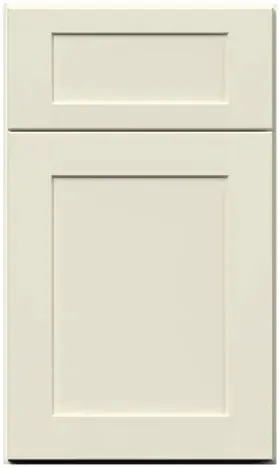



What the 42 Galaxy Linen side panel listings actually are, priced width by width
Reviewed September 2026 · Captivating Cabinets
You landed here for one of two reasons: a bathroom vanity end panel to cover an exposed side, or a vanity standing on legs like a dresser. Only the second is served by this page, and knowing that before anything goes in a cart is the most useful thing we can tell you. The Galaxy Linen side panel listings — 42 of them, GL VPF V24 through GL SPCF TP1821 — are platforms a vanity sits on, some with turned feet already fitted, not sheets that fix to the side of a box. Below: how we know, what each width costs, how tall the vanity ends up, and the one thing a beige plinth does that a white one never has to answer for.
Vanity side panel or vanity platform? What the codes say
Two things gave it away, and we checked both before writing a word. The photographs on the listings show a low, shaped base with a foot at each corner — a plinth, with the cabinet meant to stand on top. And Fabuwood's catalogue name for the same codes is "platform": VP is the Vera profile, SP the shaker profile, and the ending is the foot — TF taper, CF cove, or a bare F for a flat platform with none.
The store titles muddy this further: our listings render VPTF as "Side Panel Tall" and VPCF as "Side Panel Shaker", an automated reading of the letters rather than a description of the part. Trust the code, not the title.
A third clue for the sceptical: a genuine end panel is priced by height and depth, because that is the material in it, and the bath boxes here are all the same height and the same depth. These listings climb with cabinet width. A part that gets dearer as the vanity gets wider is a part that runs underneath the vanity.
What a platform costs for a 24-, 30-, 36-, 48- or 60-inch vanity
Six code families run the same seven sizes, and the price depends on only two things: the cabinet the platform is built for, and whether feet are fitted. Profile — Vera or shaker — costs nothing either way.
| Built for | Flat platform (VPF or SPF) | Footed platform (TF or CF) | The feet add |
|---|---|---|---|
| 24″ vanity — V24 | $217.75 | $386.75 | $169.00 |
| 30″ vanity — V30 | $234.00 | $406.25 | $172.25 |
| 36″ vanity — V36 | $253.50 | $422.50 | $169.00 |
| 42″ vanity — V42 | $269.75 | $442.00 | $172.25 |
| 48″ vanity — V48 | $289.25 | $455.00 | $165.75 |
| 60″ vanity — V60 | $321.75 | $490.75 | $169.00 |
| 18″ × 21″ bath tall — TP1821 | $409.50 | $578.50 | $169.00 |
Three things fall out of that table. Vera and shaker cost the same at every width, so the profile is a free choice. Taper and cove feet cost the same too. And the footed versions run $166 to $172 over the flat ones — within a couple of dollars of four loose GL TBF or GL CBF feet at $42.90 apiece, which tells you the footed codes are the flat platform with feet attached, not a different part.
TP1821 is the one to read twice: built for the 18″-wide, 21″-deep bath tall, it costs more than the 60″ vanity platform despite being far narrower. We have no manufacturer explanation for that and will not invent one.
A beige vanity on legs: the one piece of this finish that sits on the floor

Toe kick versus legs is usually argued on looks and mopping. In Fabuwood Linen there is a third term. On a standard vanity the bottom four inches are a recessed toe kick in shadow, and the finish there barely registers. Put the cabinet on a platform and that strip comes forward into the light, in most bathrooms within a foot of a white toilet or a white tub apron. This finish is a five-inch band of beige there, and beige beside porcelain reads as a colour — which is the point, as long as it is a point you chose.
That is not an argument against a cream or beige vanity with furniture legs; a warm plinth on travertine or a wood floor is exactly the furniture effect people buy a platform for. It is an argument about the floor. On warm-toned tile, limestone or wood, the platform reads as part of the room. On cool gray porcelain the same beige goes muddy at the one height you cannot light warmly, because the light down there is whatever the tile bounces back. If the floor is gray and already laid, keep the toe kick and spend the money elsewhere.
Test it the cheap way. A door sample in this finish is $25.00 — stand it on the floor against the tile with the bathroom lights on, not on the counter, and look at it from the doorway. The Linen collection page covers the wider undertone question; this is the one place it lands at ankle height.
If it is a finished end panel you came for
A cabinet side that faces open floor shows the box rather than a door face, and covering it is the right instinct. But the part that does that job is ordered against the cabinet's height and depth, not its width, and it is not one of the 42 listings here. Ask us to quote a finished end for the specific vanity you are buying; it is a quick question and a small line item beside the cabinet itself.
Two planning notes come with it either way. A finished end adds a little thickness, so the countertop overhang on that side is a conversation with the fabricator, not an assumption. And decide whether the finish stops at the toe kick or carries to the floor — swapping later means a new part. Our guide to end panels, scribe molding and fillers sorts out which of the three parts belongs where.
How the quote line should read
Because the store title and the real part disagree, write the order so it cannot be misread. A line item we would sign off on has four parts:
- GL SPTF V36 — shaker-profile platform with taper feet, for the 36″ vanity sink base GL VSB36-34.
- Finished deck height confirmed at ___″ (box + platform + top), checked against the mirror and faucet heights on the drawing.
- Floor noted: platform stands on [tile / wood], seen from the [doorway / tub side].
- Feet: included in the TF code — no separate GL TBF on the order.
Fill those in and most of the mistakes we see with this part are excluded. It is also the cheapest way we know to get a freestanding-vanity look out of stock cabinets: a $253.50 platform under a $490.75 sink base. Related parts: the loose bun feet, the decorative onlay that suits a vanity once it is up on a plinth, and the vanities page for the boxes these are built to carry. The full accessory set sits on the vanity accessories page.
Common questions
- Is a vanity side panel the same as a vanity end panel?
- Not on this page. The listing photographs and Fabuwood's catalogue naming both show a platform — a low plinth the vanity stands on, with or without feet. If you need a finished end panel for an exposed side, ask us to quote that part separately against your cabinet.
- What do VPF, SPF, VPTF and SPCF mean on a Fabuwood platform?
- The first two letters are the platform profile: VP is Vera, with more shaping, and SP is shaker, which is plainer. The ending is the foot: TF taper, CF cove, F no foot. Store titles that say "Tall" or "Shaker" are automated readings of those letters, not part descriptions.
- How much does a vanity platform with legs cost?
- $386.75 to $490.75 for the six vanity widths, against $217.75 to $321.75 flat. The $166 to $172 difference is almost exactly four loose bun feet at $42.90, so a footed code is the flat platform with feet fitted rather than a different product.
- What size platform do I need for a 36-inch vanity?
- The V36 codes — GL SPF or VPF V36 flat, SPTF, SPCF, VPTF or VPCF V36 footed. Match the trailing size to the vanity it goes under, and order the two together so this line changes if the width does.
- Will a beige vanity on legs look right on a gray tile floor?
- Usually not. On warm tile, stone or wood a Linen plinth reads as part of the room; on cool gray porcelain it goes muddy at floor level, where warm lighting cannot reach it. Stand a $25.00 door sample on the tile and look from the doorway before deciding.
- How tall is a vanity on a footed platform?
- The footed platforms are listed at 5″ overall. On a 34½″ vanity box that puts the deck near 41″ with a top, too tall for most bathrooms. Send us the pairing before ordering and we will confirm it against the spec book; a flat platform adds only about an inch.
Keep reading
The guides behind the numbers on this page.
- Cabinet End Panels, Scribe Molding and Fillers Explained
The part you actually want if the goal is a covered cabinet side.
- Fabuwood Cabinet Colors
Where Linen sits against Dove and Frost, from people who sell all three.
- How to Match Cabinets, Countertops, Backsplash and Flooring
The undertone test that decides whether a beige plinth suits your tile.
- Kitchen Cabinet Samples: How to Order and Evaluate
Judging a sample at floor level rather than on a counter.
- Fabuwood Bathroom Vanities: Sizes, Styles and Buying Guide
The vanity widths that decide which platform code you order.
- How to Read Cabinet SKU Codes
Why the trailing size code names the cabinet rather than the part.
- Fabuwood Linen vs Dove
If the floor argument above has you wavering, the off-white on the same door.


