

One cabinet on this page: the 18-inch, five-foot glass tower and the wall it suits
Reviewed September 2026 · Captivating Cabinets
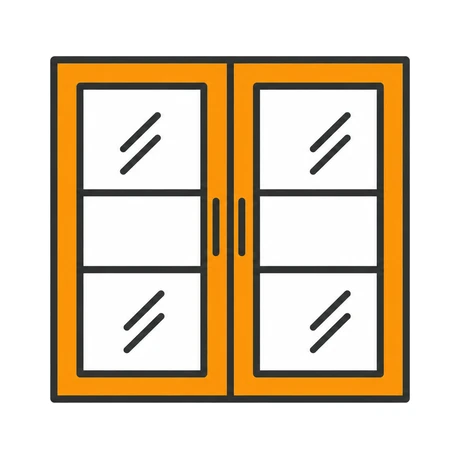
Most pages on this site are a family of cabinets in a ladder of sizes. This one is a single line item. GNK GDWD1860 is eighteen inches wide and sixty inches tall with two glass doors stacked one above the other, and it is the only double-door glass unit in this finish. That makes the article short on choices and long on consequences, because a box five feet tall and a foot and a half wide is not a wall cabinet with an extra door — it is a column, and dropping a column into a horizontal run changes the whole wall.
A vertical, not a width

Start with the number that decides everything. Sixty inches is eighteen taller than the tallest ordinary upper in this range, which is 42. Hung on the usual 54-inch line it would finish at 114 inches — nine and a half feet — so it is not hung on that line. This box starts lower, typically at counter height or just above it, and runs up to meet the top of the surrounding cabinets. It occupies the full vertical of the wall rather than the upper band of it, which is why the two doors exist: one door five feet tall would be unmanageable, so the opening is split into two.
The consequence is that this cabinet does not compete with the uppers beside it. It competes with the counter. A five-foot column landing on or near the worktop takes the run out at that point, which is a choice you make deliberately — at the end of a run, at a change of plane, or against a return wall where the counter was going to stop anyway.
It is worth saying plainly that we do not have the mounting height, the shelf count, the glass type or the mullion pattern published for this item, and we will not guess at them in print. The listing gives a width, a height and a price. Everything else is a question for the order, and the design service will draw it against your actual wall and ceiling before anybody commits.
What the horizontal break line does
Two stacked doors put a rail across the face of the cabinet somewhere around the middle. That line is not a defect and it is not neutral either — it is the strongest horizontal in the composition, and where it lands relative to the counter and to the tops of the neighbouring cabinets is what makes the column look designed or accidental.
Two arrangements work. The first aligns the break with the top of the counter-height elements nearby — the top of a backsplash, the underside of the flanking uppers — so the line reads as a continuation of something rather than an interruption. The second ignores alignment entirely and makes the column an object, standing clear at the end of a run with nothing to line up with. What does not work is a break line an inch or two off some other line in the room, which reads as a mistake even to people who cannot say why.
For the display, the split is a gift. You get two independent compositions rather than one tall one, which is far easier to keep looking deliberate: glassware in the lower half where it catches the counter light, and something larger and quieter above. The two halves do not have to relate. They only have to each be finished.
Four walls that take a column, and two that do not
Eighteen inches is a narrow footprint for five feet of height, which makes this box unusually placeable. The places it earns its keep:
- At the end of an upper run, where the cabinetry meets open wall or a dining space. The column terminates the run vertically instead of the run simply stopping, and it is the first thing the next room sees.
- Flanking a tall element — a pantry, a refrigerator surround, a chimney hood — where a full-height neighbour already sets the vertical and the glass column answers it at a smaller scale. The tall cabinet page shows what it would be standing beside.
- On a bar, coffee or drinks wall, where the contents are a matched set and the counter under it is not a work surface. This is the best use of the box and the one we draw most often.
- As a mirrored pair either side of a window or a range wall, which is the only case where two of these are better than one. Two columns at $188.50 each frame something; one column in the middle of a run just interrupts it.
And two walls to keep it off. Not on a working run, because sixty inches of cabinet landing near the counter takes out the prep zone at exactly the height your elbows need. And not beside the range: a tall pane close to a cooking surface is a cleaning job nobody signed up for, and the flanking uppers in the wall cabinet range do that job without the maintenance.
What $188.50 is doing next to the rest of the grid
The figure is the interesting part of this cabinet, so here it is against its neighbours in the same catalogue, all displayed prices at review.
| The box | Code | Size | Price |
|---|---|---|---|
| This page — two glass doors, full column | GNK GDWD1860 | 18″W × 60″H | $188.50 |
| The tallest single glass door unit | GNK GDW3642 | 36″W × 42″H | $321.75 |
| A narrow glass unit at run height | GNK GDW1842 | 18″W × 42″H | $162.50 |
| The solid single-door upper at the same width | GN W1842 | 18″W × 42″H | $354.25 |
| A wall cabinet with drawers at the same footprint | GN WD1860 | 18″W × 60″H | $926.25 |
| An open box with a finished interior, no doors | GN NDW1842 | 18″W × 42″H | $468.00 |
Two readings of that table. The first is that eighteen extra inches of height over the 42-inch glass unit costs $26.00, which is the cheapest vertical in the department by a distance. The second is the gap to the solid and drawered boxes at the same footprint, which is wide enough that we would rather you ask what the glass line covers than assume. That is the same question the whole department raises, and the honest answer is: get it written on the order. The glass doors type page has the full context.
A five-foot pane of grey with a light in it
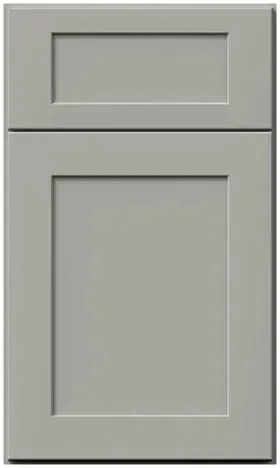
One thing about this box is specific to a mid-tone finish and worth a paragraph. A five-foot column of clear glass is the single largest opening you can cut into a painted run in this catalogue, and the interior behind it is a light wood veneer against a grey frame. On a white kitchen that contrast is mild. Here it is a genuine two-tone moment — warm wood inside a cool neutral, running the full height of the wall — and it is the reason this cabinet photographs better than its price suggests. It is also the reason it fails badly if nothing is done with it: a five-foot unlit opening is not a feature, it is a shaft.
So light it, and light both halves. A 48-inch interior strip, GNK LED CAB INT 48" STRIP at $221.00, plus the driver at $204.75, will do a column of this height; the tunable white strip at $286.00 is the one to take if you have not settled the bulb temperature in the rest of the room, because a mid-tone neutral stays crisp between 3000K and 4000K and goes slightly flat under very warm light. And order a spare shelf or two from the loose parts page so the two compositions can be set to what you own.
Then decide the contents before it ships, not after. Two bays, two arrangements, and a commitment to keeping both tidy for as long as you own the kitchen. If that sounds like a lot for one cabinet, it is — which is exactly why one column is usually better than three glass boxes scattered along a run. The whole finish, glass and solid, is on the Galaxy Nickel collection page, and a door sample at $25.00 is the way to see how the frame sits against your own light before any of this is ordered.
Common questions
- How many double door glass cabinets are in this finish?
- One. GNK GDWD1860, 18″ wide and 60″ tall, at $188.50 on our displayed figures at review. The wide glass uppers in this range are single-door boxes up to 36 inches wide; there is no family of wide two-door glass cabinets here.
- How is a 60-inch-tall wall cabinet hung?
- Not on the usual 54-inch upper line — that would finish it at 114 inches. A box this tall starts at or near counter height and runs up to meet the tops of the surrounding cabinets, occupying the full vertical of the wall rather than the upper band. The exact mounting height is a question for the drawing.
- Why does it have two doors instead of one?
- Because a single glass door five feet tall would be heavy, awkward on its hinges and prone to racking. Splitting the opening gives two manageable doors and, as a side effect, two independent display bays that are much easier to keep looking composed than one tall one.
- Where should a tall glass column go in a kitchen?
- At the end of an upper run where the cabinetry meets open wall, beside a tall element like a pantry or a chimney hood, or on a bar or coffee wall. Keep it off a working run — sixty inches of cabinet landing near the counter takes out the prep zone — and away from the range.
- Is one enough, or should there be a pair?
- One at the end of a run reads as a deliberate terminal. A mirrored pair either side of a window or a range wall frames something and is the only case where two beat one. A single column dropped into the middle of a run interrupts it rather than ending it.
- Does a glass column need interior lighting?
- On a mid-tone finish, effectively yes. Five feet of unlit clear glass is the largest dark opening you can cut into a painted run. A 48″ interior strip at $221.00 plus the $204.75 driver covers the height; the tunable white strip at $286.00 lets you settle the colour temperature in the room rather than on a spec sheet.
Keep reading
The guides behind the numbers on this page.
- Glass Cabinet Doors: Buying Guide
What to specify for a pane this large, and which glass suits a column.
- Wall and Tall Cabinets: Sizes and Buying Guide
Where 60 inches sits against every other height on the wall.
- Types of Kitchen Cabinets
Columns, towers and what counts as a wall cabinet.
- Gray Kitchen Cabinets: Finding the Right Shade
Wood veneer inside a cool neutral, and why it reads as a second tone.
- Kitchen Cabinet Samples: How to Order and Evaluate
Judging the frame against the interior before a five-foot pane commits you.
- How to Read Cabinet SKU Codes
GDWD1860 decoded: double door, wall, 18 wide, 60 high.
- 27 Kitchen Cabinet Ideas
Vertical elements used to end a run instead of letting it trail off.


