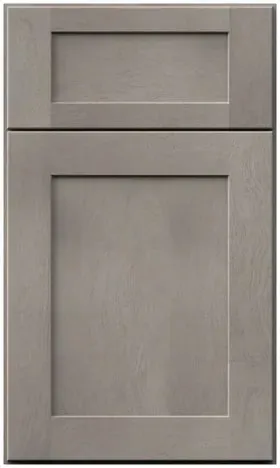


What gets past the carbon: the Galaxy Horizon replacement filter, and the stained cabinets around a ductless hood
Reviewed September 2026 · Captivating Cabinets
Prices quoted in this article were read off the grid on the review date; the live price grid on this page governs.
The listing on this page is filed as Galaxy Horizon Replacement Filter, SKU GHZ RHBB FLTR, at $71.50. It is the charcoal refill for the recirculating kit, not a grease filter, and a hood that vents outdoors never uses one. If yours recirculates, you will buy it again and again, and most pages about it stop at when to change it. This one follows the air a step further. A recirculating hood catches most of the grease and some of the smell, then blows the rest back into the kitchen, and in a stained kitchen the question worth asking is where that remainder lands and how to take it off the wood without harming the finish.
Who needs this part, in one paragraph
The charcoal filter belongs to the RHBB DCT kit, which converts a blower insert to recirculating use. Air passes through the insert’s own washable metal filter first, which catches grease, and then through the charcoal, which absorbs odour until it is saturated. Charcoal cannot be washed back to life, so it is replaced. If your hood is ducted to the outside, you do not need this part: the metal filters in the insert are the only filters you have, and they are washed, not bought. If you are not sure which you have, look above the hood. A duct heading through the ceiling or wall to an exterior cap means ducted; a grille that returns air into the room means recirculating. The internal blower page covers the inserts themselves.
What gets past the filters, and where it settles
Our CFM guide’s comparison of the two systems is precise about this. A ducted hood filters grease and exhausts it; a recirculating hood filters it and some passes through. A ducted hood removes odour; a recirculating one reduces it while the charcoal is fresh. Heat and steam are removed by one and returned to the room by the other. So a ductless kitchen is always going to have a little more airborne oil and moisture in it than a vented one, and it goes where the grille and the room’s air currents take it.
In practice, the film collects in predictable places: the hood’s own outer faces and lower edge, the doors of the wall cabinets either side, the underside of those cabinets, the top of any tall cabinet near the range, and the crown molding. Our cabinet care guide describes what happens next. Airborne oil settles on doors, mixes with dust, and slowly turns into a gummy film that plain wiping only smears around. On a painted finish that film shows as dullness. On a stain like this one, it also sits in the texture of the grain, which is why the direction you wipe matters.
Cleaning grease off stained cabinets without damaging the finish
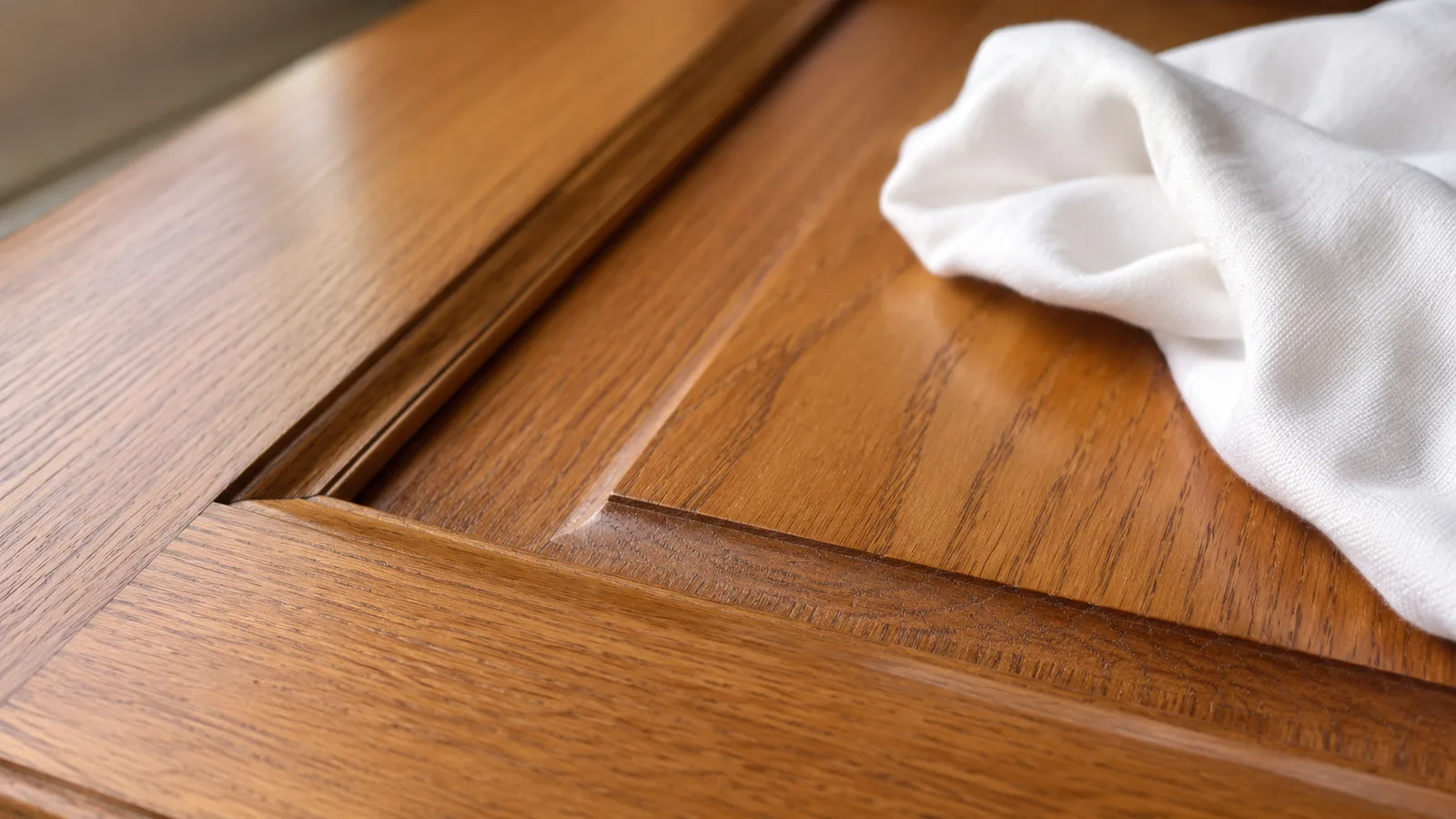
A stained cabinet is not raw wood. The colour sits in the wood, under a clear protective coat, and it is that coat you are cleaning. The routine is the one our care guide gives for every finish we sell, with two stain-specific details.
- A few drops of mild dish soap in warm water, on a soft microfiber cloth wrung out until it is damp, never dripping.
- Wipe with the grain, top to bottom. On a stain, wiping across the grain leaves streaks and fine marks; along it, any marks disappear into the wood’s own pattern.
- For fresh grease, use hot rather than warm soapy water and two passes, with a rinse between.
- Rinse with a clean damp cloth and dry immediately. Never leave water standing on joints, edges or the bottom rail of a door.
- Only if soap fails, a cabinet-safe degreaser labelled for wood cabinet finishes, tested first on the inside of a door, with the dwell time followed exactly and a rinse afterwards.
The second stain-specific detail is what to leave out. Our care guide advises against oil soaps and spray waxes as a routine on stained wood, because they build a soft film that attracts more grease and complicates any future touch-up. That matters more on this finish than on a paint: Fabuwood does not make spray cans for stained finishes, and the Touch Up Kit (stick, marker, scraper) works best on a clean surface without wax on it.
The cleaners that can change the colour
Fabuwood’s warranty lists colour change from certain household cleaners among the things it does not treat as defects, alongside UV light, smoke and sunlight. Its own care guidance says to blot rather than wipe when something wet lands on the finish, to use mild cleaners only, and never to spray cleaner directly on the wood. Our care guide’s list of things to keep away from cabinet finishes includes ammonia, vinegar concentrates, abrasive sponges and soaked cloths.
Two habits follow for a ductless kitchen. Spray any cleaner onto the cloth, never onto the cabinet, so nothing runs down the stile or pools in the panel groove. And keep the strong kitchen cleaners — oven cleaner, degreasing sprays meant for the stovetop, anything with ammonia — for the surfaces they are made for. The most common way a stained door near a range gets marked is not grease; it is overspray from cleaning the cooktop.
Pair the refill with a cleaning day
The replacement interval for the charcoal is set by the kit’s instructions and by how much and how you cook, so we do not publish a single number. What we suggest is that whatever interval you settle on, the day you change the charcoal is also the day you give the range wall a proper clean. It is the day you are already up at the hood, and the moment the smell came back is usually also the moment grease has been building on the doors nearby.
- Take out and wash the insert’s metal grease filters, following its manual. A clogged metal filter pushes grease on to the charcoal and shortens its life.
- Fit the new GHZ RHBB FLTR and note the date somewhere you will see it, such as inside the cabinet door nearest the range.
- Wash the hood’s outer faces and lower edge, the doors and undersides of the wall cabinets either side, and the crown above them, using the routine above.
- Dry everything, then run the hood on a low setting for a few minutes with the new filter in.
Done that way, the refill schedule becomes the kitchen’s deep-clean schedule, and the grey-taupe around the range stays the colour it was delivered. Between those days, a weekly wipe of the doors nearest the range, as the care guide recommends for high-touch zones, keeps the film from building up to the gummy stage.
The surfaces nobody looks at until they are sticky
The weekly wipe covers the doors. What it misses are the flat surfaces above eye level, where grease from a ductless hood settles undisturbed: the top of the hood itself, the tops of the wall cabinets if they stop short of the ceiling, the upper edge of the crown molding, and the tops of any tall cabinets near the range. Nobody sees them, so nobody cleans them, and by the time someone climbs up with a cloth the film has had a year or two to turn gummy.
Our care guide suggests a deeper pass once or twice a year that covers interiors, hardware and edges; in a ductless kitchen, add these top surfaces to it, using the same soap-and-water routine and a step stool rather than a long-handled mop that pushes water into joints. If the kitchen is still being designed, running the wall cabinets and crown to the ceiling removes most of those ledges altogether, which is one small reason to consider it when the hood will recirculate. Our molding guide covers how crown closes that gap.
Making less grease in the first place
The filter can only catch what reaches it. Three habits reduce what gets past it: switch the hood on before cooking rather than when smoke appears, so it captures the first plume; use lids, which keep most of the grease and steam in the pan; and leave the hood running for a few minutes after the burners go off. A hood that overhangs the cooktop captures more of the plume than one the same width, which is why the plain wall-mount hood page recommends sizing up. And if the recirculating setup is still at the planning stage, the duct cover page explains why induction is its best partner.
Common questions
- Does a ducted range hood need a charcoal filter?
- No. The charcoal filter, GHZ RHBB FLTR, is only for hoods fitted with the RHBB DCT recirculating kit. A ducted hood uses the insert’s washable metal grease filters and nothing else.
- Why are my cabinets sticky near the range hood?
- Airborne cooking oil settles on the doors, mixes with dust and turns into a gummy film. A recirculating hood lets some grease pass through, so ductless kitchens see more of it. Hot soapy water, two passes, wiped with the grain, then dried, removes most of it.
- How do you clean grease off stained kitchen cabinets?
- Mild dish soap in hot water on a wrung-out microfiber cloth, wiped with the grain, rinsed and dried. Only if that fails, a degreaser labelled for wood cabinets, tested inside a door first. Avoid oil soaps and spray waxes.
- What cleaners damage stained cabinets?
- Ammonia, vinegar concentrates, abrasive sponges and harsh stovetop sprays. Fabuwood’s warranty does not cover colour change from certain household cleaners, so spray the cloth, never the cabinet.
- How much is the charcoal filter?
- GHZ RHBB FLTR is $71.50. How often it is replaced depends on the kit’s instructions and how much you cook.
Keep reading
The guides behind the numbers on this page.
- How to Clean and Care for Your Kitchen Cabinets
The full grease routine, by finish, and the mistakes that do lasting damage.
- Range Hood CFM: How Much Ventilation Your Kitchen Needs
What ducted and recirculating hoods each remove, side by side.
- Brown Kitchen Cabinets: Stains, Shades & Pairings
How stained finishes wear, and what keeps them looking new.
- Gray Kitchen Cabinets: Finding the Right Shade
Why this grey is a stain rather than a paint, and what that changes.


