

Decide once: choosing a Galaxy Horizon hood blower you will not want to replace, and running it for the wood’s sake
Reviewed September 2026 · Captivating Cabinets
Prices quoted in this article were read off the grid on the review date; the live price grid on this page governs.
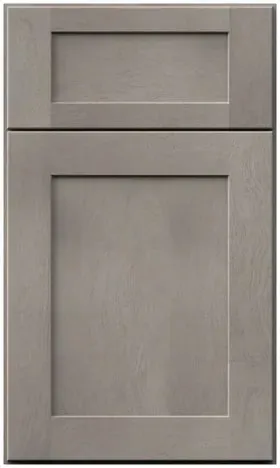
The three internal blowers filed under Galaxy Horizon are Broan-NuTone power-pack inserts, rated 250, 400 and 600 CFM, that fit inside the stainless liner of the wood shells on the hood list. They have no finish and nothing about them is specific to this stain. What is specific is the thing they protect: a stained wood hood and the cabinets around it, which Fabuwood’s own warranty says can change colour from smoke. This page asks two questions the spec table does not answer. If you buy one now, can you change your mind later, and what quietly locks the choice in? And once it is in, how do you run it so the wood around it stays as it arrived?
The three inserts in one line each
The full comparison lives in our range-hood CFM guide. For this page, the short version is enough.
| Insert | SKU | Rated / listed max | Normal-speed noise | Price |
|---|---|---|---|---|
| 250 CFM | GHZ RHBB 250 CFM | 250 / 300 | 3 sones | $419.25 |
| 400 CFM | GHZ RHBB 400 CFM | 400 / 450 | 1 sone | $903.50 |
| 600 CFM | GHZ RHBB 600 CFM | 600 / 650 | 0.5 sone | $1,787.50 |
All three fit every Allure wood hood, with one exception: the 250 is not offered for the 48″ plain box, GHZ RHA483021. Each carries Broan-NuTone’s one-year limited warranty. Maximum-speed noise ratings are not published, so we do not quote them.
Can you start small and upgrade the blower later?
In principle, yes. The insert is a separate part that mounts in the hood’s liner, and every shell in this finish accepts all three sizes, apart from the one exception above. Swapping a 250 for a 400 in three years’ time does not mean replacing the stained shell, which is the expensive, finish-matched part.
In practice, three things decided on the day of the first installation make a later upgrade either simple or a small renovation. None of them is the blower itself.
The duct size
Broan-NuTone’s inserts accept a 6″ round, 8″ round or 3¼″ × 10″ rectangular connection, and only the 600 takes the 8″. The CFM guide’s duct table shows why that matters: at 600 CFM, air in a 6″ duct moves about 1.8 times as fast as in an 8″, so a 600 on a 6″ run is louder and delivers less than it should. If a 600 is even a possibility later, the duct run through the ceiling or wall is the part to get right now, because it disappears behind drywall and tile. Our advice is to size the run for the largest blower you might ever want and have your installer confirm how a smaller insert connects to it today; the CFM guide’s fittings table includes a 6″-to-8″ transition for that reason.
The 400 CFM line
Under the current model code, a house with an atmospherically vented gas, oil or wood appliance inside its air barrier needs makeup air for any kitchen exhaust capable of more than 400 CFM. The 400 insert is rated 400 but lists 450 as its maximum, and inspectors read “capable of” differently from town to town. Stepping up to the 600 later, in a house like that, can bring a makeup-air requirement with it. Ask your building department which side of the line each insert falls on before you decide whether an upgrade is realistic.
The circuit and the Code Ready setting
The electrical feed is run at rough-in, and our listings do not publish each insert’s electrical requirements; take them from the insert’s specification sheet to your electrician and wire for the largest one you might fit. And if a 600 goes in with its Code Ready cap set to 400 or 300 CFM to avoid makeup air, that setting is made in the first five minutes after power-up and cannot be reversed, so that particular unit cannot be “upgraded” back to 600 later.
Every shell in this finish, with each blower, in one table
Because the blower is priced separately, a hood’s real cost is the shell plus the insert. This is the whole list in this finish, before ductwork, the exterior cap, electrical work and installation. The accent versions (Timber on the chimney and designer; Timber or Walnut on the slim and curved glass) cost the same as the plain shells shown.
| Shell | SKU | Shell only | With 250 CFM | With 400 CFM | With 600 CFM |
|---|---|---|---|---|---|
| Plain wall-mount 36″ | GHZ RHA363021 | $2,418.00 | $2,837.25 | $3,321.50 | $4,205.50 |
| Plain wall-mount 42″ | GHZ RHA423021 | $2,502.50 | $2,921.75 | $3,406.00 | $4,290.00 |
| Plain wall-mount 48″ | GHZ RHA483021 | $2,596.75 | Not offered | $3,500.25 | $4,384.25 |
| Chimney 30″ | GHZ RHE30 | $2,609.75 | $3,029.00 | $3,513.25 | $4,397.25 |
| Chimney 36″ | GHZ RHE36 | $2,788.50 | $3,207.75 | $3,692.00 | $4,576.00 |
| Chimney 42″ | GHZ RHE42 | $2,941.25 | $3,360.50 | $3,844.75 | $4,728.75 |
| Slim 30″ | GHZ RHS30 | $2,785.25 | $3,204.50 | $3,688.75 | $4,572.75 |
| Slim 36″ | GHZ RHS36 | $2,944.50 | $3,363.75 | $3,848.00 | $4,732.00 |
| Slim 42″ | GHZ RHS42 | $3,159.00 | $3,578.25 | $4,062.50 | $4,946.50 |
| Curved glass 36″ | GHZ RHCA36 | $3,532.75 | $3,952.00 | $4,436.25 | $5,320.25 |
| Curved glass 42″ | GHZ RHCA42 | $3,789.50 | $4,208.75 | $4,693.00 | $5,577.00 |
| Curved glass 48″ | GHZ RHCA48 | $4,062.50 | $4,481.75 | $4,966.00 | $5,850.00 |
| Designer 30″ | GHZ RHF30 | $3,812.25 | $4,231.50 | $4,715.75 | $5,599.75 |
| Designer 36″ | GHZ RHF36 | $4,043.00 | $4,462.25 | $4,946.50 | $5,830.50 |
| Designer 42″ | GHZ RHF42 | $4,277.00 | $4,696.25 | $5,180.50 | $6,064.50 |
Two patterns stand out. The gap between the 250 and the 400 is $484.25 on every shell, and between the 400 and the 600 it is $884.00, so the blower decision moves the total more than the choice between most neighbouring widths does. And at 36″, the plain box and the designer shell are $1,625.00 apart before any blower goes in; the shape, not the blower, is what separates the top of this list from the bottom.
Why the blower matters to a stained hood

The stainless liner inside every shell keeps heat and grease off the wood on the inside of the canopy. It does nothing for the outside: the front face, the lower edge, the sides, and the doors on the cabinets either side, all of which sit in the path of whatever the blower does not catch. Fabuwood’s warranty lists colour change from exposure to smoke, as well as to UV and sunlight, among the things it does not treat as defects. On a stain, where the colour is partly the wood beneath a clear coat, that is worth taking seriously.
The protection is simply a blower that gets switched on. Our cabinet care guide puts it plainly: grease that gets exhausted never lands on a door. That turns the published noise figures into a finish-care number. A blower that is loud enough to be annoying at the setting you need is a blower that gets left off, and a hood left off is a stained face collecting smoke and grease.
How to run it so the wood around it stays as delivered
These are our habits for any wood hood, not a Broan-NuTone instruction; the insert’s own manual governs its controls.
- Switch it on before the pan goes on the heat, not when the smoke appears. A running blower sets up an upward draft that captures the first plume instead of chasing it.
- Use the lowest speed that clears the cooktop, and step up for searing, frying and anything in a wok. A bigger blower on a middle setting is usually quieter than a smaller one at full speed.
- Leave it running for a few minutes after the burners are off. Steam and odour keep rising from hot pans, and that last stretch is when condensation settles on the cabinet faces closest to the range.
- Wash the insert’s own metal filters regularly. A clogged filter moves less air, which means more of the plume reaches the wood.
- Wipe the hood’s outer faces as part of the weekly routine: warm water with a little dish soap, a wrung-out soft cloth, with the grain, then dry. Anything stronger, and the order to escalate, is in the care guide.
Our default, and when we would move off it
For most kitchens in this finish we draw the 400: quiet enough at normal speed to be left on, and sitting at the rating most homes can install without makeup air, subject to how your inspector reads its listed maximum. We move down to the 250 for a small electric or induction kitchen on a short, simple duct, where it is the right size and the saving is real. We move up to the 600 for a 36″ or 48″ gas range with high-output burners, on an 8″ duct, with the makeup-air question answered in advance.
Whichever it is, choose it as if it were permanent, even though it technically is not. The shell is the finish-matched part you will keep for the life of the kitchen; the duct and wiring behind it are the parts you will not want to open again. If a ductless setup is the only option, the recirculating kit page covers what changes.
Common questions
- Is the blower included with a wood range hood?
- No. Every shell in this finish is sold without one. The inserts are separate: 250 CFM at $419.25, 400 at $903.50 and 600 at $1,787.50.
- Can I upgrade my range hood blower later?
- Usually, because the insert mounts in the liner and every shell takes all three sizes except the 250 on the 48″ plain box. What makes an upgrade hard is the duct size, the wiring and the makeup-air rule, so plan those for the largest blower you might want.
- Which blower fits my wood range hood?
- All three inserts fit every Allure wood shell, except that the 250 CFM is not offered for the 48″ plain wall-mount hood, GHZ RHA483021.
- Can cooking smoke damage wood cabinets?
- It can change their colour over time, and Fabuwood’s warranty does not treat colour change from smoke as a defect. Running the hood every time you cook, and for a few minutes after, is the best protection.
- How long should I run the range hood after cooking?
- A few minutes, until the pans stop steaming. That is when condensation settles on the cabinet faces nearest the range.
- What does a wood range hood cost with a blower?
- In this finish, from $2,837.25 (36″ plain box with the 250) to $6,064.50 (42″ designer with the 600), before ductwork, electrical work and installation.
Keep reading
The guides behind the numbers on this page.
- Range Hood CFM: How Much Ventilation Your Kitchen Needs
The full insert comparison, duct table and makeup-air rule.
- How to Clean and Care for Your Kitchen Cabinets
The grease routine for the wood that surrounds the blower.
- Kitchen Layouts Explained From Single-Wall to G-Shaped
Where the range sits decides how long, and how costly, the duct is.
- Important Kitchen Dimensions to Know Before Buying Cabinets
The clearances that set how high the hood hangs above the burners.


