

Before you buy the Galaxy Horizon “duct cover”: it is a recirculating kit, and the cooktop decides whether it is right
Reviewed September 2026 · Captivating Cabinets
Prices quoted in this article were read off the grid on the review date; the live price grid on this page governs.
The listing on this page is filed as Galaxy Horizon Duct Cover, SKU GHZ RHBB DCT, at $263.25. Despite the name, it is not a painted or stained sleeve for hiding a pipe. It is Fabuwood’s recirculating kit, which lets a blower insert in any shell on the hood list clean the air and return it to the kitchen instead of sending it outdoors. Other pages explain what is in the box. This one is about the decisions that should come before it goes in the basket, in the order they matter: which cooktop it will sit over, what your inspector will accept, and whether ductless is the permanent answer or a stage on the way to a duct.
What the kit is, in two sentences
RHBB DCT converts a Broan-NuTone insert to recirculating use with a charcoal filter, a soffit grille, a 90° stack boot, a length of 7″ round duct and a 6-to-7″ transition, according to the parts list in our range-hood CFM guide. The air goes through the insert’s own grease filter, then the charcoal, and is blown back into the room through the grille; the charcoal refill is sold separately as the replacement filter.
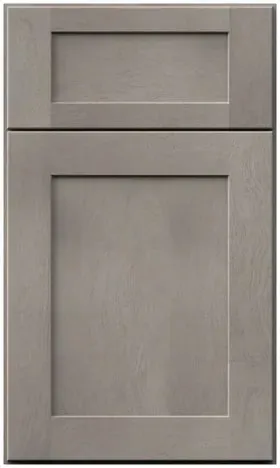
It is finish-free, and the only reason it carries this stain’s name is that it is filed in this collection. What it does change is how a stained kitchen lives day to day, which is where this page ends up.
First question: what is it going to sit over?
A ducted hood removes smoke, grease, odour, heat, moisture and the combustion gases a gas burner makes. A recirculating hood filters grease and, while the charcoal is fresh, reduces odour. It returns the heat and the moisture to the room, and it does nothing about combustion gases. Our CFM guide puts it directly: recirculating is a poor answer over a gas range, because it does nothing about the nitrogen dioxide and carbon monoxide that burners produce. Fabuwood’s own sheet recommends venting all of its hoods outside.
That makes the cooktop the first decision, not the kit. If ducting is truly impossible and the range has not been bought yet, an electric or induction cooktop is the sensible partner for a ductless hood. Induction in particular heats the pan rather than the air around it, so there is less waste heat for a recirculating system to hand back to the room. If a gas range is already fixed — in a rental, or on an existing gas line you cannot move — the honest advice is to keep pursuing a duct route with a contractor before settling for recirculation, and if you do settle, to add another source of fresh air to the room.
| Cooktop | Fit with the kit | What to add |
|---|---|---|
| Induction | Best of the three | Nothing special; run the hood for every pot |
| Radiant electric | Good | Run it longer after cooking; the room gets the heat |
| Gas | Poor | A duct if any route exists; otherwise fresh air and a CO alarm |
Second question: will the inspector count it?
Building codes set a minimum for kitchen exhaust, and they generally mean air moved to the outside. The CFM guide notes that codes do not usually count a recirculating hood as the kitchen’s required exhaust, so a ductless setup may need an exhaust fan somewhere else in the room to satisfy the inspector, typically a ceiling or wall fan ducted out by a shorter route than a hood would need.
Ask this before the kit is ordered, not at final inspection. If your building department will want a separate exhaust fan, you are running a small duct anyway, and it is worth asking whether that route could serve the hood instead. The answer is often no — the fan can sit in a spot the range cannot — but it is the one moment in the project when it is cheap to find out. On the plus side, a recirculating hood moves no air out of the house, so it never triggers the makeup-air requirement that applies to exhaust systems capable of more than 400 CFM.
Third question: is ductless permanent, or a stage?

Plenty of ductless kitchens are ductless for a reason that can change: a condo board that may approve an exterior penetration later, a landlord who might agree at renewal, a bigger renovation planned in a few years that will open the ceiling. If that describes yours, you can install the kit now and convert later, because the shell and the insert stay the same. The work is in not closing off the future.
- Keep the space above the hood clear. Whatever sits between the top of the shell and the ceiling — the kit’s duct and stack boot, a cabinet, or a stained panel — is where a future duct would run. Do not fill it with something permanent you would have to cut into.
- Choose the blower for the ducted future. The 250 is adequate for recirculating over a small electric cooktop; if you expect to vent it later, size the insert for the vented kitchen you will have. The internal blower page covers what locks that choice in.
- Keep the kit’s parts when you convert. They are specific to the insert, and if you ever move and the next kitchen cannot be ducted, they are the part you would need again.
Where the grille goes, and why it matters on a stain
The kit includes a soffit grille, which is where the cleaned air comes back into the room. Our listings do not publish its size, colour or exact position, so settle three things with your installer before the hood goes up. Where will the grille sit: in the ceiling, in a soffit, or in a panel above the hood? What is it being cut into? And will it be seen from where you normally stand?
On a painted finish, an opening cut into a finished panel can be tidied with matching paint. On this stain it cannot: Fabuwood does not make spray cans for stained finishes, and the Touch Up Kit (stick, marker, scraper) is for small marks, not for finishing a freshly cut edge across a panel. If the grille is going into a stained part, have the opening planned on the drawing so the cut edge is hidden by the grille’s own flange, and order that panel with the rest of the kitchen so it matches. The chimney hood page covers the rest of what installation looks like on a stained finish.
Living with it: the moisture that stays in the room
Because a recirculating hood hands the steam back, a ductless kitchen is a damper kitchen while the cooking is going on. Our cabinet care guide names steam as one of the everyday things that shortens a cabinet finish’s life, and it recommends keeping kettles and other steam sources out from under wall cabinets. With a ductless hood, lids on pots, a window cracked while boiling and a quick dry wipe of the doors nearest the range after heavy cooking do more than any setting on the blower. The replacement filter page covers the grease side of the same problem.
What to send a condo board or landlord
Many ductless kitchens are in buildings where someone else has to approve the work. A recirculating setup is usually the easier approval, because it makes no penetration through an exterior wall or roof and moves no air out of the building. It still helps to send the right information at the start, so the approval covers what is actually being installed.
- The shell, by listing and width, and a note that it is a wood cabinet with a stainless liner, not an appliance.
- The blower insert and its published normal-speed noise rating: 3 sones for the 250, 1 for the 400, 0.5 for the 600. Neighbours through a shared wall care about this.
- The recirculating kit, with a line making clear that nothing is vented outside, and where the grille will sit.
- Who will wire the insert. Broan-NuTone’s instructions call for a qualified installer and wiring to code, and buildings with their own rules on electrical work will want to know.
If the board is open to an exterior vent later, ask now what it would need to see. That is the conversation that turns this kit from permanent into a stage.
What a complete ductless hood costs in this finish
The kit is the cheapest part of the setup. Below are three common ductless combinations, before installation and before refills.
| Setup | Shell | Blower | Kit | Total |
|---|---|---|---|---|
| 30″ slim over a small induction cooktop | $2,785.25 | $419.25 (250) | $263.25 | $3,467.75 |
| 30″ chimney over a radiant electric range | $2,609.75 | $903.50 (400) | $263.25 | $3,776.50 |
| 36″ plain box over a 30″ range | $2,418.00 | $903.50 (400) | $263.25 | $3,584.75 |
The charcoal refill, GHZ RHBB FLTR, is $71.50 each time it is replaced. For help with the whole plan, call 609-900-3358 or send the room to the free 3D design service: a designer replies within one business day, and the full design and quote follow in 24–48 hours, priced from the collection.
Common questions
- Is the Duct Cover a trim piece that hides the duct?
- No. GHZ RHBB DCT is a recirculating kit: charcoal filter, soffit grille, 90° stack boot, 7″ round duct and a 6-to-7″ transition. It lets the insert return cleaned air to the room instead of venting outdoors.
- Is a ductless range hood safe over a gas stove?
- It is a poor match. A recirculating hood does not remove the nitrogen dioxide and carbon monoxide that gas burners produce. If ducting is impossible, an induction or electric cooktop is the better partner.
- Does a recirculating range hood meet code?
- Codes generally do not count it as the kitchen’s required exhaust, so you may need a separate exhaust fan vented outdoors. Ask your building department before ordering.
- Can I convert a ductless range hood to ducted later?
- Yes, if you plan for it: the shell and insert stay the same. Keep the space above the hood clear for a future duct, and choose a blower large enough for a vented setup.
- How much does a recirculating wood range hood cost?
- In this finish, from about $3,467.75 for a 30″ slim shell with the 250 CFM insert and the kit, before installation. Each charcoal refill is $71.50.
- Does a recirculating hood need makeup air?
- No. It moves no air out of the house, so it does not trigger the makeup-air rule for exhaust systems capable of more than 400 CFM.
Keep reading
The guides behind the numbers on this page.
- Range Hood CFM: How Much Ventilation Your Kitchen Needs
Ducted vs recirculating, the kit’s contents and the code notes.
- How to Clean and Care for Your Kitchen Cabinets
Steam and grease routines for a kitchen whose hood does not vent.
- Kitchen Layouts Explained From Single-Wall to G-Shaped
Whether moving the range to an outside wall makes a duct possible.
- Important Kitchen Dimensions to Know Before Buying Cabinets
The space above the hood that a future duct would need.


