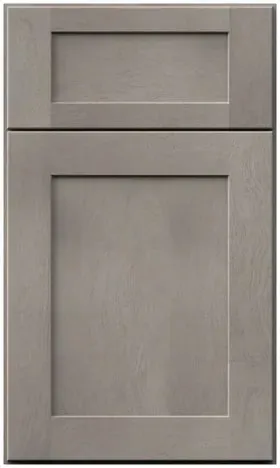


Wet things behind a wood front: what belongs in Galaxy Horizon tilt-out trays, and fitting one later
Reviewed September 2026 · Captivating Cabinets
Prices quoted in this article were read off the grid on the review date; the live price grid on this page governs.
A tilt-out tray is the smallest accessory on the list and the one that lives closest to water. The Galaxy Horizon tilt-out trays turn the fixed strip below the sink into a hinged front with a shallow pocket behind it, at one price in three lengths. It is a good part, and most of the complaints about it come from one habit: putting wet things into a closed wooden pocket and shutting it. This page is about that pocket, what to keep in it and what to keep out, the drying routine that makes it last, and how to fit one to a sink base that is already installed without marking the stained front.
One price, three lengths, and what the tray actually is
The list is three codes at the same price: GHZ TILTOUT 11" at $162.50, GHZ TILTOUT 14" at $162.50 and GHZ TILTOUT 24" at $162.50. The length is chosen by the width of the panel it goes behind, not by the width of the cabinet, and the sink bases in this finish run from GH SB21 at $386.75 to GH SB42 at $572.00. Ask us to match the length to your sink base code rather than measuring the panel yourself.
What the listing does not publish is the depth of the pocket, what the tray is made of, or what hinges and stop come with it. It is shallow by nature, because it sits in the narrow space between the false front and the front wall of the sink. That shallowness is the reason for everything else on this page.
What belongs in a tilt-out tray, and what does not
The tray is a small, closed pocket directly under the running tap. Anything that goes into it wet stays wet, because there is no air moving through a closed front. So the rule is simple: dry things in, wet things out.
- Good: a spare sponge still in its wrapper, a dish brush with a dry head, a scraper, rubber gloves once they have dried, a small tray for rings and a watch while you wash up, a pot scourer that has dried overnight.
- Bad: the sponge you just used, a wet dishcloth, anything still dripping, open bottles of washing-up liquid that can leak, and cleaning sprays with loose triggers.
A wet sponge shut into a pocket is the most common cause of a tilt-out that smells. It is also the most common way water gets onto the inside of the front, because the sponge drips onto the tray and the tray sits against the back of the panel. On a stain that is the wrong place for water to sit: Fabuwood’s care guidance is to blot moisture rather than leave it or wipe it around, and a closed pocket does neither.
If you want the used sponge close at hand, keep a small caddy on the sink ledge for the day, and let the tray hold the spares. That one change is most of the difference between a tray that lasts and one that is thrown out.
The drying habit that keeps the front sound
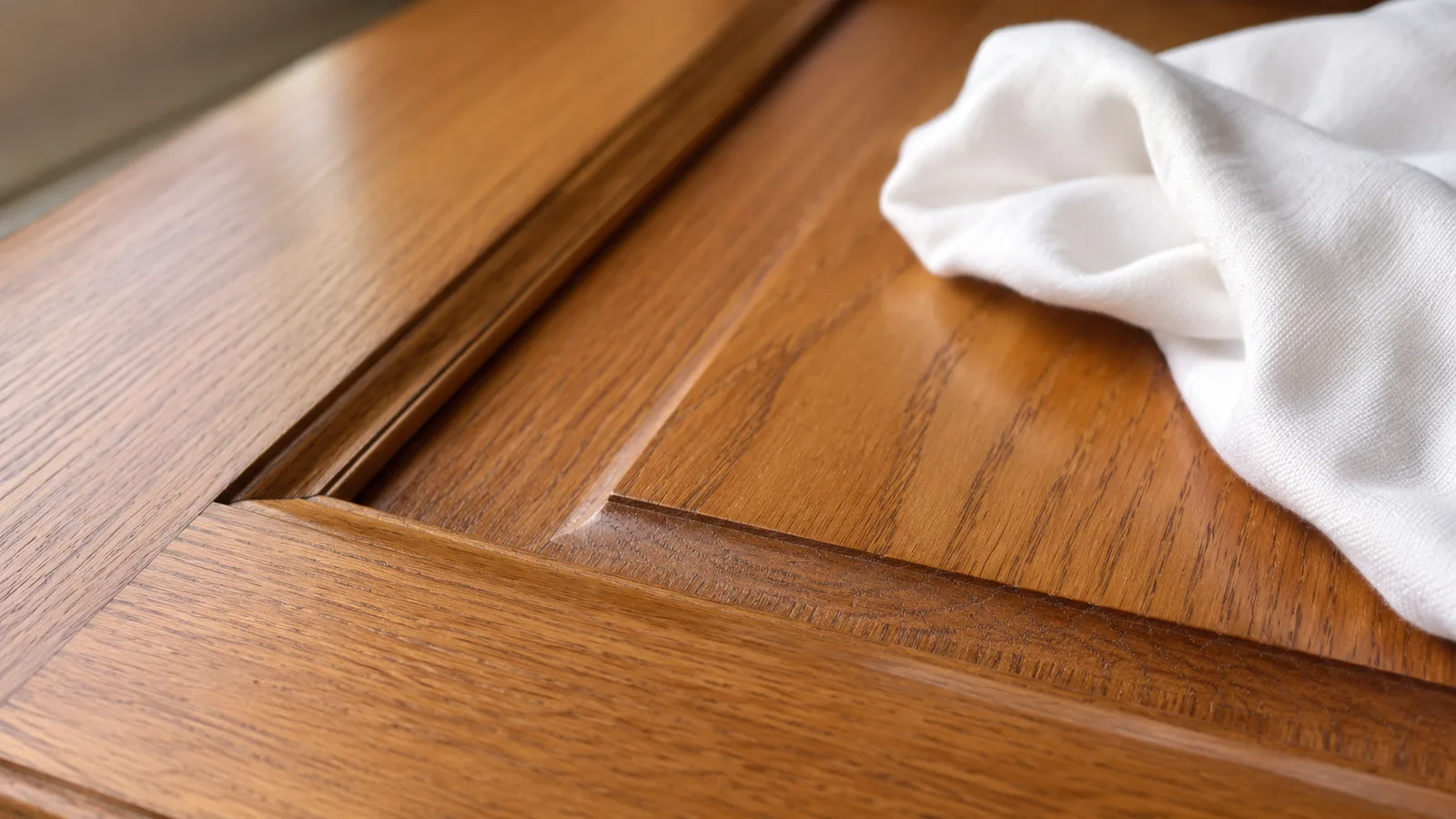
Water finds the sink front in three ways: splashes from the tap, drips running off the worktop edge, and anything wet put in the tray. The first two are the same for every sink base; the third is the one the tray adds.
Once a day, after the last wash-up, tip the tray open and look. If there is water in it, empty it and leave the front tipped open for an hour. Once a week, lift out whatever is in the tray and wipe the pocket with a dry cloth. And whenever you see drips on the face of the front, blot them with a dry cloth rather than wiping, which is what Fabuwood asks for on its finishes and what stops water being pushed into the edge of the panel.
The top edge of the front deserves a special look. It sits directly below the worktop edge, and water running off the worktop lands on it. If that edge starts to look dull or rough, it is taking water; dry it after every wash-up for a week and see whether the worktop edge needs a drip line of its own.
The sink decides whether a tray fits
Before ordering one, check the one thing the tray needs: room between the back of the false front and the front wall of the sink bowl. The tray tips out on hinges at the bottom, and its pocket has to swing through that gap. A sink with a deep front wall, or one set far forward in the worktop, may leave too little room.
Checking is easy. Open the sink base doors, look up behind the false front and measure from the back of the panel to the nearest point of the sink bowl or its mounting clips. Send us that number with your sink base code and the sink you have or plan to fit, and we will tell you whether a tray will swing.
Some sinks settle the question outright. An apron-front sink replaces the false front with the sink itself, so there is no panel to convert; a farm sink base does not take a tray. A sink base whose false front is part of a single wide drawer-style face is worth asking about too.
Fitting a tray to a sink base that is already installed
This is a common retrofit, and it is one of the few accessory jobs where a stained front is at risk, because the panel comes off and goes back on. Take it slowly.
- Order the tray against your sink base code, and ask for the fitting instructions with it. How the false front is fixed and how the hinges attach are not on the listing.
- Empty the sink base and lay a towel on the floor of the cabinet and on the floor in front of it.
- Remove the false front according to the instructions. Put it face down on a soft cloth, never on a bare worktop, so the stained face is not scratched.
- Where new holes are needed, mark them, put low-tack painter’s tape over the spot, and drill through the tape. It stops a drill bit skating and splintering the edge.
- Refit the front on its new hinges and check it closes flush with the doors below and the drawers on either side, and that the tray clears the sink when it tips.
If a stained edge does get marked, do not reach for paint. Fabuwood makes no spray cans for stained finishes; the Touch Up Kit at $62.40 is a stick, a marker and a scraper, and a small nick on a stain blends back into the grain.
The part that sits under the tray
The tilt-out deals with the front of the sink base. The floor of the cabinet is the other wet place, and the store sells a GHZ UNDER SINK MAT at $156.00 for it. The mat is filed on the wider accessory list rather than with the three trays on the tilt-out list, so look for it there. The box of every cabinet in this line is ½″ veneered plywood, which copes with an occasional spill much better than particleboard, as the plywood guide explains. It still should not sit in water. A mat on the floor and a tray kept dry at the front make the sink base the least troublesome cabinet in the kitchen rather than the most.
A once-a-year look at the sink front
The sink base is the cabinet where small problems grow quietly, because nobody looks at it closely. Once a year, ideally on a bright day, give it five minutes.
- Tip the tray open and look at the back of the front panel and the bottom of the pocket. Any dark marks, softness or a musty smell mean water has been sitting there. Dry it, leave it open for a day, and change what goes in the tray.
- Look along the top edge of the front and the lower rails of the doors below in a low, raking light. A dull or rough patch is a place water has been getting to. Dry it after each wash-up for a few weeks and touch it up with the kit if the finish has worn.
- Close the tray and check it still sits flush with the doors below it and the drawers either side. A front that has started to sit proud may have a loose hinge screw; tighten it before it wears the edge.
- Lift the mat and check the cabinet floor under it for damp. A slow drip from a tap connection often shows here months before anywhere else.
None of that is special to a tilt-out; it is simply the moment the tray gives you a reason to look. Because this is a stain, the goal is always to catch water while it is still something to wipe, not something to repair. The lifespan guide explains why the sink base is usually the first cabinet in a kitchen to show its age.
Common questions
- What do you keep in a sink tilt-out tray?
- Dry things: spare sponges, a dry brush, a scraper, dried gloves, a small dish for rings while you wash up. Keep anything wet or dripping out, because a closed pocket under the sink gives it no air to dry.
- Can you keep a wet sponge in a tilt-out tray?
- It is the most common cause of a tray that smells and of water sitting against the back of the front. Leave the used sponge in a caddy on the sink ledge to dry, and keep spares in the tray.
- Why does my tilt-out tray hit the sink?
- There is not enough room between the back of the false front and the front of the sink bowl or its clips for the pocket to swing. Measure that gap before ordering and send it to us with the sink base code and your sink.
- Can you add a tilt-out tray to an existing sink cabinet?
- Usually, yes. Order it against the sink base code, protect the stained front while the panel is off, and tape over any new holes before drilling. All three lengths are $162.50.
- Does a farmhouse sink cabinet take a tilt-out tray?
- No. An apron-front sink fills the space where the false front would be, so there is no panel to convert.
Keep reading
The guides behind the numbers on this page.
- How to Clean and Care for Your Kitchen Cabinets
Blotting, mild cleaners and the sink front in particular.
- Furniture Board vs Plywood Cabinets: Strength, Moisture, and Cost
Why the box under the sink is plywood, and what it tolerates.
- How Long Do Kitchen Cabinets Last?
The sink base is the first cabinet to show water damage, and why.
- Brown Kitchen Cabinets: Stains, Shades & Pairings
How a nick on a stain differs from a chip on paint.
- Free 3D Kitchen Design
A designer replies within one business day; the full drawing and quote follow in 24–48 hours.


