

Twelve pulls a day: choosing a garbage pull-out by duty cycle rather than by price
Reviewed September 2026 · Captivating Cabinets
Count the pulls. Breakfast wrappers, coffee grounds, a tissue, the bathroom bin at bedtime — a bin drawer gets opened somewhere between eight and fifteen times a day in a family house, and it is the only cabinet in the room that gets opened with a full hand, a knee or an elbow. Every other moving part in a kitchen or bath lives an easy life by comparison. That is why this is the one accessory where the hardware spec is the whole decision, and it is why cheap runners on a bin cabinet announce themselves inside a year while cheap runners on a linen drawer take a decade to.
What a decade of use looks like on this particular part

At a dozen cycles a day you are asking for roughly 4,400 full extensions a year, each one with a weight that changes from empty to a full liner as the week goes on, and each one ending in a close that is usually a shove rather than a push. Runners fail here in a specific order: the soft-close damper stops damping, then the drawer starts to sag at full extension, then the front rubs the frame. None of that is dramatic and all of it is annoying every single day.
The single listing on this page is GN VGO12FD BLUM at $1,556.75 — a 12″-wide bin cabinet for a vanity with a full-door front and Blum soft-close hardware. It is worth being blunt about what that price is. It is not an insert. It is a complete cabinet, finished to match, with the carriage and the hardware in it, which is why it sits so far above the parts you can buy to convert a box you already own.
Three ways to end up with a bin drawer, priced
The complete cabinet is one route. Fitting a pull-out into a plain box is another, and it is substantially cheaper in a bathroom. Here is the same result reached three ways, using parts that are all on this collection.
| Route | Parts | Total | What you get |
|---|---|---|---|
| Complete vanity cabinet | GN VGO12FD BLUM | $1,556.75 | 12″ wide, full-door front, finished and pre-assembled |
| Convert a vanity box | GNK TCV15 BLUM $708.50 + GN VB15FD $341.25 | $1,049.75 | 15″ wide, more bin, $507.00 less |
| Convert a kitchen base | GNK TC15 BLUM $617.50 + a 15″ base | Base priced separately | The kitchen equivalent, 15″ or wider |
| Wider kitchen bins | GNK TC18 BLUM $734.50, GNK TC21 BLUM $809.25 | — | 18″ and 21″, the double-bin widths |
| Full-height door versions | GNK TC15FHD, TC18FHD, TC21FHD BLUM | Same as above | No drawer above; one tall door |
The middle row is the one most bathrooms should read twice. For $507.00 less than the finished cabinet you get three more inches of width, which in bin terms is the difference between a liner you change every other day and one you change twice a week. The trade is that you are combining two line items and an installer has to fit the carriage, where the complete cabinet arrives done.
One bin or two, decided by the width you actually have
The width sets this, not preference. A 12″ box takes one bin and nothing else. A 15″ box takes one generous bin or two narrow ones that are both too small to be useful. Eighteen inches is where a genuine double starts working, and 21″ is where two full-size liners live comfortably side by side — which is why GNK TC18 BLUM and GNK TC21 BLUM exist as separate parts rather than as options on a smaller one.
- Bathroom, one bin. Bathroom waste is light and low-volume, and a second bin in a bath ends up holding hair ties. A 12″ or 15″ single is right.
- Kitchen with kerbside recycling collected mixed: one large bin beats two medium ones every time.
- Kitchen with separated recycling: 18″ minimum, 21″ if the layout can spare it. Two narrow bins in a 15″ box is the classic regret.
- Composting: treat it as a third stream and keep it on the counter or under the sink separately. Nobody has yet made a three-bin 21″ box that works.
One layout note that is easy to miss at the drawing stage: the bin cabinet wants to be within a pace of the main prep surface and never behind the dishwasher door swing. If you are still moving boxes around, that is the sort of thing the free 3D design catches before the order rather than after.
Door-mount or frame-mount, and why the FD in the code matters
A door-mounted bin has the door fixed to the carriage, so the whole face travels out with the bins and there is no handle to find — you pull the door and the bins follow. That is what the FD and FHD codes mean on these listings. A frame-mounted one leaves the door hinged and has you open it first, then pull a separate basket out from behind.
For a part used a dozen times a day with full hands, door-mount wins on ergonomics without much argument: one movement instead of two, and no door standing open into the room while you are scraping a plate. What it costs you is adjustment. A door-mounted front has to be aligned to the doors either side of it, and unlike a hinged door it cannot be nudged with a hinge screw afterwards — the carriage has to be set correctly at install. Say that to whoever is fitting it.
Frame-mount keeps its advantage in exactly one situation: a run where the bin cabinet sits under a countertop overhang or beside a wall that stops the door opening fully. Rare, but check the clearance before you assume.
Lids, liners and the two practicalities nobody mentions
A lid on a pull-out bin is a genuine trade-off rather than an obvious upgrade. A lid controls smell and keeps a cat out. It also adds a second action every time you throw something away, which in a house with a dozen pulls a day is a dozen extra movements, and lids on pull-outs are usually the part that breaks first because they get caught on the cabinet frame by someone in a hurry. Our honest read: lid in a kitchen with pets or a long gap between collections, no lid in a bathroom.
Liners are the other quiet decision. Measure the bin before you buy a case of bags, because the bins supplied in pull-outs are rarely a standard supermarket size, and a bag that is fractionally too small slides down inside the bin and empties into it. The fix people land on eventually is a bag one size up with the excess folded over the rim, which also stops the bag sticking to the bin when it is lifted out.
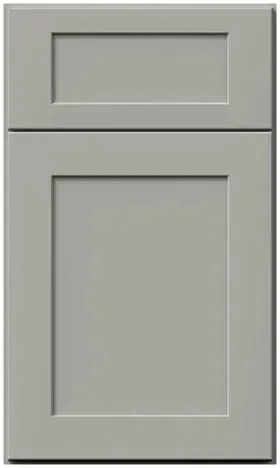
And check under the bin twice a year. A bin cabinet is the one place where a drip runs down inside a liner and sits on the cabinet floor unnoticed, and a cabinet floor that stays damp is the one failure mode this construction cannot shrug off. Our notes on cleaning and caring for cabinets cover the rest; on this finish, the practical upside is that everyday marks around a bin door show far less than they would on a white one.
Where this sits in the order
One line item, used more than anything else you will buy. Pre-assembled, 7 days to 3 weeks, KCMA certified, AWI Premium Grade, with the Fabuwood limited lifetime warranty behind the cabinet and Blum behind the moving parts. The alternatives live under trash can pull-outs and the boxes to fit them in under vanities and base cabinets. If the budget only stretches to one piece of upgraded hardware in the whole job, put it here.
Common questions
- How much does a vanity garbage pull-out cost?
- GN VGO12FD BLUM, the 12″ complete cabinet with a full-door front and Blum soft-close hardware, is $1,556.75 at our displayed price. The cheaper route is a GNK TCV15 BLUM pull-out at $708.50 fitted into a GN VB15FD box at $341.25 — $1,049.75 together, and three inches wider.
- How wide does a pull-out bin cabinet need to be?
- Twelve inches takes one bin. Fifteen takes one generous bin. Eighteen is where a real double starts to work, and 21″ is where two full liners sit comfortably. Two bins in a 15″ box is the most common regret we hear about.
- What does FD mean on a trash pull-out code?
- Full door: the door front is fixed to the pull-out carriage, so the face travels with the bins and you open it in one movement. FHD is the full-height-door version with no drawer above it. Both are door-mounted rather than frame-mounted.
- Is a door-mounted bin better than a frame-mounted one?
- For daily use, yes — one action instead of two and no door standing open in the room. The cost is that the front has to be aligned properly at install, because it cannot be adjusted with a hinge screw afterwards. Frame-mount only wins where a wall or overhang stops the door opening fully.
- Should a pull-out bin have a lid?
- In a kitchen with pets or infrequent collections, yes. In a bathroom, no. A lid adds a second movement to something you do a dozen times a day, and it is usually the first part to break when someone in a hurry catches it on the frame.
- Why is Blum hardware worth it on a bin cabinet specifically?
- Because of the cycle count. A dozen pulls a day is about 4,400 full extensions a year under a changing load, usually closed with a shove. That is several times the work any other cabinet in the house does, and it is where undamped runners start to sag and rub.
Keep reading
The guides behind the numbers on this page.
- Why Blum Soft-Close Hinges Are Worth the Investment
The hardware argument, made at length.
- Soft-Close vs Self-Closing Drawers
What a damper actually does, and what it is like when it stops doing it.
- Space-Saving Cabinet Solutions
Where a bin cabinet fits among the other pull-outs.
- Beam-Mounted Pull-Out Accessories
How these carriages mount, if you are converting a box you already own.
- How to Clean and Care for Cabinets
Including the twice-a-year look under the bin.
- Types of Base Cabinets
The boxes a pull-out carriage can go into.
- Gray Kitchen Cabinets: Finding the Right Shade
Why a bin door in this depth of colour stays presentable.


