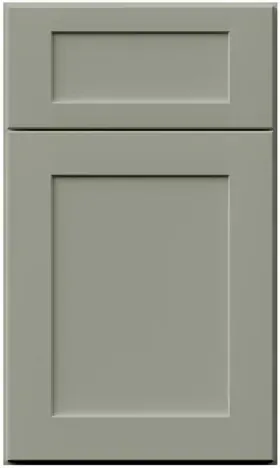
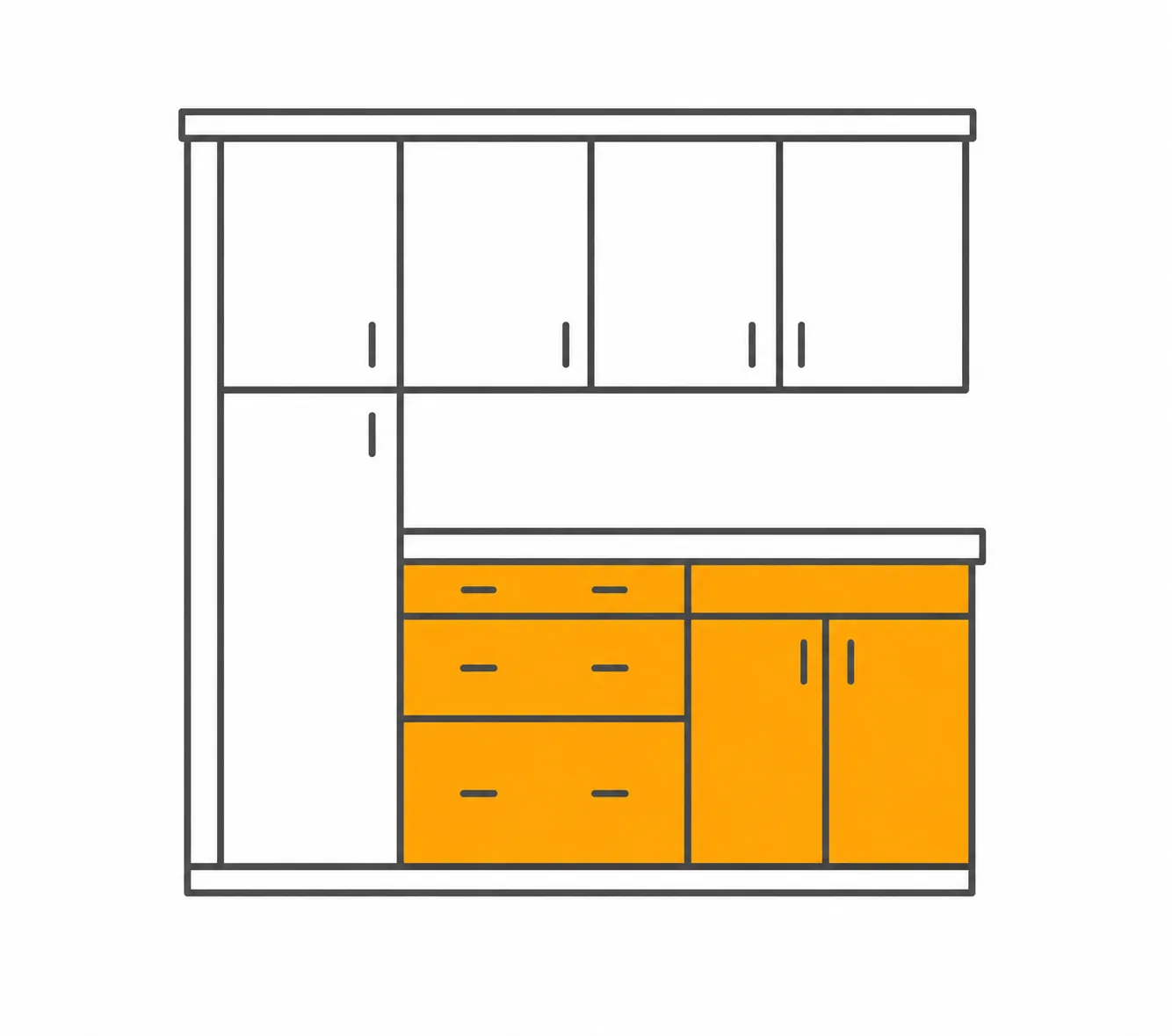


Dog food, detergent and a toddler: the Galaxy Pistachio Green full height single door base as the household cabinet
Reviewed September 2026 · Captivating Cabinets
Prices quoted in this article were read off the grid on the review date; the live price grid on this page governs.
Every kitchen stores a second inventory that has nothing to do with cooking: a sack of dog food, the dishwasher tablets, three spray bottles, a roll of bin liners, the first-aid box and the torch that only matters in a power cut. It is bulky, some of it is dangerous, and in most houses it ends up crammed under the sink. The Galaxy Pistachio Green full height single door base — one tall door, no drawer across the top — is a better home for most of it, and this page is about using it that way: which width suits which job, how to keep small hands out, and what a spill does inside the box.
The cabinet that holds everything that is not food

The household things share three traits. They are tall or bought in bulk, so they want height more than they want drawers. They are used often but briefly — a scoop of kibble, one tablet, one spray — so they want to be at the edge of the run, not in the middle of the cooking zone. And some of them should not be reachable by a two-year-old. A box with one door and no drawer answers the first two directly: the whole door face opens onto a single cavity 34½″ high and 24″ deep, with a ¾″ plywood shelf, and it can sit at the end of a run where nobody is chopping.
It is also a different answer from the sink base. The space under a sink is where cleaning supplies traditionally live, but it is the wettest, most crowded box in the kitchen, broken up by a trap and a disposal. Moving the bulky things into their own box leaves the sink base for the few bottles used at the sink and frees a cavity with no plumbing in it.
Which width for which household job
The door-only boxes run from 9″ to 21″ at full depth and at 12″ deep. The pairings below are the ones we draw most; measure the tallest thing you intend to store, because the clear opening behind the door is less than the label and it is not published — tell us what is going in and we check it against the spec sheet.
| Width | Full depth · price | 12″ deep · price | The job we give it |
|---|---|---|---|
| 9″ | GPG B09FD · $273.00 | GPG B09FD-12D · $266.50 | Spray bottles, a lint roller, dog leads and the torch |
| 12″ | GPG B12FD · $328.25 | GPG B12FD-12D · $321.75 | Dishwasher tablets, bin liners, sponges, the cleaning caddy |
| 15″ | GPG B15FD · $341.25 | GPG B15FD-12D · $331.50 | A lidded pet-food bin standing on the cabinet floor |
| 18″ | GPG B18FD · $373.75 | GPG B18FD-12D · $364.00 | Pet food plus the treats, bowls and grooming kit on the shelf |
| 21″ | GPG B21FD · $399.75 | GPG B21FD-12D · $390.00 | The bucket, a folded mop head and bulk paper towels |
The 12″-deep versions belong where a full-depth box will not fit — a mudroom wall by the back door, where the leads and the food bag live, or a narrow utility corridor. They carry a counter or a slab shelf of their own depth, so plan the top at the same time.
Pet food, bowls and the bag that will not fit anywhere

A large sack of dry food is the single most awkward thing a household buys. Decant it. A lidded bin standing on the floor of a 15″ or 18″ box keeps the food sealed and the smell in, and the scoop lives on the shelf above. If lifting the bin forward from the back of the box is a nuisance, a high-sided roll-out makes it slide: GPG ROD-B15 BLUM H is $240.50 and GPG ROD-B18 BLUM H is $250.25 on the roll-out page. Another route is the waste pull-out made for a drawerless front, GPG TC15FHD BLUM at $617.50 or TC18FHD BLUM at $734.50 on the trash pull-out page: the whole door carries a frame that slides out with it, and plenty of owners stand sealed food bins in it rather than rubbish. Check your bin against the frame before you order.
Put the box at the end of a run, out of the path between the fridge, the sink and the hob, so the bowls on the floor beside it are not under anyone’s feet while they cook. A floor mat under the bowls is worth more than any cabinet feature.
One point about the finish here. The bottom rail of a door at floor level collects nose prints, dust and the odd claw mark, and a mid-tone greyed sage hides that kind of wear better than a white door does. The trade is the one every mid-tone makes: dried water drips from a drinking bowl show as pale marks, so the bottom of this door wants a wipe more often than the rest of the run.
Keeping a toddler out of a drawerless door
A box with no drawer has one advantage in a house with small children that is easy to miss: there is only one thing to lock. A drawer bank needs a latch per drawer, and an open bottom drawer makes a handy step up to the counter. One tall door needs a single latch.
These are framed cabinets with full-overlay doors, which suits the common child-safety latches. Spring latches screw to the back of the door and catch on the inside of the face frame; magnetic locks mount inside the door and open with a magnet key held against the outside, with nothing visible on the green face. Both are sold separately by baby-safety brands, and both are fitted on site. The Blum soft-close hinges slow a door that a child pushes shut, which spares fingers a slam — but soft-close is not child-proofing, and it is not a substitute for a latch.
The honest advice about what goes where is simpler than any hardware. Things that are genuinely dangerous if swallowed — dishwasher pods, oven cleaner, drain cleaner — belong up high, in a wall cabinet, whatever else you do. The base box is for the bulky and the harmless: the food, the paper, the bucket.
Spills, drips and the inside of the box
A household box gets things put into it wet. A spray bottle that has just been used, a bucket not quite drained, a bottle of detergent with a sticky collar. The inside of an Allure box is a natural wood veneer over ½″ plywood, which shrugs off an occasional drip wiped up the same day and does not like standing liquid left overnight — no cabinet interior does. A plastic tray or a cut-to-size liner on the cabinet floor under the cleaning bottles costs almost nothing and saves the veneer.
The door gets the other half of the treatment: wet hands, dog-food dust and fingerprints. Wipe it with a soft damp cloth and a little mild soap, dry it, and keep abrasive pads and solvent cleaners off the paint. The cabinet care guide has the full routine, and it applies to this finish exactly as it does to the whites.
When a different box does the household job better
If you want a drawer for the small things — batteries, keys, the dog’s spare collar — over the door, take the same widths with a drawer on top from the single door base page. If the household storage has to be wider than 21″, the full height double page carries the drawerless boxes from 24″ up. The few bottles used at the sink still belong in the sink base, and the rest of the finish is on the collection page. If you are not sure the colour suits a room full of pet hair and daily traffic, a door sample left at the end of the run for a week will tell you more than any photograph.
Galaxy boxes arrive pre-assembled in about 2 weeks. The free 3D design service will place the household box in your plan — a designer replies within one business day — and builders and property managers fitting the same layout in several units get trade pricing through Captivating Pro.
Common questions
- Where should I store dog food in the kitchen?
- In a lidded bin inside a door-only base at the end of a run, away from the cooking zone. A 15″ or 18″ box takes a bin standing on its floor; a high-sided roll-out (from $240.50) makes it slide forward.
- Do child-safety latches work on framed cabinets?
- Yes. Spring latches catch on the inside of the face frame, and magnetic locks fit inside the door with nothing visible outside. Both are sold separately and fitted on site; a door-only box needs just one.
- Where should cleaning supplies go if I have small children?
- Anything dangerous if swallowed — dishwasher pods, oven and drain cleaner — belongs in a wall cabinet, up high. The base box is for bulky, harmless things: paper, the bucket, pet food.
- Are soft-close hinges child-safe?
- They slow a door that a child pushes shut, which helps with pinched fingers, but they do not stop a child opening it. Use a latch as well.
- Do green cabinets show pet marks?
- This greyed sage hides nose prints, dust and light scuffs better than a white door. Dried water drips from a bowl show on any mid-tone, so wipe the bottom of the door more often.
- How much is a 15 inch base cabinet with no drawer?
- GPG B15FD is $341.25 on our grid on the review date; the 12″-deep version, B15FD-12D, is $331.50.
Keep reading
The guides behind the numbers on this page.
- How to Clean and Care for Your Kitchen Cabinets
What to use on a painted door that gets wiped with wet hands.
- Types of Base Cabinets: Sizes & Standard Dimensions
Door-only boxes against the drawer and sink bases around them.
- Green Kitchen Cabinets: Sage, Pistachio, and Moss Shades and Pairings
The colour family this finish belongs to, and what it pairs with.
- Pre-Assembled Kitchen Cabinets: A Dealer’s Buying Guide
What arrives assembled, and what is fitted on site.


