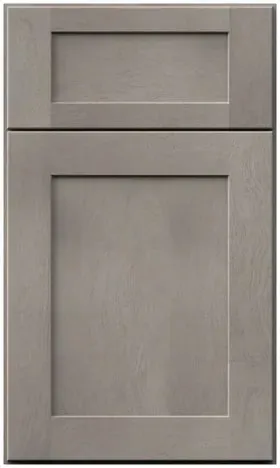


The box that comes later: Galaxy Horizon single door base cabinets and a stain that has to match
Reviewed September 2026 · Captivating Cabinets
Prices quoted in this article were read off the grid on the review date; the live price grid on this page governs.
Most cabinets in a kitchen are bought once. The narrow ones are not. A Galaxy Horizon single door base cabinet is the box that gets added when a wall comes out, swapped when a dishwasher leaks, or ordered on its own because somebody measured the run twice and still came up one cabinet short. On a painted door that is a small errand. On a stained one it is a matching problem, because the colour sits in the wood rather than on top of it, and a door made next year meets doors that have spent a year in your light. This page is about ordering these boxes so that problem never comes up, and about what to do when it does.
Why the narrow box is the one that gets reordered
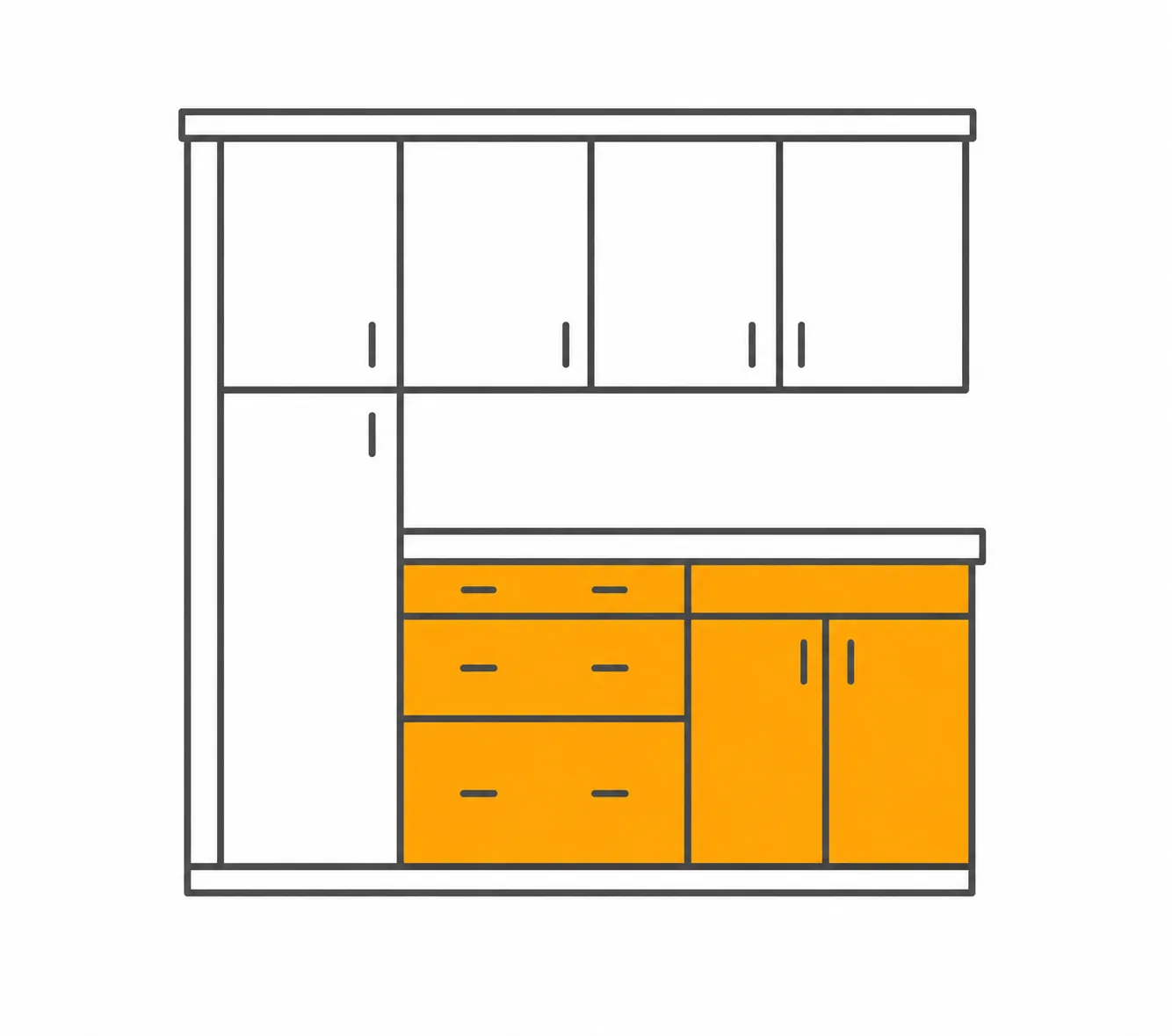
Look at what these widths do in a plan. The 12″ to 21″ one-door boxes, each with a drawer over its door, are the cabinets that close out a run, sit beside the dishwasher, hold the bin, and fill the space the refrigerator leaves. They are the positions that change when a kitchen changes: a bin pull-out added in year two, an appliance swapped for a wider model, a slow leak from the dishwasher supply that swells the floor of the box next to it. The wide cabinets and drawer banks rarely get touched again. The narrow ones do.
They are also the boxes people forget. A plan drawn in a hurry closes out the run with a filler, then the installer finds the wall is out of square and the filler is really a missing cabinet. Here is what each width costs, whole and as a bare carcass, because both numbers come up later in this article.
| Width | Complete cabinet | Carcass only | Typical position |
|---|---|---|---|
| 12″ | GH B12 · $364.00 | B12-BO · $234.00 | The end of a run, trays on edge |
| 15″ | GH B15 · $377.00 | B15-BO · $243.75 | The narrowest width a bin pull-out is listed for |
| 18″ | GH B18 · $409.50 | B18-BO · $263.25 | Beside the dishwasher, cutlery above |
| 21″ | GH B21 · $432.25 | B21-BO · $279.50 | A bin with floor to spare, or the stock pot |
Every one is 34½″ high and 24″ deep, a ½″ veneered plywood box with a natural wood-veneer interior, a ⅝″ dovetailed drawer on Blum Tandem plus Blumotion runners, and one full-overlay door on Blum soft-close hinges. The drawerless versions of the same widths live on the full-height single page. Prices are our displayed figures on the review date; the grid above the article is the authority if they have moved.
What Fabuwood says about a stain made in two different runs
Fabuwood is unusually direct about this in its own spec book. For every stained finish it prints an asterisk: wood and a multi-step finishing process mean colour varies, and that variation is treated as normal rather than as a fault. The warranty goes a step further. It says a replacement cabinet may not match the display sample or the cabinets already in your home, and it lists colour change from sunlight and UV exposure among the things it does not cover, adding that finishes can darken or lighten with age.
Put those three sentences together and the risk of a late order is plain. A box made in the next production run can land a shade either side of the first batch, and the first batch has meanwhile moved a little in your light. Neither difference is a defect by the maker’s definition, and neither is ours to promise away. What we can do is keep you from needing a late box at all, and when you do need one, choose where the difference lands.
This is the real practical gap between a stain and a paint. An opaque colour like Galaxy Nickel covers the wood completely, so a new door and an old one differ mainly by age. A stain is partly the wood showing through, so the grain of each new piece adds a second variable. That is also what people like about it; the same property cuts both ways.
Put the uncertain box on the first order

The rule we give every stained kitchen is simple: if a narrow box might be needed, buy it now. A spare 12″ at $364.00 is cheap insurance against a mismatch you would look at every day. Three situations deserve that caution in particular.
- A run that ends against an old wall. Plaster walls are rarely flat or square, and the difference between a filler and a box often only shows up once the first cabinet is screwed to the wall. If the plan says “GH BF3 or maybe GH B12”, order the B12 as well as the $26.00 filler; an unused box can stay in its carton.
- A bin you might add later. Order the box that suits a pull-out now, even if the pull-out itself waits. The waste units are listed for 15″, 18″ and 21″ boxes — GHZ TC15 BLUM at $617.50, GHZ TC18 BLUM at $734.50 and GHZ TC21 BLUM at $809.25 — and fit into a cabinet already on the wall. The trash pull-out page groups them.
- A kitchen being built in phases. If the island or a second run is a year away, decide its narrow boxes now and store them upright and dry, off a bare concrete floor and out of direct sun. They arrive pre-assembled, doors hung, so they keep well if the cartons are left sealed.
While you are ordering, add the Touch Up Kit made for this finish, $62.40, and a $35.00 door sample kept in a drawer. The sample is not a guaranteed match for anything, because it is a third production run of its own. It is a fixed reference, though, and it lets you see in a year whether your cabinets have drifted warmer or lighter in the sun.
A damaged box does not have to mean a new door
When a narrow cabinet has to be replaced, the door and the drawer front are usually fine. Water damage, a crushed corner in transit, a box drilled wrongly for plumbing: all of that is carcass damage. The catalogue sells every one of these boxes as a carcass only, the -BO code, and it costs about two-thirds of the complete cabinet, from B12-BO at $234.00 to B21-BO at $279.50.
On a stained kitchen, that option is worth more than the saving. Move the old door and the old drawer front onto the new carcass and the parts you see most are still from your original batch. Blum’s quick-release hinges are built for exactly this: the door unclips from its mounting plate without tools and clips onto the new one. What changes is the face frame, the strip of stained solid wood that shows around the door on a full-overlay cabinet. That strip is narrow, so if the new frame runs a shade off it reads as a thin line, not a panel.
Two cautions. The listing does not say exactly what ships on the front of a carcass-only drawer base, including whether the drawer box itself is included, so ask before you order. And the new frame should be judged in place, beside its neighbours, before anything is screwed to the wall. The loose parts page lists every carcass alongside the shelves, clips and the touch-up kit.
If a late box is unavoidable, choose where it lands
Sometimes the late cabinet is new, not a replacement: a run extended, an island added. Then the question is where a slightly different door will read least, and the answer is about how the eye travels along a run.
- Beside an appliance. A narrow box between a dishwasher and a range, or next to the refrigerator, is framed by stainless steel on one or both sides. The eye compares it to the appliance first and to the next cabinet second, so a small shift in tone disappears.
- At a change of plane. Where a run turns a corner, the two walls get different light, and doors on the return already read a little different from those on the main wall. A new box on the return hides in a difference the room already has.
- Behind a filler or panel. A 3″ filler, GH BF3 at $26.00, or a base end panel, GH BEP at $149.50, between old and new breaks the line. Two doors that differ slightly are much harder to compare when they do not touch.
- Swap the old one out. If the new box has to go somewhere prominent, move an original cabinet of the same width into the prominent spot and put the new one where the old one was. Doors of the same width and hand usually move between boxes on their hinge plates, so this is often a door swap rather than a cabinet swap; ask us to confirm for your two boxes.
The one position to avoid is the middle of a long unbroken run in direct daylight, where a new door sits between two old ones at eye level from the sink. If the plan only allows that, talk to the free 3D design service before ordering; there is usually a way to move the change to an end.
Comparing the new cabinet with the old ones

When the carton arrives, do the comparison in the kitchen, not the garage. Horizon is a grey-taupe that moves between warm and cool with its surroundings, and a door lit by a garage strip light will look nothing like the same door in the room. Unwrap the door or front, hold it upright at the height it will hang, beside the cabinet it will join, in daylight. Look from where you normally stand, not from six inches away.
Two kinds of difference are worth separating. A different grain pattern, or a panel that reads a touch lighter than its neighbour, is the stain doing what Fabuwood says it will. A different colour family, a visibly glossier or flatter sheen, or a finish flaw is something to photograph and send to us before the cabinet goes on the wall, with the label from the carton in the shot. Once it is installed, a return is a much bigger job for everyone.
Judge it at more than one time of day, too. A difference that shows under the midday sun can vanish at dusk and the reverse, and the decision should be made on how the run looks most of the time, not in its worst five minutes. The cabinet lifespan guide covers how each part of a cabinet ages.
If a narrow door box is not the right answer
If the late box is really a bin or a pan store, the drawerless full-height singles give a pull-out the whole door. If the remainder is 24 inches or more, a two-door base is one box instead of two. If the position is the main prep counter, a three-drawer bank does more than any door. Gaps under nine inches belong to a filler or a filler pull-out, both on the pull-out organiser page. The rest of the finish is on the collection page, and if you are a contractor ordering in phases for a client, the Captivating Pro program is trade pricing with one set of terms.
Common questions
- Will a cabinet I order later match my existing stained cabinets?
- Not guaranteed. Fabuwood treats colour variation between stained pieces as normal, and its warranty says a replacement may not match existing cabinets. Order every box you might need on the first order, and keep a door sample as a reference.
- Can I replace just the cabinet box and keep my door?
- Yes. Each of these widths is sold as a carcass only, the -BO code, from B12-BO at $234.00 to B21-BO at $279.50. The door moves across on its quick-release hinges. Ask what ships on the front of a drawer base carcass before ordering.
- Why does a stained cabinet vary more than a painted one?
- Paint is opaque and hides the wood, so two painted doors differ mostly by age. A stain lets the grain through, so every piece adds its own pattern and absorbs colour slightly differently. Fabuwood prints that as a note on all its stained finishes.
- How much is a 15 inch base cabinet with a door and drawer in this finish?
- GH B15 shows at $377.00: a 34½″ × 24″ pre-assembled box with one full-overlay door and a ⅝″ dovetailed drawer. The 12″ is $364.00, the 18″ $409.50 and the 21″ $432.25.
- Does sunlight change the colour of stained cabinets?
- It can. Fabuwood’s warranty lists colour change from UV light and sunlight as not a defect and says finishes can darken or lighten over time. It is one more reason a box ordered years later can look different beside the originals.
- Where should an added cabinet go so a colour difference shows least?
- Beside an appliance, on a corner return, or separated from its neighbours by a filler or end panel. Avoid the middle of a long, sunlit run. If it must go somewhere prominent, move an original door of the same width there instead.
Keep reading
The guides behind the numbers on this page.
- Kitchen Cabinet Samples: How to Order & Evaluate
The sample that stays in a drawer as your fixed reference.
- How Long Do Kitchen Cabinets Last?
Which part of a cabinet fails first, and why that is usually not the door.
- Pre-Assembled Kitchen Cabinets: A Dealer’s Buying Guide
Storing and unpacking assembled boxes, including the ones you keep for later.
- Cabinet End Panels, Scribe Molding & Fillers Explained
The parts that can separate an old cabinet from a new one.
- Gray Kitchen Cabinets: Finding the Right Shade
Where this grey-taupe stain sits among the painted greys.


