

Twelve inches: one width, four genuinely different cabinets
Reviewed September 2026 · Captivating Cabinets
At nine inches you take what you are given. Twelve is where the base board starts offering a choice, and the choice is bigger than most people notice: six SKUs, four different kinds of cabinet, and a price spread from $321.75 to $617.50 for the same twelve inches of wall. Picking the cheapest one because the width is the same is how a kitchen ends up with a broom slot where the utensils should be.
Four boxes, one width
These are not variants of each other. A full-height door box and a three-drawer bank do different jobs, cost $289.25 apart, and are both twelve inches wide. Read down the table before you read the price column.
| SKU | Displayed price | What it is | Where it belongs |
|---|---|---|---|
| B12FD-12D | $321.75 | Full-height door on a 12-inch-deep box | A shallow end box, a walkway leg, the back of a peninsula |
| B12FD | $328.25 | Full-height door, full 24-inch depth | Trays, sheet pans, a broom, anything tall and flat |
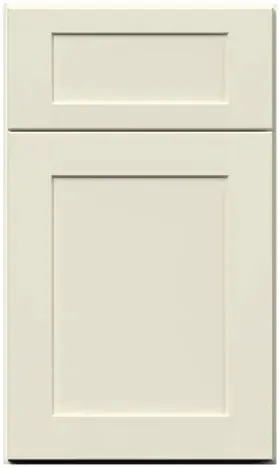
| B12 | $364.00 | A top drawer over a single door | The default narrow base — foil, bags, small tools |
| BTL12 / BTR12 | $419.25 | A handed angled transition box | The end of a run that has to turn, or a run that changes depth |
| DB12 | $617.50 | Three dovetailed drawers on full-extension glides | Beside the range: utensils, spices, knives |
The two boxes nobody has heard of
BTL12 and BTR12 are base transitions, and they are handed — L and R tell you which side the angle falls on, so the pair exists because a run can end at either hand. Their job is to close the end of a run at an angle instead of a square corner, which softens the sharpest edge in a kitchen and gives a peninsula or an island end something to resolve into.
They are $419.25, more than the drawer-over-door box and less than the drawer bank, and they are the only transition boxes on the base board narrower than 24 inches. The exact angle and the finished-side arrangement are not spelled out on the listing, so confirm the geometry against your plan before you order one — a transition that turns the wrong way is not a return you want to make.
Is a 12-inch drawer base worth $617.50?
It is $253.50 more than the plain B12, a 70 per cent premium for the same twelve inches of floor. Sometimes yes. What you are buying is three dovetailed solid-wood drawer boxes on full-extension concealed glides with soft-close, which means every item in the cabinet comes to you rather than you going into the cabinet. In a narrow box that difference is larger than it is in a wide one: reaching to the back of a twelve-inch door opening is genuinely unpleasant.
Where it pays: immediately beside the range or the cooktop, holding utensils, spices and the things you grab mid-cook. Where it does not: as a lone drawer bank stranded in the middle of a door run, where it reads as an accident and stores the same things a drawer elsewhere already holds.
Twelve inches and the three-inch grid
Base widths step in threes, so any wall length is closed by some combination of 9, 12, 15, 18, 21, 24, 27, 30, 33, 36, 39, 42 and 48. Twelve is the piece that absorbs the remainder when the rest of the run is made of appliance-sized boxes. A wall that takes a 36-inch sink base, a 24-inch dishwasher opening and a 30-inch range leaves whatever is left over, and twelve inches of it is a cabinet rather than a strip of filler.
That is worth doing arithmetic for. Three inches of filler costs $26.00 and stores nothing. Twelve inches of cabinet costs $364.00 and stores a fortnight of foil, bags and sandwich boxes. On a wall where you have the length, spend it.
The mistake at this width
Ordering by width alone. Because all six of these SKUs read as "12-inch base cabinet" on a spec sheet, they get transcribed into a quote interchangeably, and the difference only surfaces on delivery day when the drawer bank you planned turns out to be a door box. When you send a list to be priced, send the SKU, not the width — that is what the letters in the code are for.
Common questions
- How wide is a 12-inch base cabinet on the inside?
- Narrower than twelve. A framed box gives back the face frame and stiles, so the usable opening is meaningfully smaller than the nominal width. The listings do not publish the figure, so confirm it before ordering an insert that has to slide in.
- What is a base transition cabinet?
- An angled end box, made in a left and a right hand, used to turn the end of a run or step it into a different depth instead of stopping it square. At this width the pair displays for $419.25 each; confirm the angle against your plan before ordering.
- Is a 12-inch drawer base worth the money?
- It is $253.50 more than the door version. In a narrow box the drawers earn it, because reaching to the back of a twelve-inch door opening is awkward and a full-extension drawer removes the reach entirely. Put it where you cook, not where you store.
- What is the difference between B12 and B12FD?
- B12 has a drawer over a door. B12FD has a door over the full height and no drawer. The FD box is $35.75 cheaper and is intended for tall flat storage, not as a budget alternative.
- Do 12-inch base cabinets arrive assembled?
- Yes — these ship pre-assembled, with the box glued, dowelled and pocket-screwed and the doors already hung on soft-close hinges. Lead time runs from about a week to three weeks depending on the line.
Keep reading
The guides behind the numbers on this page.
- How to read cabinet SKU codes
The letters are the whole story at this width — FD, DB, BTL and BTR decoded.
- Cabinet terminology glossary
Face frame, stile, transition, full-height door: the vocabulary a quote will use back at you.
- Dovetail drawers
What you are paying the $253.50 premium for when you choose the drawer bank.
- Pre-assembled cabinets: a buying guide
Why a narrow box in particular is worth having built in a factory rather than on your floor.
- Types of base cabinets
A tour of the families, useful when four of them show up at one width.
- Small kitchen design and layout ideas
Where narrow boxes belong in a plan, and how many of them a small room can carry.