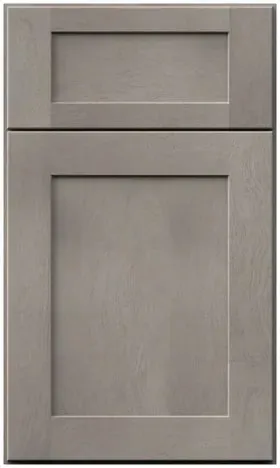


The most-handled door in the kitchen: care and wear on a Galaxy Horizon appliance wall cabinet
Reviewed September 2026 · Captivating Cabinets
Prices quoted in this article were read off the grid on the review date; the live price grid on this page governs.
Most wall cabinets are opened a few times a day. The appliance box is opened every time the kettle, the coffee machine or the toaster is used, and it sits lower than any other upper, down in the gap between the counter and the run above. It is the door your hands find first in the morning and the one closest to steam. That makes it the best place in the kitchen to think about how Galaxy Horizon wears, how it should be cleaned, and what a stain can and cannot have done to it when it gets marked. The box itself is simple, and there is only one.
One box, and one detail to confirm
GH WAC3018 is the only appliance box on the wall list in this finish: 30 inches wide, 18 inches high, $796.25 at displayed prices on the review date. It is built like every other Allure upper — a ½-inch veneered plywood box with a natural wood-veneer interior and a solid wood face frame — and it is one of the dearer uppers for its size, because the front is doing more work than a plain door.
What that front actually does is not published in the product data, and it changes how you use the box: a front that rolls up, one that lifts, and doors that fold back each leave different clearances and each put your hand in a different place. Send us the code before you order and we will confirm what ships. It is on the appliance wall page, beside the rest of the wall cabinets.
The door your hands find first
Think about where the wear goes on a cabinet front that is used several times a day. It concentrates in three places: the edge you grip, the bottom rail your fingers brush on the way past, and the face-frame edge that the front meets when it closes. On most uppers those places barely get touched. Here they get touched by damp hands, buttery fingers and whoever is making tea at seven in the morning.
A stain handles that kind of wear in its own way. Because the grain shows through, small marks tend to disappear into the pattern rather than standing out against a flat field of colour, which is the general advantage a stained face has over a solid paint in a busy spot. The other side of it is that a mark which does show cannot be sprayed out, as the touch-up section below explains. That general comparison of stain and paint is our experience across many kitchens rather than a published figure for this finish.
The practical step that helps most is hardware. A pull or knob on the front puts your fingers on metal instead of on the rail, and it puts the wear on a part that is meant to take it. Fabuwood photographs this finish with gold hardware and with copper accents; whatever you pick, give this box something to hold.
Steam, the kettle and the underside of the run
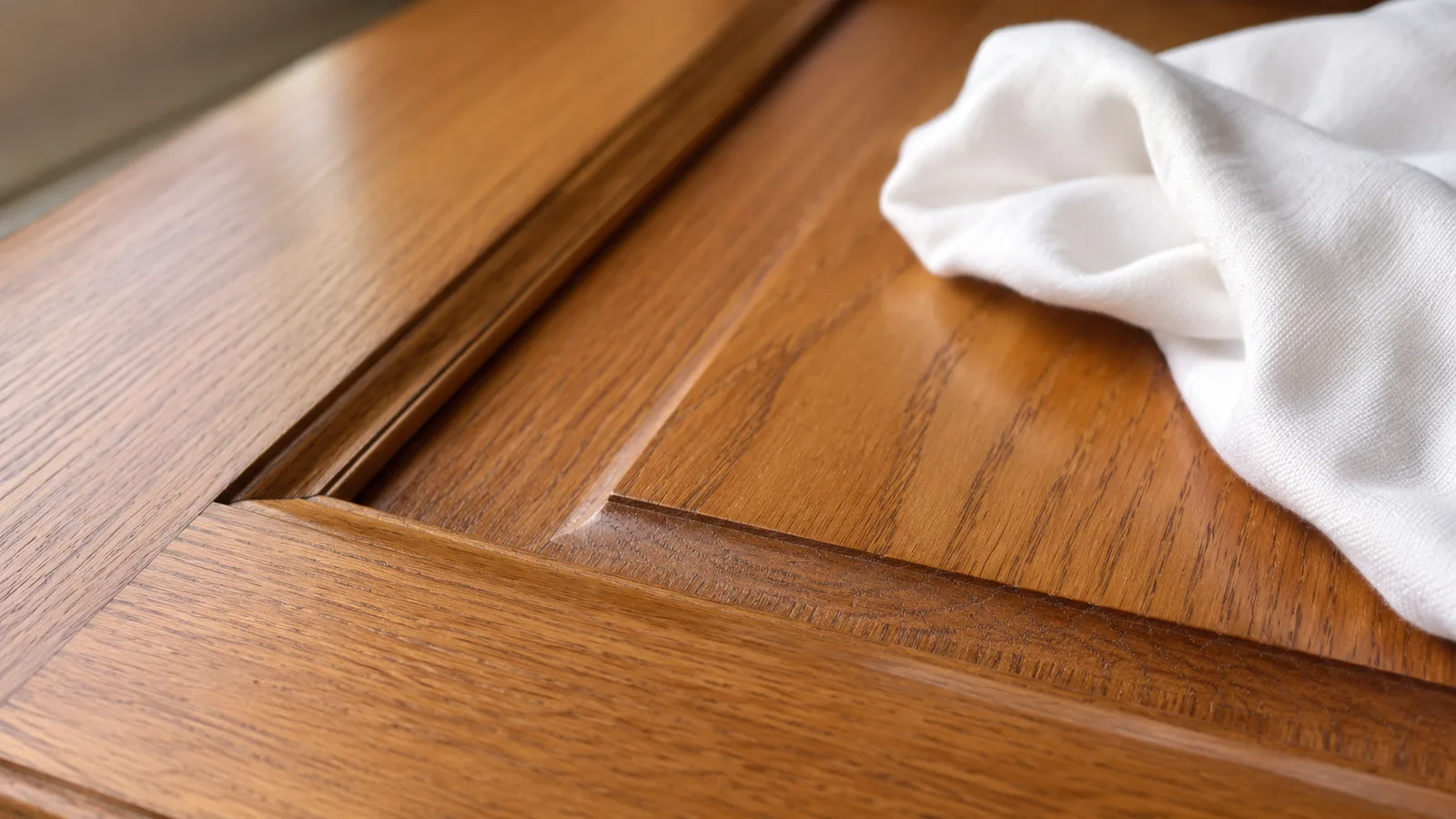
Steam is the one thing an appliance box sees that other uppers mostly do not. A kettle or a coffee machine run with the front closed, or pushed to the back of the box, sends warm moisture straight onto the face frame, the inside of the top and the underside of the upper run above. Done once, it does nothing. Done twice a day for years, it is the most likely cause of a finish that looks tired at the front edge while the rest of the kitchen looks new.
Three habits avoid it, and they cost nothing. Open the front fully before switching anything on. Pull a kettle or coffee machine forward to the front edge of the counter while it runs, so the steam rises into the room rather than into the box. And if condensation forms on the frame or the inside of the door, blot it off with a dry cloth rather than leaving it to dry. A small tray under the coffee machine keeps drips and grounds off the box floor as well.
Cleaning a stained face the way Fabuwood asks
Fabuwood’s own cabinet care guidance is short and worth following exactly, because a stained finish is less forgiving of harsh cleaners than people expect.
- Blot, do not wipe, when something wet lands on it. Wiping spreads the liquid along the grain; blotting lifts it.
- Use mild cleaners only: warm water with a little gentle soap on a soft cloth, wrung out until it is barely damp. Dry the surface straight afterwards.
- Never spray a cleaner directly onto the wood. Spray the cloth, then wipe. Overspray runs into the joints of the face frame and the edges of the door panel, where it is hardest to dry.
- Avoid abrasive pads and strong chemical cleaners. Fabuwood’s warranty lists certain household cleaners, alongside smoke and sunlight, among the causes of colour change it does not treat as defects.
On this box, a quick wipe of the grip edge and the bottom rail once a week does more than an occasional deep clean. The longer version of all this is in the cabinet care guide.
When it does get marked
Sooner or later something will catch it — a mug handle, a toaster lever, a ring. What you can do about it depends on the finish, and on a stain the options are specific. Where a painted door can be resprayed from an aerosol, Fabuwood makes no aerosol for its stains; its catalogue says so in as many words. The repair tool here is a kit — $62.40 for this finish — made up of a fill stick, a colour marker and a small scraper. The stick fills a chip or a dent, the scraper levels the fill with the surface, and the marker colours it and draws the grain line back across the repair.
It works well for what it is meant for. A small chip on the edge of the grip, a scratch across a rail, a dent from a dropped spoon: done carefully, those disappear at the distance anyone looks at an upper. What it cannot do is refinish a large worn area, even out a door that has gone darker or lighter with light over the years, or repair a front that has swollen from repeated soaking. The kit fixes accidents; care prevents wear. Order the kit with the cabinets so it is in the drawer before it is needed; it is listed with the loose parts.
Before the appliance box goes on the order
Decide which appliances will live in it, and measure the tallest of them with its lid or handle up. Sort out power with your electrician before the wall is closed. Confirm the front mechanism with us, as above. Then order the box on the same order as the uppers around it, so it comes from the same batch; on a stain that varies between parts, the box directly under your eye at the counter is not the one to add later.
It ships pre-assembled with the front fitted, in about 2 weeks. Hold a door sample where the box will sit before you commit, since this is the part of the finish you will see closest. For a drawing of the whole counter with the box placed, ask for a free 3D design; a designer replies within one business day. Trade pricing is through Captivating Pro, and the full finish is on the collection page.
Common questions
- Can steam from a kettle damage kitchen cabinets?
- Repeated steam aimed at the same spot can wear a finish over time. Open the appliance cabinet fully before use, pull the kettle or coffee maker forward to the counter edge while it runs, and blot off any condensation.
- How do you clean stained kitchen cabinets?
- With a soft cloth and mild soapy water wrung out until barely damp, then dry. Blot spills rather than wiping, never spray cleaner directly onto the wood, and avoid abrasive pads and strong chemicals.
- Can stained cabinets be touched up?
- Small damage, yes. Chips, dents and short scratches are filled, levelled and recoloured with the $62.40 kit sold for this finish. Large worn areas and colour that has shifted with age are beyond it, and there is no aerosol option for stains.
- Do stained cabinets show wear less than painted ones?
- In our experience small marks tend to blend into the grain on a stained face, where they would stand out on a solid paint. Larger damage is harder to hide on a stain because it cannot be resprayed.
- How much is the appliance wall cabinet in this finish?
- GH WAC3018 is $796.25 at displayed prices on the review date: 30 inches wide and 18 inches high. It is the only appliance wall box in the finish.
Keep reading
The guides behind the numbers on this page.
- How to Clean and Care for Your Kitchen Cabinets
The full routine behind the four rules on this page.
- Kitchen Cabinet Materials and Construction
What sits under the stain, and why plywood copes with a damp kitchen.
- Parts of a Kitchen Cabinet: Every Component Named
Face frame, rail, stile: the parts that take the wear, by name.
- Kitchen Cabinet Samples: How to Order & Evaluate
Checking a stain at the distance you will actually see it.
- How Free 3D Kitchen Design Works
Send a sketch and a few photos; the drawing that comes back counts every part.


