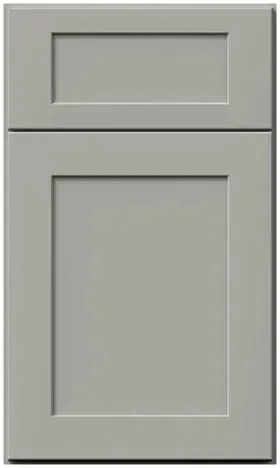


Twelve inches wide, twelve inches deep: planning at the square width
Reviewed September 2026 · Captivating Cabinets
Twelve inches is the one width that matches the depth of the box, which makes it the easiest unit in the catalog to picture: a cube on the wall, or a tall column of them. Fourteen units are built here — six single-door cabinets in six heights, and eight run-enders that exist at no other width except six.
Six heights, and what each one is for
This is the width where the full height ladder is easiest to read, because nothing else about the box is changing. The cheapest wall cabinet in the entire line lives here: W1215, twelve wide by fifteen tall, at $172.25.
| Code | W × H | Displayed price | The job it was drawn for |
|---|---|---|---|
| W1215 | 12″ × 15″ | $172.25 | A shallow closer over a window head or beside a soffit |
| W1218 | 12″ × 18″ | $221.00 | The gap above a hood or a microwave, kept in line with the run |
| W1230 | 12″ × 30″ | $227.50 | A standard upper where the run tops out around 84″ |
| W1236 | 12″ × 36″ | $266.50 | A taller run finishing near 90″ with crown above it |
| W1239 | 12″ × 39″ | $279.50 | The odd height, drawn for 9-foot rooms and shallow moldings |
| W1242 | 12″ × 42″ | $302.25 | Ceiling-height cabinets with nothing above them |
Notice how flat that curve is. Going from 30 inches tall to 42 adds $74.75 and forty per cent more interior volume — the extra height is the cheapest storage on this page, far cheaper than adding another cabinet beside it. Whether you want that top shelf is a separate argument; you will need a stool to use it.
The two ways a run ends at 12 inches
Eight of the fourteen units here are not really cabinets in the storage sense. Four are angled wall ends — WAE1230, WAE1236, WAE1239 and WAE1242, $279.50 to $364.00 — whose face turns 45 degrees so the run does not stop on a square corner. The other four are open end wall units, OE1230 through OE1242 at $364.00 to $455.00, which present a doorless bay at the end of the row.
The choice is about what the run runs into. An angled end works where the cabinets die into a doorway or a walkway and a square corner would be at shoulder height in someone’s path. An open end works where the last bay is on show from the dining side and you want three or four things visible. Both live on the wall end page. Unlike the 6″ open ends, the 12″ open end is not sold as a left and a right — one part, either hand.
The mistake: two 12s where one 24 belongs
Twelve-inch cabinets multiply in plans because they are the easiest thing to drop into a gap. Watch what that costs. Two W1230 boxes are $455.00 and give you two 12″ compartments with a pair of stiles down the middle. One 24″ double-door box at the same height is $364.00 and gives one shelf you can lay a platter on.
So the sequence when a plan has 24 inches to fill is: check the double-door wall cabinets first, and only split the width if something forces it — a hood flue, a window return, a change in ceiling height, or a deliberately symmetrical elevation where two narrow doors read better than one wide pair.
Why the depth matters more here than the width
Every wall cabinet on this site is 12 inches deep unless the listing says otherwise, and at this width that squares the box. It also sets your clearance: a 12″-deep upper hanging on a 54″ line over a 24″-deep counter leaves a foot of working depth in front of it and about 18 inches of open backsplash below it. Both of those numbers get quoted in remodels without anyone checking them against the actual counter.
The exceptions are worth knowing because they break the plane. Refrigerator wall units are built 24 inches deep so they come flush with the appliance, and the microwave cabinets in the MC family are 21 inches deep. Neither exists at 12 inches wide, but if one appears elsewhere on your elevation, the 12″ boxes beside it will need an end panel to close the step.
Common questions
- What is the cheapest wall cabinet?
- W1215 — 12 inches wide by 15 tall — at $172.25 displayed. It is cheapest because it is small in both directions, not because it is a lesser box: same plywood carcass, same full-overlay door, same soft-close hinge as the 42″ units.
- How deep is a 12 inch wall cabinet?
- Twelve inches, the standard depth for uppers in this line, which makes this the one width where the box is square in plan. The only wall cabinets built deeper are the 24″-deep refrigerator units and the 21″-deep microwave cabinets.
- What height wall cabinet should I use with a 9 foot ceiling?
- Either 39 or 42 inches, depending on how much reveal you want above. On a 54″ mounting line a 42″ box tops out at 96 inches, leaving a foot to close with crown or a soffit; a 39″ box leaves fifteen.
- Is an angled wall end cabinet worth it?
- Where a run of uppers ends in a walkway, yes — a 45-degree face at head height is the difference between a corner people notice and one they walk into. Where the run ends against a wall or a tall cabinet, spend the $279.50 elsewhere.
- Can two 12 inch cabinets replace a 24 inch one?
- They fill the same wall but they cost more and store less usefully — $455.00 against $364.00 at 30 inches tall, with a double stile blocking the middle. Split the width only when something in the elevation actually requires it.
Keep reading
The guides behind the numbers on this page.
- Wall and tall cabinet sizes and buying guide
Reads the height ladder against ceiling heights, which is the decision this width makes clearest.
- Kitchen dimensions guide
The 54″ mounting line, the 18″ backsplash gap and the clearances they depend on.
- Cabinet molding types
What closes the space above a 30″ or 36″ run, and why 42″ boxes usually need less of it.
- Cabinet door overlay styles
Why a full-overlay door on a narrow box leaves so little frame showing.
- Kitchen layouts guide
Where runs end, and therefore where an angled or open end actually pays for itself.
- Pre-assembled cabinets buying guide
What arrives on the truck, since these come built rather than flat-packed.