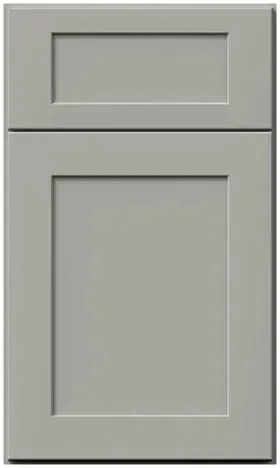


The microwave picks the cabinet: sizing a Galaxy Nickel wall box to the appliance
Reviewed September 2026 · Captivating Cabinets
Every other cabinet in the kitchen is chosen to suit the room. This one is chosen to suit an appliance you have probably not bought yet, in a spot you picked because the last kitchen had it there. That order of operations is why microwave cabinets are the ones most often ordered twice. The appliance has fixed dimensions, a fixed mounting height and a venting arrangement that is either ducted or is not, and all three of those decide the cabinet. So buy the microwave first, on paper at least, and then read this.
Two different cabinets for two different appliances

There are two families on this page and they are not variations on a theme. One is a short box designed to sit above an over-the-range microwave, with the appliance hanging beneath it. The other is a tall, deep box with an opening cut into it for a countertop microwave to be built in. Confusing them is the most common mistake made on this page.
| Cabinet | Code | Size | Price |
|---|---|---|---|
| Over-the-range box | GN MW3018 | 30″ wide, 18″ high, standard depth | $360.75 |
| Built-in box, 30″ tall | GN MC303021 | 30″ wide, 30″ high, 21″ deep | $757.25 |
| Built-in box, 36″ tall | GN MC303621 | 30″ wide, 36″ high, 21″ deep | $708.50 |
| Built-in box, 39″ tall | GN MC303921 | 30″ wide, 39″ high, 21″ deep | $724.75 |
| Built-in box, 42″ tall | GN MC304221 | 30″ wide, 42″ high, 21″ deep | $773.50 |
Two things jump out of that table. The first is that the 30-inch-tall built-in box is displayed above the 36-inch one — $757.25 against $708.50 — which is the shorter cabinet pricing over the taller. That is what the grid showed on the review date and we are not going to pretend otherwise; ask us before you order the short one, because on those numbers you would be paying a premium for less cabinet.
The second is the depth. Every built-in box is 21 inches deep, against 12 inches for the run either side. That is a nine-inch step out into the room, at eye level, and it is a design decision rather than a detail — it has to be drawn, and there has to be a finished side where the step happens. The microwave cabinet end skin, GN SK MC, is $50.05.
Over the range: the governing number is in the appliance manual
Over-the-range microwaves are effectively a standard product. They are built to fit a 30-inch opening — almost universally 29⅞ inches wide — which is why GN MW3018 is 30 inches and why there is no other width. The appliance mounts to the wall and screws up into the underside of that cabinet, so the box is short: 18 inches, because the microwave is occupying the bottom of what would otherwise be a full-height bay.
The mounting height is not ours to specify and we will not guess at it. Every manufacturer publishes a minimum in the installation manual — usually expressed either as a clearance above the cooking surface or as a floor-to-top-of-unit figure — and the numbers differ between brands and between gas and electric ranges. Read the manual for the model you are buying, and read it before the cabinet order goes in, not after.
Once you have that number the rest is arithmetic, and it is worth doing on paper because of what it does to the run. The top of the microwave is where the bottom of the cabinet goes. Add 18 inches for the box. Compare that top-of-box figure to where the rest of your uppers land: a 30-inch run starting at 54 inches tops out at 84, a 36-inch run tops out at 90. If the microwave cabinet lands somewhere else, the run has a step in it — and a step above a range, dead centre in the most looked-at wall in the kitchen, is not a subtle thing. It can be closed with a filler or absorbed by changing the height of the boxes either side, but it has to be planned.
Then venting, which is the part that ought to change more minds than it does. A ducted over-the-range unit pushes cooking air outside through a duct that has to exist and has to have a route. A recirculating one pushes it through a charcoal filter and back into the room, which means it removes some smell, some grease and no heat or moisture at all. It is not a hood. If you cook seriously, the honest answer is a hood and the microwave somewhere else — a 36-inch wall-mount hood shell is GNK RHA363021 at $2,418.00 and takes a blower such as the 400 CFM GNK RHBB 400 CFM at $903.50, with the rest on the hoods page.
Built into a run: the opening, the trim kit, the model number
The MC boxes take a countertop microwave and surround it, which gets the appliance off the worktop and into the cabinetry. They come in four heights because the microwave opening sits within a taller box, with shelved storage above and below it, so the height you pick depends on what else that bay is doing.
Two things have to be settled before one of these is ordered, and neither is a cabinet question. First, the opening: the box has a factory-cut aperture, and its exact dimensions are not printed on the product page. Send us the model number of the microwave and we will confirm the fit in writing rather than have you measure a cabinet on delivery day. Second, the trim kit: any countertop microwave built into a cabinet needs the manufacturer’s own trim kit, which is model-specific, which is not a cabinet part, and which is not in this catalogue. It is bought with the appliance. A built-in without its trim kit is an appliance sitting in a hole with a gap around it.
Then decide the height of the opening off the floor, which is a safety question more than a design one. A microwave door at 60 inches or above means lifting a hot, full, unstable dish down from above chest height, and that is how people get burned. Put the opening at or below eye level for whoever uses it most, and if the household includes children or anyone short, put it lower still.
Last, the appliance face itself. A microwave set into a run is the largest rectangle at eye level that is not cabinetry — usually stainless, sometimes black, always a different material from everything around it. Against a mid-tone grey it reads as a deliberate inset rather than a bright interruption, which is a small advantage this finish has over a white run, but it is still the thing the eye goes to when you walk in. Below the counter it is not.
The honest case for putting it somewhere else
We sell both of these boxes and we will happily quote either, and we still suggest a third option to about half the people who ask. The microwave does not have to be on the wall.
A base microwave bay puts the opening at counter level: GN BMC24 is $614.25 and GN BMC30 is $695.50, both 24 inches deep, and both on the specialty base page. Three things improve at once. You lift hot dishes out at waist height instead of over your head. The appliance disappears from the sightline, which in a continuous upper run is worth more than people expect. And the wall above the range is freed up for a real hood, which is the single biggest improvement available to a kitchen that gets cooked in.
What you give up is base cabinet storage, which is not nothing — that is 24 or 30 inches of the most valuable real estate in the kitchen. And an island bay puts the microwave where children can reach it, which is either the point or the objection depending on the household. Weigh it honestly rather than defaulting to over-the-range because that is where the last one was.
If the microwave does stay on the wall, one last placement note: keep it out of the corner and out of the last bay before a walkway. A microwave door is 15 to 20 inches of swing at chest height and it wants clear air in front of it, plus somewhere to put the dish down within a step. Landing space beside an appliance is covered in the kitchen dimensions guide.
The order of operations that avoids a re-order
Pick the appliance. Get the manual. Take the mounting height and the cutout from it. Draw the run at that height and see what the step does. Then order the cabinet, the filler if there is one, and the end skin where the depth changes. In that order, every time — the cabinet is the last decision, not the first.
A free 3D design will do the elevation for you with the microwave in it at the manual’s height, which is usually the point at which people see the step in the run and change something. Boxes are pre-assembled and ship in 7 days to 3 weeks; the whole wall grid is on the wall cabinet page and the rest of the finish on the collection page.
Common questions
- What size cabinet goes above an over-the-range microwave?
- A 30-inch-wide, 18-inch-high box — GN MW3018 at $360.75 in this finish. Over-the-range microwaves are built to a 30-inch opening, almost always 29⅞ inches wide, so there is no other width. The appliance hangs beneath the cabinet and screws up into it.
- How high should an over-the-range microwave be mounted?
- Whatever the appliance manual says, which varies by brand and by whether the range is gas or electric. Manufacturers publish either a minimum clearance above the cooking surface or a floor-to-top-of-unit figure. Get that number before the cabinet order goes in, because it sets where the box above lands relative to the rest of the run.
- Is a recirculating over-the-range microwave a proper range hood?
- No. It pushes cooking air through a charcoal filter and back into the room, so it removes some smell and grease and no heat or moisture. A ducted unit vents outside and is a genuine improvement. If you cook seriously, fit a hood and put the microwave elsewhere.
- Do I need a trim kit to build a microwave into a cabinet?
- Yes, and it comes from the appliance manufacturer, not from us. Trim kits are model-specific and are not a cabinet part. Without one you have an appliance sitting in an opening with a visible gap around it. Buy it with the microwave.
- How deep is a built-in microwave wall cabinet?
- Twenty-one inches, against 12 inches for standard wall cabinets — a nine-inch step out from the run either side. That step needs to be drawn rather than discovered, and it needs a finished side where it happens; the microwave cabinet end skin is $50.05.
- Should the microwave go over the range or in a base cabinet?
- A base microwave bay at counter level is safer to lift hot dishes from, keeps the appliance out of the sightline, and frees the wall above the range for a real hood. It costs you 24 or 30 inches of base storage — $614.25 or $695.50 for the cabinet. For a kitchen that gets cooked in, it is usually the better answer.
Keep reading
The guides behind the numbers on this page.
- Important Kitchen Dimensions Before Buying Cabinets
Mounting heights, landing space and clearance above a cooking surface.
- Wall and Tall Kitchen Cabinet Sizes and Buying Guide
How a 21-inch-deep box sits against a 12-inch run.
- Types of Kitchen Cabinets
Every appliance-specific box in one place.
- Fabuwood Cabinet Sizes and Specs
Catalogue dimensions for both microwave families.
- Kitchen Cabinet Terminology Glossary
Trim kit, cutout, filler, skin — the words on a microwave quote.
- Kitchen Layouts Guide
Where the appliance wall falls, and what that does to the sightline.
- How Much Do Fabuwood Cabinets Cost?
Where an appliance-specific box sits in a whole-kitchen budget.
- Free 3D Kitchen Design
What we need from you, and what comes back on the drawing.


