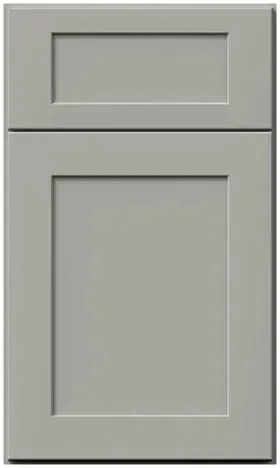


Six inches of upper, and the narrow pull-out that beats every box at this width
Reviewed September 2026 · Captivating Cabinets
Six inches is a leftover width rather than a cabinet width. Nothing built at it has a door on it. What the grid does carry is a bottle lattice, a pair of handed open ends, and — filed under parts rather than cabinets — a pull-out that fills the same gap and is the only one of the four that stores anything you will touch daily.
Four answers at six inches, and two of them are not cabinets
Read this one across rather than down. Width is fixed, the families are fixed, and height is the only variable that moves the price — so the entire width fits in a single table.
| What it is | 30″ tall | 36″ tall | 39″ tall | 42″ tall |
|---|---|---|---|---|
| Bottle lattice — GN WC06… | $273.00 | $305.50 | $318.50 | $341.25 |
| Open end wall, left or right — GN OEL6… / OER6… | $364.00 | $425.75 | $429.00 | $455.00 |
| Wall pull-out, 6″ wide — GNK SPO-WF6… | $438.75 | $468.00 | $471.25 | $497.25 |
| Wall pull-out, 3″ wide — GNK SPO-WF3… | $380.25 | $409.50 | $412.75 | $432.25 |
The two GN codes are finished boxes with a back, two sides and a hanging rail; they live on the wine rack and wall end pages. The two GNK codes are not boxes at all. They are pull-out units that take the place of a filler strip between an upper and a wall or an appliance, ordered off the cabinet accessories page and built to the height of whatever hangs beside them.
That last detail is the reason the four heights line up. Whichever of the four you choose, its top finishes on the same line as the rest of the run — no trim, no packer, no step in the elevation.
Only one of the four brings anything back out to you
A six-inch shelf behind a door is a shelf you reach into, elbow first, to find a jar you cannot see. A six-inch rack on full-extension runners is a shelf that comes to you, and at this width that is the whole difference between storage and decoration. Jars stand two deep on each tier and you read the labels from above instead of feeling for them at the back.
It is also the priciest six inches in the kitchen by any measure you like — $438.75 at thirty inches tall against $273.00 for the lattice. It is the only one of the four anybody uses twice a day. Beside a range or a cooktop it is the right answer; at the far end of a run where nobody cooks it is an expensive way to fill a gap.
When six inches should cost nothing at all
There is a fifth answer the table does not price, because it is neither a box nor a mechanism: a plain filler strip. Flat matching stock, scribed on site, closing a gap without pretending to be storage. Against $273.00 for the cheapest thing on this page that is the frugal call, and it is usually the right one — at the end of a run against a wall, above an appliance bay, or anywhere the six inches sits above head height where nobody will ever look into it. The loose parts page carries the stock, and end panels, scribe molding and fillers explained covers how it gets cut.
The open end units earn their money in exactly one situation: the run stops in mid-air and the last bay is seen from the room side. There they read as a designed stop rather than a cabinet that was sawn off. Order them by hand — OEL for a left return, OER for a right — and mark it on the elevation, because the hand is built in at the factory and is not a site adjustment.
What this width costs against the one above it
Put the two narrowest widths side by side at the standard height and the case thins out fast. A doored box at nine inches wide is $208.00. The lattice at six is $273.00, the open end is $364.00, the pull-out is $438.75. Every single one of them costs more than a cabinet a third wider that comes with a door and two adjustable shelves.
So the order of operations is: first see whether the layout can give up three more inches. If it can, take the nine-inch box and stop reading. If it cannot, and the gap is within arm’s reach of the cooking, buy the pull-out. If it cannot and the gap is anywhere else, buy the filler and spend the difference on something you will notice.
Common questions
- Is there a 6 inch wall cabinet with a door?
- No. Nothing at this width in the collection has a door on it. The doored ladder starts at nine inches and steps in threes from there. At six you get a bottle lattice, a handed open end, or a pull-out that replaces a filler.
- What is the smallest wall cabinet you can buy?
- Six inches wide. The cheapest is the lattice at $273.00 for the 30-inch-tall version. The narrowest doored upper is nine inches at $208.00, which costs less and holds considerably more.
- What is a wall filler pull-out?
- A narrow rack on full-extension runners with a face that matches the doors, fitted where a filler strip would otherwise go. Three and six-inch widths are made in all four upper heights, $380.25 to $497.25 at displayed prices on the review date, and they are ordered as accessories rather than as cabinets.
- Should I use a 6 inch cabinet or a filler?
- A filler, unless the gap is beside the cooktop or the run ends in open air. A filler is flat stock cut on site. A six-inch cabinet is full cabinet money for a slot you cannot reach into properly.
- Do open end wall cabinets come in left and right versions?
- Yes, and they are not interchangeable. OEL is the left-hand unit and OER the right, both $364.00 at thirty inches tall. The hand is set at the factory, so it has to be correct on the order rather than corrected on site.
Keep reading
The guides behind the numbers on this page.
- Cabinet end panels, scribe molding and fillers explained
What a filler actually is, how it is scribed, and why it is the default answer to a narrow gap.
- Beam-mounted pull-out cabinet accessories
How the narrow pull-outs are built and carried, which is what you are paying for at this width.
- Space-saving cabinet solutions
The rest of the family of mechanisms that make awkward inches usable rather than decorative.
- Wall and tall kitchen cabinets: sizes and buying guide
Where the four upper heights come from, and why every family at this width shares them.
- How to read cabinet SKU codes
WC, OEL, OER and SPO-WF taken apart letter by letter.
- Important kitchen dimensions before buying cabinets
Reach and clearance numbers that decide whether a six-inch bay is usable at all.