

The cottage detail: where a beaded plank belongs in a kitchen, and where it will date
Reviewed September 2026 · Captivating Cabinets
Beadboard is a nineteenth-century wall lining that became a twenty-first-century shorthand for "cottage kitchen", and the gap between those two facts is where most beadboard mistakes live. Used in one or two considered places it is one of the cheapest ways to give a flat-painted kitchen some texture. Used everywhere it is a theme. This page is one product — GN BPP-12, the beaded panel plank, at $126.75 — so the useful thing to write about is not the part but the decision.
What the part is, and what it is not

GN BPP-12 is a beaded plank supplied in the same paint and the same finishing run as the doors. It is cladding, not cabinetry: you fix it over something that already exists — the back of an island, the return of a peninsula, the apron under a bar, the face of a boxed-in structure — and the beads run vertically across it.
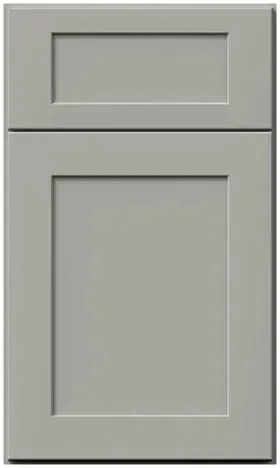
It is not a door style. The doors in this line are contemporary five-piece shaker with a recessed MDF centre, and nothing on this page changes that. It is also not a kit for a whole wall: it is one plank part number, so a wall’s worth of it is a quantity conversation rather than a single line.
One honest note on that quantity. The listing gives the plank as 12 inches, and the live list does not publish a length for it. Because this is cladding sold by the piece and cut to a run, a length is exactly the number a quantity calculation turns on. Confirm it with us before the order is released rather than working back from an assumption — the same applies to how the planks join, since an edge detail that looks right on a sample can read as a seam on a six-foot run.
The four places it works
- The back or end of an island. The single best position: a large flat face, presented to a room, that nobody opens and nothing is stored behind. Texture there does real work, and it is the one part of a kitchen where a decorative choice has no functional consequence at all.
- A peninsula return facing a dining or living space. Same logic, usually a smaller face, often more visible because people sit closer to it.
- A hood surround or a chimney breast. Vertical beading up a tall narrow element exaggerates its height, which is generally what you want on a hood and generally what you do not want on a wide one.
- Inside a glass-front cabinet, as a back. This is the quietest and cleverest use: you get the texture only where it is framed by a glass door, in a small field, lit from inside. The glass cabinet doors guide covers what else that decision involves.
What the list has in common is that every one of them is a face with no moving part in it. That is the rule. Beading on anything that opens, anything that gets wiped daily, or anything at counter height behind a hob is a maintenance decision disguised as a style decision — the grooves catch what a flat face sheds.
The honest style note
Beadboard carries a look, and the look is specific: farmhouse, coastal, country. It is not a neutral texture the way a plain panel is. On a warm white or a soft cream that reading is reinforced and the whole kitchen goes in one direction, which is fine if that is the direction you chose.
On a mid-tone grey the reading is more ambiguous, and that is genuinely an advantage. The colour is not itself a period signal, so beading on a grey island back tends to read as texture rather than as theme — closer to panelled joinery than to a country kitchen. It is one of the few places where this finish makes a decorative choice easier rather than harder.
The failure mode is quantity. One island back is a detail. An island back plus a hood surround plus a peninsula plus the back of the uppers is a decision the room cannot walk back from, and it is the version that dates. If you are not sure, do the island and stop; you can always add later, and nobody ever regretted the restraint. For a sense of how this lands in finished rooms, 27 kitchen cabinet ideas and the 2026 style guide are both worth ten minutes before ordering.
Four textures on the same list that are not cottage
If what you actually want is texture rather than a period reference, the decorative list has three more options and a moulding, and they read completely differently.
| SKU | What it is | How it reads | Price |
|---|---|---|---|
| GN BPP-12 | Beaded plank, 12″ | Cottage, farmhouse, coastal | $126.75 |
| GN RFP696 | Reeded interlocking panel, 6″ × 96″ | Contemporary, closer to fluted joinery | $250.25 |
| GN SFP696 | Slatted interlocking panel, 6″ × 96″ | Contemporary, wider rhythm, more shadow | $250.25 |
| GN SHL-8 | Ship lap, 8 ft | Horizontal boards — coastal, but flatter | $169.00 |
| GN BM3/4 | Batten moulding, ¾″ | For building your own panelled field | $44.20 |
The two interlocking panels are the ones to look at if the kitchen is contemporary rather than traditional. They are twice the price of the beaded plank and they buy a different century — vertical reeding and slatting read as current joinery rather than as a reference to anything. Both are sold as 6 by 96 inch lengths, which makes quantities on those two straightforward in a way the beaded plank is not. Where a kitchen sits on the traditional-to-contemporary line is worked through in contemporary versus transitional cabinets.
GN SFPEC, the side finished panel end cap, is $97.50 and closes the exposed end of an interlocking run. Batten at $44.20 is the fully bespoke route: flat sheet plus battens, set out by an installer, which gives you any panel proportion you like and costs a day of somebody’s labour.
What the bead does to a mid-tone
A bead is not a surface, it is a repeated shadow. Every groove is a narrow dark line and every ridge catches whatever light is in the room, so the texture you see is really a striped tonal pattern rather than a relief.
That pattern behaves differently depending on how far the base colour sits from black. On a bright white the contrast between the lit ridge and the shadowed groove is at its most extreme, which is why beadboard on white reads as strongly as it does. On this mid-tone the two are closer together, so the beading is quieter — it registers as a soft vertical rhythm from across the room and only resolves into distinct boards when you are near it. Whether that is what you want depends entirely on whether you wanted a feature or a texture. If it is a feature you are after, the reeded panel with its deeper profile does more work on this colour than the bead does.
Either way, put the panel where light rakes across it rather than where light hits it square on. A beaded face lit flat from directly in front loses most of its shadow and most of its point. Finding the right shade of grey covers how this finish handles light more generally.
What to send, and what to order with it
The face you are cladding, measured width and height, with a photograph and a note of which direction the light comes from. If it is an island back, tell us whether there is a counter overhang and stools, because that decides how far down the cladding actually needs to run and whether it will be kicked.
Order banding and touch-up in the same box — GNK EDGE-BAND at $7.15 and GNK TOUCH-UP-KIT at $62.40 from the loose parts page. Cladding is cut on site by definition, so that is not a precaution here, it is part of the job.
Everything ships with the rest of the order, pre-assembled where it is a cabinet and finished in the same batch where it is a part, in seven days to three weeks, KCMA certified, AWI Premium Grade, with the Fabuwood limited lifetime warranty. The beaded plank is here, the rest of the decorative range is on the trim page, and the whole finish is on the collection.
Common questions
- Where should beadboard go in a kitchen?
- On a face with no moving part in it: the back or end of an island, a peninsula return, a hood surround, or the inside back of a glass-front cabinet. Avoid it on doors, on anything wiped daily, and behind a hob — the grooves catch what a flat face sheds.
- Is beadboard out of style?
- Not in a single considered position. What dates is quantity — an island back plus a hood surround plus a peninsula plus the uppers reads as a theme rather than a detail. Do one face and stop; you can always add later.
- How much is the beaded panel plank?
- GN BPP-12 is $126.75 displayed. The listing gives it as a 12-inch plank and the live list does not publish a length, so confirm that with us before quantities are calculated — a length is the number the whole calculation turns on.
- What is the contemporary alternative to beadboard?
- The interlocking panels: GN RFP696 reeded and GN SFP696 slatted, both $250.25 for a 6 by 96 inch length, with GN SFPEC end caps at $97.50. They read as current joinery rather than as a period reference, and being sold at a published size makes quantities easier.
- Does beadboard look different on a grey kitchen?
- Quieter. The texture is really a repeated shadow, and on a mid-tone the lit ridge and the shadowed groove sit closer together than they do on a bright white — so the beading registers as a soft vertical rhythm from across the room rather than as a strong feature. Put it where light rakes across it, not square on.
- Can I clad a whole wall in it?
- It is one plank part number rather than a wall kit, so a wall is a quantity conversation. Tell us the area, the light direction and how the planks should join, and we will price it properly rather than multiplying a guess.
Keep reading
The guides behind the numbers on this page.
- 27 Kitchen Cabinet Ideas
Finished rooms with textured island backs, cottage and contemporary.
- Contemporary vs Transitional Kitchen Cabinets
Where a period texture helps a room and where it fights it.
- Kitchen Cabinet Styles and Colour Trends for 2026
What texture is doing in current kitchens, and what is fading.
- Glass Cabinet Doors Buying Guide
The quietest place to put a textured back — behind glass.
- Gray Kitchen Cabinets: Finding the Right Shade
How this mid-tone handles a surface made of shadow lines.
- Kitchen Cabinet Molding Types
Battens, caps and the trim that finishes a clad face.
- Cabinet Door Samples: How to Order and Evaluate
Judging a texture in the room rather than on a screen.


