

The panel that hides an appliance gap: the strip beside a dishwasher, and the bottom six inches nobody plans for
Reviewed September 2026 · Captivating Cabinets
A dishwasher is the only appliance in a kitchen that is both fitted like a cabinet and behaves like a machine. It sits in a 24-inch opening with cabinetry either side, it is fixed to the counter rather than to the floor, and once a day it vents hot wet air out of its door seal at ankle height into whatever is next to it. The parts on this page deal with the first of those facts. The last one is why the article does not stop there.
What is actually being covered

Two different conditions get called a dishwasher panel and they need different parts.
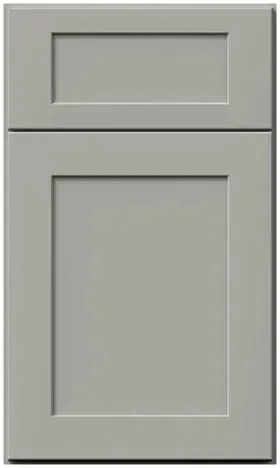
The first is a strip. A dishwasher opening is nominally 24 inches, cabinets come in three-inch steps, and walls finish where they finish — so the run either side of the appliance rarely lands exactly on the opening. What is left is a narrow vertical gap between the appliance and the cabinet, or between the appliance and a wall. That gap is what GN DWR6 at $201.50 is for: a finished face six inches wide, made the same way as the doors, closing the space in a way that reads as part of the run.
The second is a side. Where a dishwasher sits at the end of a run — beside a sink base with nothing beyond it, or at a peninsula return — one whole side of the appliance is exposed and that is a two-foot-deep, three-foot-tall plane of bare steel or plastic. That is a cabinet side problem, not a gap problem, and it is solved from the cabinet skin page or with a base end panel. Ordering a six-inch strip for it is the commonest mis-order on this page.
Panel-ready or stainless, and what each one commits you to
Before the strip, the bigger decision: whether the appliance shows at all. A stainless machine is a deliberate break in the run — a bright vertical rectangle between two painted faces. A panel-ready machine takes a custom door front and disappears into the cabinetry entirely, which is the look people are usually picturing when they say "integrated".
Be clear about what panel-ready costs before you commit to it. The appliance itself is dearer. Its door front has to be built to the appliance maker’s own template, within their weight limit, with their handle position and their thickness — it is a made part, not a catalogue one, and this finish’s live list does not publish a dishwasher door front. That is not a no; it is a "ask us first", and the answer has to come before the appliance is bought rather than after.
Our honest view: on a mid-tone grey run, a stainless dishwasher is a perfectly good outcome and reads as intentional, because the finish has enough depth to hold its own against steel rather than being washed out by it. Integration is worth the money and the complication where the kitchen is small enough that a single bright rectangle dominates it, or where the run is long and unbroken enough that the appliance is the only interruption in it. In an ordinary kitchen with a range, a hood and a fridge already in the room, one more stainless face changes very little.
What closes the gap, and what each option costs
| Option | Width | How it reads | Price |
|---|---|---|---|
| GN DWR6 | 6″ | Faced, in the plane of the doors | $201.50 |
| GN DWR3 | 3″ | Faced, for a narrower gap | $130.00 |
| GN DWR1-1/2 | 1-1/2″ | Faced, for a hairline gap | $123.50 |
| GN BF3 | 3″ | Flat filler — closes the gap, does not continue the run | $26.00 |
| GN BF6 | 6″ | Flat filler at the wider size | $43.55 |
That table is really one question: is the gap somewhere the eye reads the rhythm of the fronts, or is it just a gap? Beside a bank of drawers, where the strip sits in the middle of a series of faces, the faced version is worth the difference — $201.50 against $43.55 is real money, but a flat strip in the middle of a drawer tier is the detail that makes a run look assembled rather than designed. Against a wall, at the end of a run, with nothing to line through with, the filler is the right answer and the saving is honest. The full filler grid is on the filler page, and the narrower faced parts are on the applied front page.
One caveat we would rather state than bury: the DWR family is titled inconsistently on the live list. GN DWR6 is called a dishwasher panel while GN DWR3 and GN DWR1-1/2 are called drawer panels, and all three are the same ascending series of narrow finished faces. Tell us the opening and what sits behind it, and we will confirm which part the code ships as before the order is released.
The bottom six inches, where every one of these eventually fails
A dishwasher vents. Depending on the machine it discharges steam through a port in the door, through the door seal itself at the end of a cycle, or both, and it does it once a day for fifteen years at somewhere between ankle and knee height. Whatever is immediately beside and below that vent gets hot damp air on it more often than any other surface in the kitchen except the inside of the sink base.
That is why the bottom edge of a panel or filler beside a dishwasher is the edge that fails first, and it is nearly always because it was cut on site and left raw. A finished part is finished on its faces; a trimmed bottom is exposed core, and exposed core sitting in repeated steam is a swelling waiting to happen. Two rules deal with it. Cut the panel at the top where the counter hides it, not at the bottom, whenever the geometry allows. And where the bottom has to be cut, band and seal it before the piece is fixed — GNK EDGE-BAND is $7.15 and GNK TOUCH-UP-KIT is $62.40, both on the loose parts page.
The other thing that lands there is water. A dishwasher door opens over the floor, and everything that drips off a rack drips onto the bottom few inches of whatever is beside it. On this finish that has one specific consequence worth knowing: dried water spots are more legible on a mid-tone than they are on a bright white, because a mineral deposit dries pale. A wipe with the door open at the end of a cycle deals with it entirely, and it is the only maintenance habit this colour genuinely asks for — how to clean and care for cabinets has the rest.
Two things to check that are not cabinet decisions
First, the door swing against the run. A dishwasher door drops through ninety degrees and lands more or less horizontal at about knee height. If there is a drawer bank immediately beside it with a protruding pull, or an inside corner within a few inches, the door and the pull will meet. That is what the filler beside the appliance is doing as much as anything cosmetic, and it is the same clearance argument the filler page works through at a corner.
Second, the connections. A dishwasher takes a supply, a waste line and a circuit, and all three normally pass through the side of the adjacent sink base. That means the cabinet beside it is drilled, which is an order-day decision on a new box and a site job on an existing one. If you are also planning a pull-out under that sink, the two compete for the same square foot — the cabinet accessories page has the units, and the collision is worth catching on the drawing.
Everything here ships with the rest of the order, pre-assembled, in seven days to three weeks, finished in the same run as the doors, on a KCMA-certified AWI Premium Grade build carrying the Fabuwood limited lifetime warranty. The panels are here and the whole range is on the collection.
Common questions
- Do I need a panel beside my dishwasher?
- You need something in the gap. If the run does not land exactly on the 24-inch opening, a narrow finished face or a filler closes it. If a whole side of the appliance is exposed at the end of a run, that is a cabinet side rather than a gap and it takes a covering or an end panel instead.
- How much is a dishwasher end panel?
- GN DWR6, the 6-inch faced panel, is $201.50 displayed. The narrower faced parts in the same family are GN DWR3 at $130.00 and GN DWR1-1/2 at $123.50. A plain filler doing the same job is GN BF3 at $26.00 or GN BF6 at $43.55.
- Is a panel-ready dishwasher worth it?
- It is where a single bright rectangle would dominate a small kitchen, or where the run is otherwise unbroken. It costs more in the appliance, and the door front has to be made to the appliance maker’s template — this finish’s live list does not publish one, so ask us before the machine is bought rather than after.
- Does a stainless dishwasher look wrong in a grey kitchen?
- No. A mid-tone has enough depth to hold its own against steel rather than being washed out by it, and in a kitchen that already has a range, a hood and a fridge in stainless, one more face changes very little.
- Why does the bottom edge beside a dishwasher fail first?
- Because the appliance vents hot damp air at about ankle height once a day for fifteen years, and the bottom of the panel is usually the edge that was cut on site and left raw. Cut at the top where the counter hides it if you can; where you cannot, band and seal the bottom before the piece is fixed.
- What should I send you to get this right?
- The dishwasher make and model, the finished opening width, what sits either side of it, and whether either side is a wall. The model number matters most — opening widths, door thicknesses and vent positions vary between machines and all three affect the parts beside it.
Keep reading
The guides behind the numbers on this page.
- How Long Do Kitchen Cabinets Last?
Why the bottom edge next to a wet appliance is the one that goes.
- How to Clean and Care for Kitchen Cabinets
The one habit a dishwasher bay asks for on a painted finish.
- End Panels, Scribe Molding and Fillers Explained
Gap or side: two different problems, two different parts.
- Important Kitchen Dimensions Before Buying Cabinets
Appliance openings, door swings and the clearances around them.
- Kitchen Cabinet Materials and Construction
What is under a painted face, and why a raw cut edge swells.
- Cabinet Terminology and Abbreviations
Filler, panel, applied front — the words on this quote.
- 27 Kitchen Cabinet Ideas
Finished runs with stainless appliances and with integrated ones.


