


One bead, two outcomes: where beaded molding elevates a shaker kitchen and where it dates it
Reviewed September 2026 · Captivating Cabinets
A bead is a half-round ridge run along a strip of wood, and it is the oldest decorative move in cabinetry — it exists because a sharp arris chips and a rounded one does not, and it stayed because it casts a clean shadow. On a five-piece shaker door programme it is also the only traditional detail available to you, since the doors themselves are flat-panelled and deliberately plain. That makes it a genuinely useful part and a genuinely dangerous one. Used on the right three feet of a kitchen it makes a stock run look built. Used everywhere, it turns a contemporary shaker kitchen into a hesitant 2008 one.
What the part is, and why a flat-panel programme has one at all
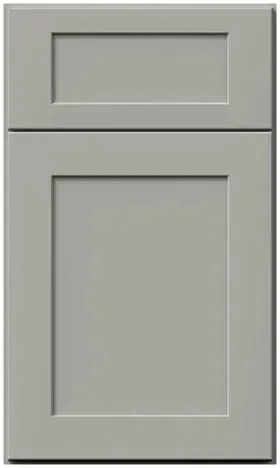
GN BM1 1/4 is $57.85 and the code says most of what matters: a one-and-a-quarter-inch profile carrying a bead along one edge. It is a strip, not a trim kit, and it is bought by the length to be cut and applied wherever a small applied moulding is wanted.
The reason the part exists on a line whose doors are square-edged and unadorned is that applied moulding is the only way traditional detail can be added after the door style is fixed. Shaker is a frame-and-flat-panel construction with no ornament on the door; you cannot make it more traditional by ordering a different door without leaving the programme. You can add a bead to a hood surround, an island end or a built-in opening, and the whole run stays consistent because the bead is in the same finish.
Which is a real capability and also a trap, because the same logic makes it tempting to add a bead to everything. Below is the line we draw, and it is a line we hold on jobs even when a client pushes.
Four places it earns its keep
- Framing a hood surround. A chimney hood in cabinet finish is a large flat plane with nothing on it, and a bead run around the front face gives it an edge. This is the single most common good use, and it usually takes less than ten feet of material — see the hood list for the shells it applies to.
- On a panelled island end. Where an island end is clad in a finished panel, a bead run as a rectangle inside the panel edge turns a flat sheet into a recessed field, which is how a run of boxes starts looking like a piece of furniture rather than a row of cabinets.
- Inside a built-in opening. A niche, a bookcase end, a desk return or a bench alcove takes a bead around the opening and reads finished. A raw plywood edge in an opening reads temporary.
- Around a mirror or a vanity opening in a bathroom. This is the small-room use and it is the most forgiving, because a bathroom is a room where traditional detail is still comfortable even in an otherwise plain house. The vanity range is where this one usually lands.
What those four have in common: each is a discrete object — a surround, a panel, an opening — that the bead defines the edge of. None of them is a long horizontal run of cabinetry. A bead is a framing device, and it works where there is something to frame.
Three places we would talk you out of it
Along the light rail, on a contemporary run. A bead under the uppers turns a functional strip into a fussy one, and the whole point of a light rail is that it disappears. The flat batten profile, GN BM3/4 at $44.20, is what we would use instead when a run wants a shallow trim with no ornament. The light rail page covers that decision in full.
Stacked under a tall crown. Once a crown assembly is three parts high, adding a bead as a fourth element produces a pile of small profiles that reads as busy rather than as rich. If an assembly wants more presence, use a taller crown profile from the crown moulding page rather than more elements.
Everywhere, in the name of consistency. This is the one that actually ruins kitchens. A bead on the hood, the island, the light rail, the valance and the toe kick does not read as a coherent scheme; it reads as trim that was chosen once and then applied by rule. Traditional detailing works by contrast — one framed object among plain ones — and a house rule kills the contrast.
A finish note that changes the calculation here. A bead does its work entirely through the shadow it casts, and the shadow it casts on a mid-tone grey is shallower than the same bead on a white door, where the highlight-to-shadow range is at its widest. So on this finish the detail reads softer and smaller than it does in the sample photo. That is an argument for using it where it is close to the eye — a vanity, a niche, an island end at seating height — and against relying on it to do work across a room.
The four small profiles, compared
Beaded moulding sits in a family of small applied strips, all of them under eighty dollars, all of them easy to confuse on a quote. What separates them is the edge treatment and therefore the job.
| Profile | Code | Price | Edge | What it is for |
|---|---|---|---|---|
| Beaded molding 1-1/4″ | GN BM1 1/4 | $57.85 | Half-round bead | Framing a surround, panel or opening |
| Batten molding 3/4″ | GN BM3/4 | $44.20 | Flat | A shallow, contemporary strip with no ornament |
| Scribe molding decorative | GN SM8-D | $41.60 | Profiled | Meeting a wall, with a shaped edge |
| Quarter round molding | GN QRM | $62.40 | Quarter circle | Closing a gap in an internal corner |
Note the overlap in the bottom two rows: a decorative scribe and a quarter round both have a shaped edge and both close a joint, so they get substituted for each other on site constantly. They are not interchangeable, and the scribe moulding and quarter round pages explain why. The bead is the only one of the four bought for how it looks rather than for what it covers.
How much, and what to ask before ordering
Because it is used on discrete objects rather than along runs, the quantity is small and the takeoff is easy: measure the perimeter of the thing being framed, add eight inches per mitred corner, round up. A hood surround typically comes in under ten feet; an island panel under fourteen; a vanity opening under eight.
Two things to confirm with us first. The live list does not publish a stick length for this profile, and a bead is applied with the finish already on it, which means the mitres are cut through a finished surface. Ask for the length, and tell your installer the cuts want a fine-tooth blade and a backer — a chipped bead at the corner of a hood surround is at eye level and stays there. For how applied trim behaves against finished panels generally, the end panels and moulding guide is the background, and everything on this page is priced on the beaded moulding page.
Common questions
- What is beaded molding used for on kitchen cabinets?
- It is a small applied strip with a half-round bead along one edge, used to frame a discrete object: a hood surround, a panelled island end, a built-in opening or a vanity mirror. GN BM1 1/4 is $57.85. It is not intended to run the length of a cabinet elevation.
- Does beaded molding make shaker cabinets look dated?
- It can. Used once, on a surround or a panel, it reads as a deliberate framing detail. Applied everywhere as a house rule — light rail, valance, toe kick, crown — it reads as a kitchen from the late 2000s, because traditional detailing works by contrast and a blanket rule removes the contrast.
- What is the difference between beaded molding and batten molding?
- The edge. GN BM1 1/4 at $57.85 carries a bead and is ornamental; GN BM3/4 at $44.20 is flat and is the contemporary choice where a shallow strip is wanted with no detail. On a modern flat-fronted run the batten is almost always the better answer.
- Should I add beaded molding under my wall cabinets?
- Only if the kitchen is traditional in intent. Under the uppers the job is hiding the light fixtures, and a bead there makes a functional strip fussy. Use light rail, GN LRM at $149.50, or the flat batten if the rail is deeper than the fixture needs.
- How much beaded molding do I need for a hood surround?
- Measure the perimeter of the face being framed and add roughly eight inches per mitred corner. Most hood surrounds come in under ten feet. The live list does not publish a stick length for this profile, so confirm it with us before the quantity is fixed.
- Does a bead show up as well on a gray finish as on white?
- Less. A bead works through the shadow it casts, and the highlight-to-shadow range on a mid-tone is narrower than on a white door, so the detail reads softer. Use it close to the eye — a vanity, a niche, an island end by the seating — rather than expecting it to carry across a room.
Keep reading
The guides behind the numbers on this page.
- Kitchen Cabinet Molding Types
The whole trim vocabulary in one place, with what each profile is for.
- Shaker vs Slab Cabinets
What a five-piece shaker door is, and why it carries no ornament of its own.
- Fabuwood Door Styles
The door programmes an applied bead has to sit next to.
- Contemporary vs Transitional Kitchen Cabinets
Where a traditional detail helps a scheme and where it undercuts it.
- Kitchen Cabinet Styles and Color Trends for 2026
What is currently being detailed, and what is being left plain.
- Cabinet End Panels, Scribe Molding and Fillers Explained
How applied trim behaves against a factory-finished panel.
- 27 Kitchen Cabinet Ideas
Framed surrounds and plain ones, in finished rooms.
- Kitchen Cabinet Samples: How to Order and Evaluate
Judging a shadow line in your own light before committing to it.


