

Taking the hip out of the walkway: where a run should stop being square
Reviewed September 2026 · Captivating Cabinets
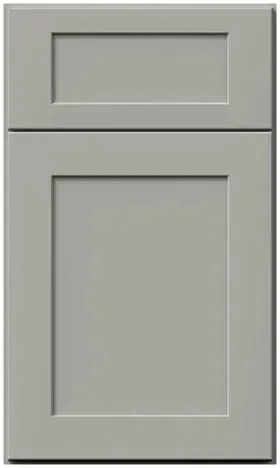
At 36 inches off the floor, the outside corner of a countertop is at hip height on most adults, and the end of a run is exactly where people cut the corner. That is the whole case for an angled end. GN BRA24 at $588.25, with the GN BTL12 and GN BTR12 transitions at $419.25 each, turn a square end into a 45° one, and the reason to buy one is circulation rather than storage: it is bought by the foot of walkway it gives back, not by the shelf it contains.
The corner your hip finds in the dark
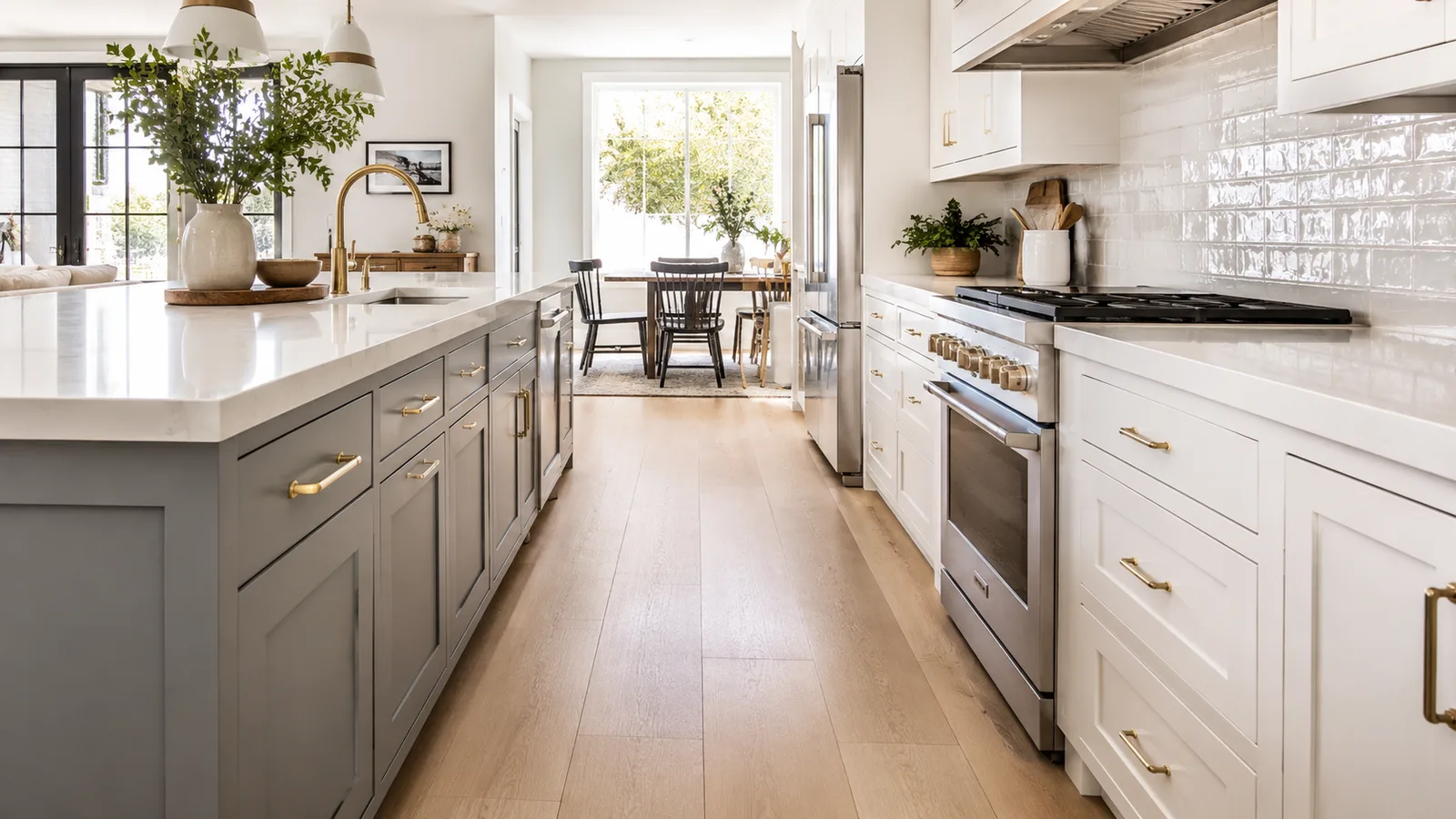
People do not walk the way plans are drawn. They cut diagonally: fridge to sink, door to table, sink to bin. Wherever a run ends into a traffic path, the point of that run is standing in the middle of somebody’s shortest route, at the height of a hip bone and a coat pocket. It gets caught on aprons, it collects the chip in the stone that nothing else in the kitchen ever gets, and in a house with children it is at head height for the first four years of their lives.
An angled end takes the point out of the path. It does not make the run shorter in any meaningful way — you lose a wedge of counter that was never usable anyway — and it does not add storage. What it buys is the corner of the walkway back, and whether that is worth $588.25 comes down to a measurement almost nobody takes.
Measure the lane at the pinch, then decide
| Lane at the square corner | What that feels like | What the 45° end does | Our call |
|---|---|---|---|
| Under 30″ | A squeeze. Two people cannot pass, and one open appliance door closes it entirely | Gives back exactly the inches at the pinch, which is where they are missing | Angle it, or shorten the run |
| 30″ to 36″ | One person, turning sideways when carrying anything | Turns a squeeze into a walkway | Angle it |
| 36″ to 42″ | A working walkway for one | Comfort rather than rescue — but it matters where the path bends at that corner | Angle it if traffic actually turns there |
| 42″ to 48″ | A proper work aisle | Almost purely cosmetic | Finish it square and put a skin on it |
| Over 48″ | Two cooks pass without either moving | Nothing | Square end |
Take the measurement at counter height, not at the floor. The floor is the widest the lane ever is: above it sit the overhang, the handles, and the appliance doors that swing into the same space. The island clearance guide has the walkway and work-aisle figures those rows are built on, and important kitchen dimensions before buying cabinets covers the landing and standing space around them.
What the angle does to the countertop
A square end is one 90° corner and the fabricator has been cutting them all week. An angled end is a mitred return: two obtuse corners and a short diagonal edge between them, all of which have to carry the same profile as the rest of the top. It is a different template and a different price, and it is a conversation to have before the slab is cut rather than after it is in the van. Two details worth naming to the fabricator: ask for a small eased radius at both obtuse corners, because a knife point in stone is the thing that chips, and check where the seam falls, since an angled end sometimes moves it.
The overhang follows the diagonal too. Whatever you have specified along the run — an inch and a half, or twelve to fifteen inches where people sit — continues around the angle, and it is the diagonal edge, not the wall behind it, that you measure the walkway from.
And to the toe kick, which is the part that takes the traffic
The recess under the cabinets turns the angle as well, which means two miters instead of one square corner and a little more length than a straight run. GN TK8 is an 8-foot length at $55.90, GN TK8-3/4 is the thicker version at $58.50, and GN TKC, the toe kick cap, is $7.80 — all under toe kicks. Put them on the cabinet order so the paint is a single batch, because at an angled end the toe kick is visible from three directions rather than one.
This is one of two places in this collection where the colour is a maintenance decision rather than a taste one. The toe kick at an angled end is the most-kicked piece of trim in the house: shoe toes, chair legs, the vacuum head, a mop, a dog. A mid-tone gray does not keep a record of that the way a white toe kick does — scuffs and grey marks simply stop registering from standing height. The honest other half: dust sits visibly on a gray at floor level, and so does dried mop water, both of which a white kick hides better. So the trade is scuffs you stop noticing against dust you start noticing, which is a trade most households take. Our care guide covers the cleaning, and the gray shade guide places this particular depth among the alternatives.
If anyone sits at that end

A peninsula that seats people is a circulation problem twice over: the lane behind the stools has to clear a seated person, not an empty run. Allow around 24″ of counter edge per stool and 12″ to 15″ of overhang for knees, and then check what the angle does to the count. A 45° end usually costs one straight-on position and offers a corner seat in its place, which is a better seat for conversation and a worse one for eating off a plate. Either is fine; deciding it on the drawing is better than discovering it when the stools arrive.
And behind the stools, measure the lane from the edge of the counter with a chair pulled out, not from the cabinet. That is the number that decides whether the angle was worth buying.
Which of the three pieces the traffic calls for
- A run that ends into a walkway: GN BRA24 at $588.25. It is 24″ wide and 24″ deep at 34½″ high, with one door and a wedge-shaped shelf behind it — full depth at the wall, tapering to the angled face, which suits bottles, boards and platters stood upright rather than stacked plates. The shelf is stocked as a part, AS-BRA24 at $64.35.
- A run that steps from 24″ deep to 12″ deep and shows the step: GN BTL12 or GN BTR12 at $419.25, chosen by the direction the angle turns as you face the run from the room. The factory cuts the hand and it cannot be reversed on site. Their shelf is AS-BT12 at $34.45.
- A lane over 42″ wide with no turn in it: neither of them. Finish the run square and put a finished face on it — GN SK BASE, the base end skin, at $62.40, or GN BEP, the applied base end panel, at $149.50, both under decorative accessories. An angled end bought for looks alone is the one we talk people out of.
Whichever piece ends the run, the exposed side needs finishing: a cabinet side leaves the factory finished as an interior, and the end of a peninsula is what the room looks at. Our end panels and fillers guide explains the panel-versus-skin choice, and the other odd base shapes have pages of their own — the blind corner, the easy reach, the lazy Susan, the drawer bench seats and the specialty bases.
Common questions
- How wide does a kitchen walkway need to be?
- About 36″ for a passage and 42″ for a working aisle, with 48″ where two people work past each other. Measure at counter height, not at the floor — the overhang, the handles and the appliance doors all live above it.
- When is an angled end cabinet worth it?
- When the lane at the square corner measures under 36″, or when traffic actually turns at that corner. Over 42″ with no turn, finishing the run square and skinning the end is the better buy, and the angle is cosmetic.
- What does a return angle cabinet cost?
- $588.25 for the GN BRA24 as displayed, with the GN BTL12 and GN BTR12 transitions at $419.25 each. The exposed side needs a GN SK BASE skin at $62.40 or a GN BEP panel at $149.50 on top.
- Does an angled cabinet cost more in countertop?
- Usually. It is a mitred return rather than a square corner: two obtuse corners and a diagonal edge, all carrying the same profile, and it can move the seam. Raise it with the fabricator before the slab is cut, and ask for an eased radius at both obtuse corners.
- Which is the left transition and which is the right?
- BTL is the left-turning piece and BTR the right, judged as you face the run from the room. The angle is cut at the factory, so a wrong hand cannot be corrected on site — send us the elevation if there is any doubt.
- Does an angled end lose a stool?
- Generally one straight-on position, replaced by a corner seat. Allow 24″ of counter edge per stool and 12″ to 15″ of overhang, then count the positions on the drawing before the stools are bought.
Keep reading
The guides behind the numbers on this page.
- Kitchen Island Clearance Guide
Walkway and work-aisle widths, and seating overhangs.
- Important Kitchen Dimensions Before Buying Cabinets
Landing space, standing room and counter height, with numbers.
- Cabinet End Panels, Scribe Molding and Fillers Explained
Skin or applied panel on the side the room sees.
- Kitchen Cabinet Molding Types
The toe kick, the base molding and how each turns a corner.
- How to Clean and Care for Kitchen Cabinets
Keeping the most-kicked trim in the house looking new.
- Gray Kitchen Cabinets: Finding the Right Shade
Where this depth of gray sits, and what it forgives.
- Kitchen Layouts Guide
The plan shapes that end in a peninsula rather than a wall.


